


Difficulty
A DIVERSE & IMMERSIVE SAFARI EXPERIENCE
Eastern Tanzania: Endemic Birds & Mammals
This new journey through Eastern Tanzania reveals an extraordinary side of the country rarely seen by travelers—one shaped by montane forests, treeless plains, miombo woodlands, and lush coastal foothills. Designed by longtime VENT leader Dion Hobcroft, the tour combines comfort with remarkable birding and wildlife encounters, spanning habitats that support more than 400 bird species and an exceptional mix of mammals. From the Lark Plains beneath Mount Meru to the Usambara Mountains, Mikumi National Park, and the Udzungwa ranges, each stop offers striking scenery and a rich blend of East African biodiversity. Optional travel to Pemba Island adds further coastal and island endemics.
Tour Overview
Mar 27–Apr 15, 2027
Eastern Tanzania offers some of the most varied and rewarding wildlife experiences in East Africa, yet it remains well off the traditional safari circuit. This thoughtfully designed itinerary introduces participants to a remarkable diversity of landscapes—ranging from highland rainforests to sun-drenched dry woodlands—and to the outstanding bird and mammal life they support. With more than 400 bird species possible and a mammal list that may exceed 40 species, the tour provides an exceptional immersion into the region’s natural richness.
Beginning beneath the slopes of Mount Meru, we explore Arusha and the famed Lark Plains before heading to Mkomazi National Park and its expansive dry woodlands. From here, the journey climbs into the cool air of the Usambara Mountains, where mossy forests hold an extraordinary array of localized and endemic birdlife. Nights in both the western and eastern Usambaras offer time to absorb the atmosphere of these storied montane environments.
The scenery shifts again as we travel through Morogoro and into the vast miombo woodlands of Mikumi National Park—a landscape alive with East African mammals, raptors, and woodland specialists. Visits to the Udzungwa ranges and nearby forest camps bring yet another layer of biodiversity, where rural hospitality and peaceful garden birding complement the larger forest reserves.
For those continuing to Pemba Island, a two-night extension introduces the island's blend of coastal forest, tropical beaches, and distinctive birdlife, including several species found nowhere else.
Across this expansive route, participants gain deep exposure to the “other Tanzania”—a region rich in wildlife, dramatic terrain, and superb natural history experiences rarely included in standard itineraries.
Ecosystems Experienced
Eastern Tanzania encompasses an unusually rich ecological gradient, beginning with the acacia and open plains around Arusha and extending through dry savannas, miombo woodlands, montane rainforests, fertile foothills, river valleys, and coastal lowlands. The Usambara Mountains rise abruptly from surrounding plains, sheltering cool, moisture-laden forests known for high endemism. In contrast, Mikumi and Mkomazi protect drier woodland and floodplain environments supporting East Africa’s classic mammals. The Udzungwa ranges add lush forest edges and rural agricultural mosaics, while the optional extension to Pemba Island introduces tropical coastal ecosystems. Together, these landscapes form one of East Africa’s most biodiverse regions.
Expected Climate
Temperature
Expect a broad range of temperatures across elevations and habitats. Lowland areas such as Mikumi, Mkomazi, and coastal Dar-es-Salaam can be warm to hot, often reaching the 80s–90s °F (27–34 °C) during the day. Higher elevations in the Usambaras and Udzungwa ranges are noticeably cooler, with mornings and evenings dropping into the 50s–60s °F (10–18 °C). Conditions around Arusha remain mild, while Pemba Island extension days are steadily warm and humid.
Rainfall
Rainfall varies by region. Eastern Tanzania experiences localized showers and occasional heavier bursts, especially in montane forests where moisture is more persistent. Lowland savannas and miombo woodlands tend to be drier, though brief rain is still possible. The tour period generally aligns with a window of moderate precipitation, with conditions shifting quickly between sun, clouds, and short-lived showers.
Seasons
This tour typically takes place during a period of transition between the long rains and the drier months, creating lush landscapes, active wildlife, and excellent bird activity. Lower elevations warm quickly after rains, while the mountains retain cool, fresh conditions. Across the region, vegetation is green, water sources are productive, and forest and woodland species are highly active—making it an ideal time to explore Eastern Tanzania’s immense ecological variety.
Key Species
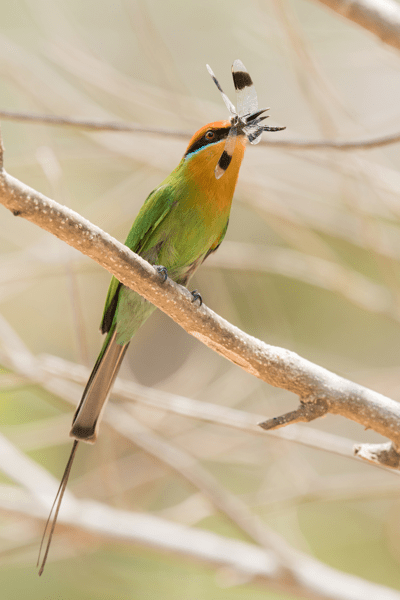
Bohm's Bee-eater
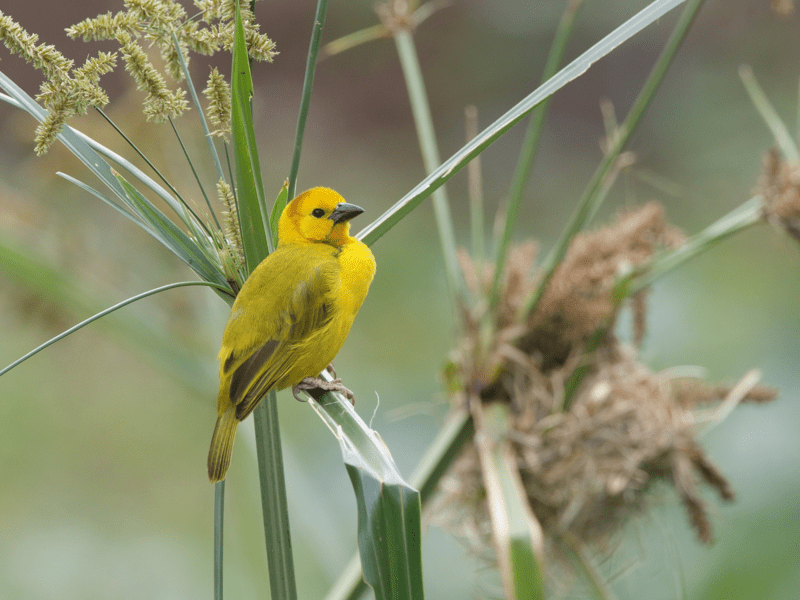
Taveta Golden-Weaver
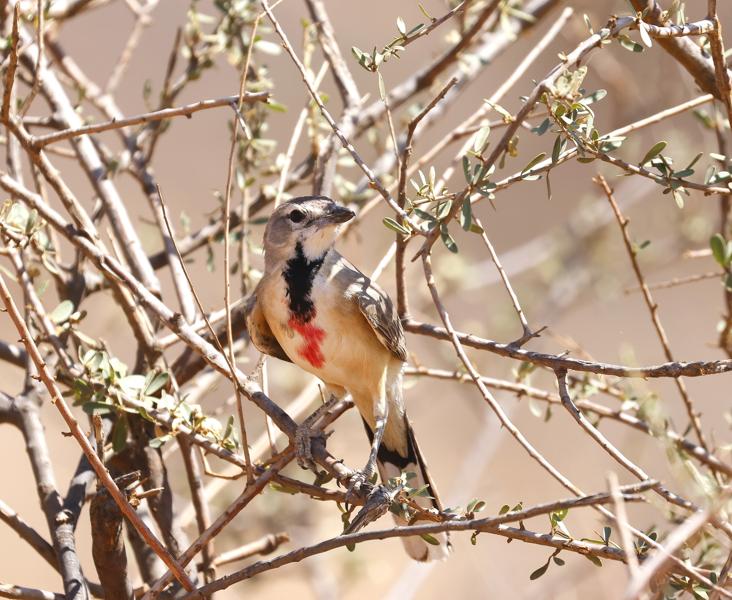
Rosy-patched Bushshrike
African Tailorbird
Fraser's Eagle Owl
Narina Trogon
Leader
+ Local leader
Dion Hobcroft
Primary Leader
Australian naturalist and senior tour leader with over 40 years of field experience and unmatched expertise in the birds and wildlife of the Asia-Pacific region.
Read MoreItinerary
Click here to download the 2027 itinerary PDF
Day 1
Depart the USA and begin your journey to Tanzania, with an overnight flight to Kilimanjaro International Airport.
Day 2
Arrive in Tanzania and transfer to the tranquil Ngare Sero Mountain Lodge, a peaceful retreat surrounded by forest and ponds at the foot of Mount Meru.
Ease into the adventure with your first opportunities to spot East African birdlife before gathering with the group for a welcome dinner.
Day 3
Spend the day exploring Arusha National Park, where forests, grasslands, and shimmering lakes create one of northern Tanzania’s most diverse wildlife landscapes.
Look for an impressive variety of wildlife, from giraffes, elephants, and zebras to flamingos and an exciting mix of forest and grassland birds.
Return to Ngare Sero Mountain Lodge after an unforgettable introduction to Tanzania’s rich natural heritage.
Day 4
Venture onto the open plains north of Arusha in search of the exceptionally rare Beesley’s Lark, one of Tanzania’s most sought-after endemic birds.
Experience a striking landscape where traditional Maasai grazing lands, abundant birdlife, and sweeping views of Mount Meru come together for a rewarding day in the field.
Keep watch for a variety of grassland wildlife, including giraffes, zebras, and gazelles, while enjoying outstanding photography opportunities.
Day 5
Travel across northern Tanzania toward Mkomazi National Park, with a rewarding birding stop in the Merelani area, renowned for its vibrant Maasai biome specialties.
Search for an exciting mix of colorful regional birds while taking in the changing landscapes that define this part of the country.
Arrive at Mkomazi in the afternoon and settle into camp, ready to explore one of Tanzania’s most remote and rewarding wildlife destinations.
Day 6
Spend a full day exploring the rugged landscapes of Mkomazi National Park, one of Tanzania’s least-visited wildlife reserves and a haven for both birds and mammals.
Search for an exceptional diversity of species, including colorful dry-country birds and the elusive Friedmann’s Lark, while enjoying the park’s peaceful, uncrowded setting.
Keep watch for iconic African wildlife—from giraffes, zebras, and antelope to elephants, lions, and the park’s carefully protected populations of black rhinos and African wild dogs.
Day 7
Begin the day in the South Pare Mountains, exploring Chome Forest Reserve’s montane forests and grasslands in search of Tanzania’s rare and range-restricted bird species.
Look for regional specialties including the endangered South Pare White-eye, colorful sunbirds, forest warblers, and the striking Oriole Finch, with the possibility of impressive raptors overhead.
Travel through the scenic Eastern Arc Mountains toward the West Usambara Mountains, with birding stops along the way before arriving at Muller’s Mountain Lodge.
Day 8
Explore the West Usambara Mountains, one of Tanzania’s most important birding regions, in search of a remarkable collection of forest specialists and local endemics.
Spend the day seeking out elusive species such as the Usambara Thrush, Spot-throat, Oriole Finch, and other rare mountain birds found only in these unique habitats.
Continue into the evening with a special night birding effort, adding the possibility of owls, nightjars, and other nocturnal species to the day’s discoveries.
Day 9
Enjoy a final morning of birding in the West Usambara Mountains before traveling through Tanzania’s scenic Eastern Arc Mountains toward Amani Forest.
Make birding stops along the route through varied landscapes, watching for species of rocky outcrops and forest habitats before arriving at the remote Amani Forest Bandas.
Settle into this simple, nature-focused retreat, where researchers and birders come to experience the extraordinary diversity of the surrounding forest.
Day 10
Spend the day exploring Amani Forest, one of Tanzania’s most important forest sites, where rich biodiversity and rare mountain species make every walk rewarding.
Search for an impressive range of forest specialties, including the critically endangered Long-billed Tailorbird, Amani Sunbird, and other East Arc endemics found nowhere else.
Beyond the birds, experience the forest’s wider wildlife, from monkeys and galagos to chameleons and the possibility of elusive nocturnal mammals after dark.
Day 11
Begin the day in Zigi Forest, exploring the lower elevations of the East Usambara Mountains in search of sought-after forest birds, including Fischer’s Turaco, African Broadbill, and Eastern Nicator.
Pause at Wami Bridge for a chance to spot Bohm’s Bee-eater and other regional specialties before continuing south through Tanzania’s changing landscapes.
Arrive in Morogoro after a scenic travel day, ready for the next chapter of the journey.
Day 12
Explore the Uluguru Mountains and Bunduki Reserve, a spectacular montane forest habitat known for its rich bird diversity and unique highland species.
Search for sought-after specialties including Livingstone’s Turaco, Uluguru Bushshrike, White-winged Apalis, and Loveridge’s Sunbird while revisiting opportunities for other regional favorites.
Return to Morogoro after a rewarding day immersed in one of Tanzania’s most important forest ecosystems.
Day 13
Transition from Tanzania’s agricultural landscapes into Mikumi National Park, where the scenery opens into classic African wilderness and the chance for exciting wildlife encounters begins.
Search for soaring raptors and vultures along the way, then spend the afternoon on safari exploring the park’s diverse habitats and wildlife.
Day 14
Explore Mikumi National Park’s distinctive Miombo woodlands, a unique habitat that supports a fascinating community of specialized birds found only in central eastern Africa.
Search for signature woodland species such as Racket-tailed Roller, Southern Ground-Hornbill, and Bohm’s Bee-eater while enjoying the park’s rich birding opportunities.
Keep watch for iconic African mammals, including elephants, giraffes, zebras, buffalo, and the possibility of lions or the striking Sable Antelope.
Day 15
Enjoy a final morning in the Mikumi area, searching for any remaining birding highlights before continuing south through Tanzania’s changing landscapes.
Arrive at Kisolanza Farm House, a welcoming countryside retreat surrounded by gardens that provide a peaceful setting and excellent opportunities for relaxed birding.
Day 16
Explore the gardens, woodlands, and seasonal wetlands around Kisolanza Farm House, where a mix of habitats creates opportunities for an impressive variety of birdlife.
Search for Miombo specialties and open-country species, including regional highlights such as Whyte’s Barbet, Miombo Wren-Warbler, Denham’s Bustard, and the elusive Locustfinch.
Enjoy the contrast between wooded farmland and grassland landscapes, a fitting addition to the diverse birding experiences of eastern Tanzania.
Day 17
Travel east toward the Udzungwa Mountains, arriving at Hondo Hondo Forest Camp, a nature-focused base surrounded by a variety of rich habitats to explore.
Visit the remarkable Kilombero Floodplain, where pioneering discoveries revealed several bird species new to science, including the sought-after Kilombero Cisticola and Kilombero Weaver.
Search the wetlands and surrounding landscapes for localized specialties such as Coppery-tailed Coucal, White-crowned Lapwing, and Rufous-bellied Heron.
Day 18
Explore the diverse habitats around Hondo Hondo, from rice fields to forest patches, where this rich transition zone attracts an exciting mix of birdlife.
Search for colorful specialties including Lesser Seedcracker, waxbills, Zanzibar Red Bishop, and the elusive Kretschmer’s Longbill, while keeping watch for rare forest birds.
Look beyond the birds for unique mammals of the region, including Udzungwa Red Colobus, Sanje Mangabey, and the unusual Chequered Elephant Shrew.
Day 19
Make an early departure toward Dar es Salaam, with relaxed birding stops along the way and a final opportunity to seek coastal specialties at the Ruvu River floodplain.
Search for localized highlights including Ruvu Weaver, Scaly Babbler, Coastal Cisticola, and Plain-backed Sunbird before arriving in the city.
Conclude the main tour with time to refresh at the hotel before an evening departure or the option to continue onward to Pemba for additional endemic bird discoveries.
Tour Add-ons
If you would like to book a tour add-on, you will be given that opportunity during the check out process.
What’s Included
Accommodations & Dining
Settle into comfortable accommodations with modern amenities. Enjoy freshly prepared meals that highlight local flavors and international favorites, with consideration for any dietary needs.
Guided Services & Gratuities
Experience each destination with the help of Leaders who share history, culture, and wildlife insights. Gratuities for crew and local guides are included, ensuring seamless service without extra concerns; tipping for your Leaders is discretionary and not included.
Active Essentials
Every tour includes the core elements that make our field experiences possible so you can stay engaged with a range of activities. All outings include the necessary equipment and full safety support, making it easy to join at your own pace.
Transportation & Logistics
We coordinate every transfer, from airport pickup to port boarding. Whether traveling by bus, boat, or charter, our team ensures smooth connections and stress-free travel.
FAQs
Similar Trips
Loading calendar...