


Difficulty
BIRDS-OF-PARADISE HIGHLIGHTS
Papua New Guinea Highlights
This highlight tour of Papua New Guinea delivers an unforgettable introduction to one of the world’s most exciting birding destinations. From the lowland forests of the Fly River to the foothill forests of Tabubil and the cool montane slopes of the central highlands, you encounter a spectacular selection of birds-of-paradise alongside hornbills, crowned-pigeons, parrots, kingfishers, and bowerbirds. Comfortable hotels, a beautifully situated mountain lodge, and well-paced travel support long, rewarding days in the field. With expert local guidance, diverse habitats, and a focus on iconic species, this tour showcases the essence of New Guinea’s wild, island-continent avifauna.
Tour Overview
Jun 5–Jun 20, 2027
Jun 8–Jun 23, 2028
Papua New Guinea holds a legendary place in the imagination of birders. This vast, rugged island shelters more than 700 bird species, nearly half of them endemic, and a remarkable array of mammals, butterflies, and other wildlife. This highlight itinerary focuses on three classic regions: the lowland rainforests along the mighty Fly River, the hill forests around Tabubil, and the highland mountains around Tari and Mt. Hagen, where birds-of-paradise are part of daily life.
The journey begins in Port Moresby, where nearby forests and wetlands introduce you to honeyeaters, fruit-doves, and parrots before the first encounter with the spectacular Raggiana Bird-of-Paradise. From there, you fly west to Kiunga, a frontier town on the Fly River. Boat trips and roadside birding offer chances for Blyth’s Hornbill, Southern Crowned-Pigeon, King Bird-of-Paradise, and a wealth of lowland specialties. Moving upslope, Tabubil’s foothill forests reveal a different suite of birds, including torrent specialists, lorikeets, and elusive forest skulkers.
A charter flight into the central ranges brings you to Ambua Lodge, one of New Guinea’s most celebrated birding bases. Here, moss-draped forest and flower-laden gardens host up to ten species of birds-of-paradise, along with a rich supporting cast of highland passerines and raptors. Finally, the tour continues to Kumul Lodge near Mt. Hagen, where feeders and nearby trails deliver close views of Ribbon-tailed Astrapia, Brown Sicklebill, and many high-elevation specialties.
Throughout the tour, accommodations range from well-appointed city hotels to characterful mountain lodges, with good meals and mostly moderate walking. This journey offers a deep, yet accessible, immersion into the birds, forests, and cultures of Papua New Guinea’s most iconic regions.
Ecosystems Experienced
Papua New Guinea spans an astonishing gradient of tropical habitats. Towering lowland rainforest along the Fly River shelters hornbills, crowned-pigeons, parrots, and birds-of-paradise in a dense tapestry of buttressed trees and vine-choked understory. Foothill and hill forests around Tabubil bridge the gap between lowland and montane zones, supporting torrent specialists along rushing rivers and a host of mid-elevation endemics. In the highlands, steep slopes cloak themselves in mossy cloud forest, tree ferns, and flowering shrubs that attract dazzling birds-of-paradise, honeyeaters, and berrypeckers. Scattered gardens, grasslands, and village edges add a patchwork of open habitats that hold manucodes, whistlers, and a vibrant daily chorus of calls.
Expected Climate
Temperature
Conditions range from hot and humid to pleasantly cool, depending on elevation. Lowland sites such as Port Moresby, Kiunga, and the Fly River typically reach the upper 80s F by midday, with warm, humid nights. Foothill forests around Tabubil are slightly cooler but still sultry, especially during calm, overcast afternoons. In the highlands at Ambua Lodge and Kumul Lodge, daytime temperatures are much more moderate, often in the 60s and low 70s F, with crisp mornings and evenings that invite light jackets. The shift from lowland heat to cool mountain air becomes a memorable part of the overall experience.
Rainfall
Papua New Guinea’s forests are shaped by frequent moisture. In the lowlands, showers can appear suddenly, delivering heavy bursts of rain before clearing to bright, humid skies. Along the Fly River and around Tabubil, drizzle and mist are common, feeding torrents and waterfalls that echo through the valleys. In the highlands, clouds often gather in the afternoons, creating soft light and occasional light showers over mossy slopes. Most birding takes place between passing systems, and the interplay of sun, cloud, and rain adds drama and depth to the forest landscapes.
Seasons
July falls within a generally favorable period for travel and bird activity. Many birds-of-paradise maintain display routines, and fruiting and flowering plants draw in parrots, honeyeaters, and pigeons. River levels and trail conditions are typically manageable, with a mix of sunny spells, overcast intervals, and periodic rain that keeps forests lush and active. Cooler, stable conditions in the mountains make highland birding particularly comfortable, while lowland forests remain rich with vocal activity at dawn and dusk. It is an ideal season to experience New Guinea’s avian diversity across multiple elevations.
Previous Field Reports
Key Species
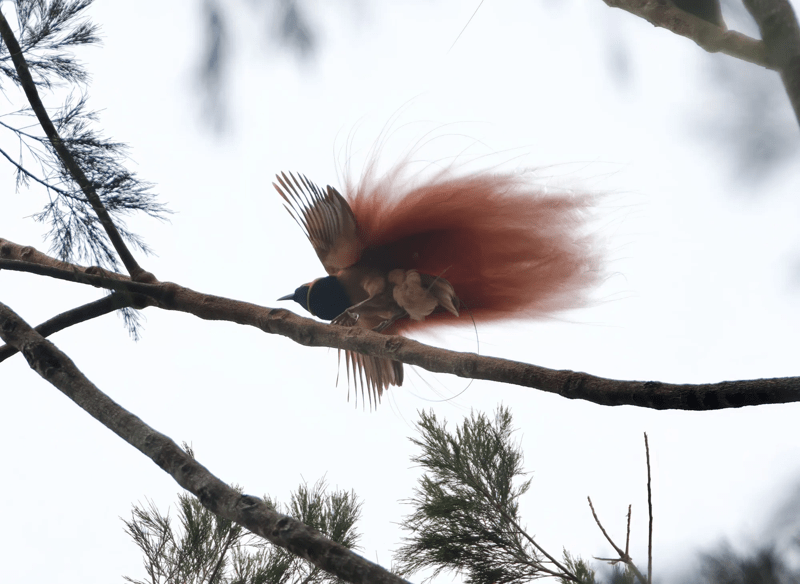
Raggiana Bird-of-Paradise
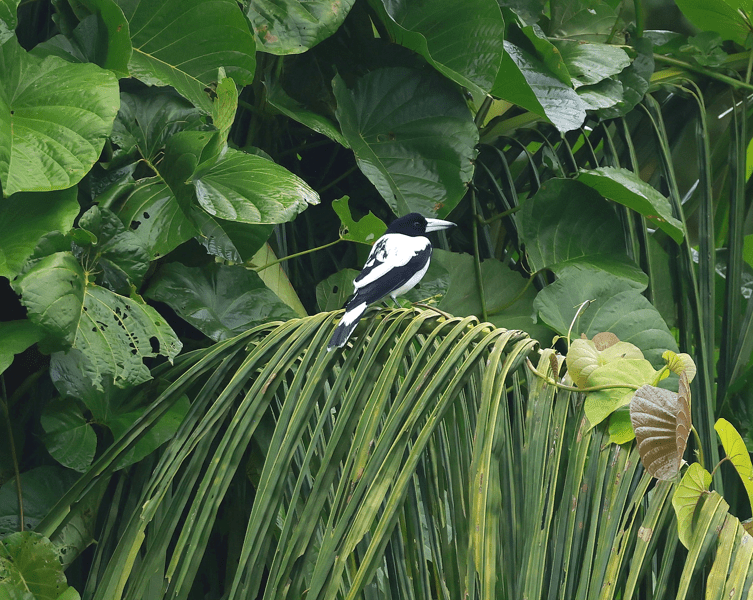
Hooded Butcherbird
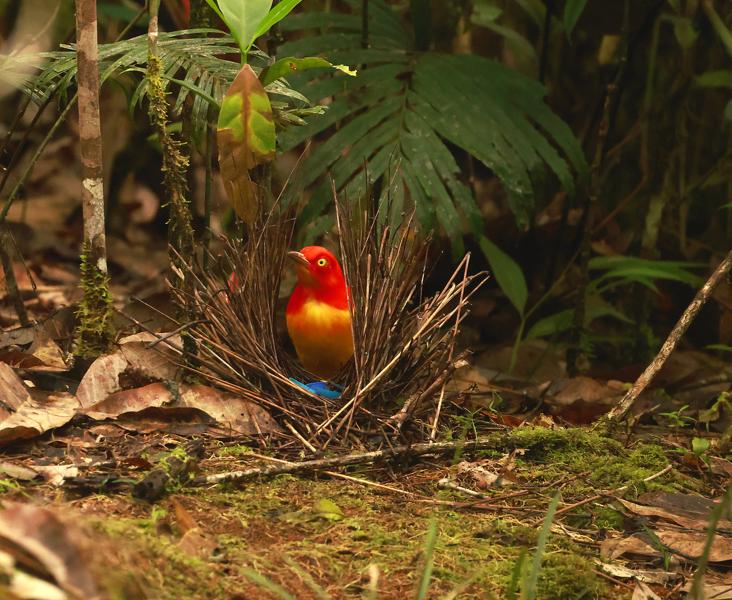
Flame Bowerbird
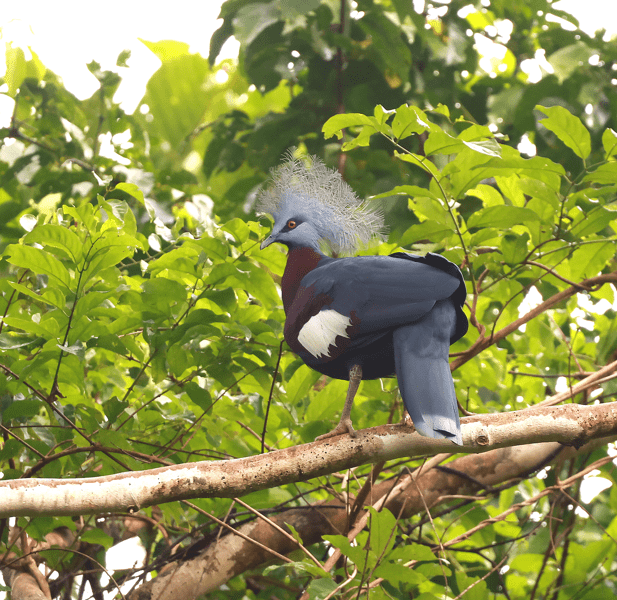
Sclater's Crowned-Pigeon
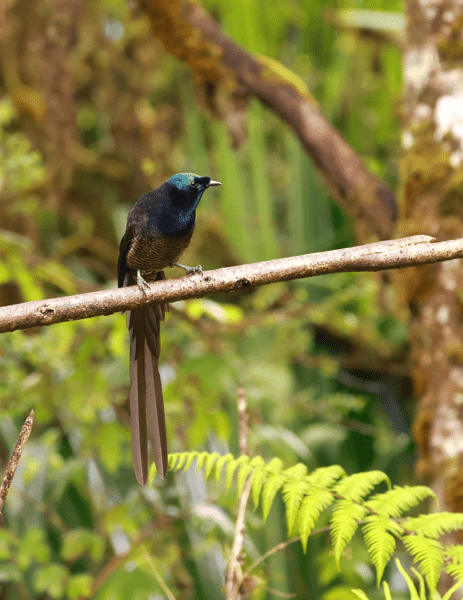
Stephanie's Astrapia
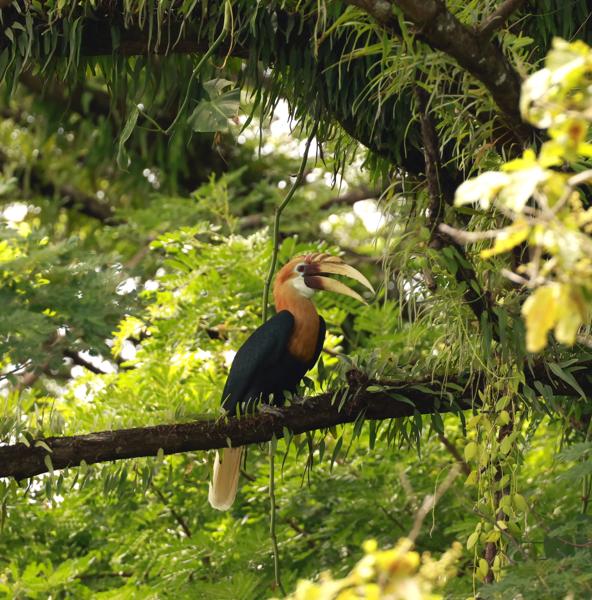
Blyth's Hornbill
Leader
+ Local Leader
Max Breckenridge
Primary Leader
Australian bird guide and conservationist with deep field experience, known for his sharp ear, adventurous spirit, and dedication to bird protection.
Read MoreItinerary
Click here to download the 2027 itinerary PDF
Day 1
Depart and begin the journey across the Pacific, adjusting to new time zones as night and day slide past the aircraft windows.
Day 2
Cross the International Dateline en route to Brisbane, watching the changing sky over the open ocean.
Day 3
Connect in Brisbane and fly to Port Moresby, then settle into the Airways Hotel, your comfortable base overlooking the city and surrounding hills.
If time allows, visit the Pacific Adventist University grounds, where lakes and open woodland host waterfowl, herons, and a variety of doves, kingfishers, and honeyeaters.
Enjoy a welcome dinner and orientation as you take in your first views of the tropical landscapes.
Day 4
Drive up to Varirata National Park, where eucalypt savanna grades into lush hill forest alive with endemics and forest skulkers.
Walk quiet roads and forest trails in search of Raggiana Bird-of-Paradise display trees, fruit-doves, parrots, and jewel-babblers.
Day 5
Fly west to Kiunga, watching from the air as seemingly endless rainforest stretches toward the horizon.
Settle into the Kiunga Guest House, a welcoming base with air-conditioned rooms and home-cooked meals.
Begin exploring nearby roads and forest edges for hornbills, parrots, and the first lowland specialties of the Fly River region.
Day 6
Travel by boat along the Fly River and its tributaries, gliding past towering forest walls and sandy riverbanks.
Watch for Southern Crowned-Pigeon, King Bird-of-Paradise, hornbills, cockatoos, and a wealth of riverine species perched along the margins.
Day 7
Bird near Kiunga one last time, scanning forest edges and clearings for additional lowland species.
Drive north toward Tabubil, following the Kiunga–Tabubil Road as it climbs into foothill forest beneath the Star Mountains.
Arrive and settle into Hotel Cloudlands, your comfortable base in the hills.
Day 8
Explore foothill forest around Tabubil, searching for parrots, lorikeets, forest kingfishers, and foothill endemics along roads and trails.
Visit the Ok Menga hydroelectric area where rushing water and rocky gorges provide habitat for Torrent Flycatcher, Torrent-lark, and other torrent specialists.
Enjoy changing light and mist drifting over forested ridges as you return each evening.
Day 9
Explore foothill forest around Tabubil, searching for parrots, lorikeets, forest kingfishers, and foothill endemics along roads and trails.
Visit the Ok Menga hydroelectric area where rushing water and rocky gorges provide habitat for Torrent Flycatcher, Torrent-lark, and other torrent specialists.
Enjoy changing light and mist drifting over forested ridges as you return each evening.
Day 10
Board a charter flight into the central ranges, watching the landscape rise into rugged mountains and deep valleys.
Arrive near Tari and transfer to Ambua Lodge, a beautifully situated highland lodge set among mossy forest at 6,800 feet.
Take an introductory walk around the lodge gardens and forest edge, where birds-of-paradise and highland passerines often appear within sight of the dining room.
Day 11
Spend time along the Tari Gap and nearby trails where gnarled trees, orchids, and hanging moss create a fairytale highland forest.
Search for multiple species of birds-of-paradise, along with whistlers, fantails, berrypeckers, and high-elevation raptors.
Enjoy time around the lodge itself, where feeders, flowering shrubs, and forest edges provide superb highland birding.
Day 12
Spend time along the Tari Gap and nearby trails where gnarled trees, orchids, and hanging moss create a fairytale highland forest.
Search for multiple species of birds-of-paradise, along with whistlers, fantails, berrypeckers, and high-elevation raptors.
Enjoy time around the lodge itself, where feeders, flowering shrubs, and forest edges provide superb highland birding.
Day 13
Take a final morning walk around Ambua for any missed highland specialties.
Fly to Mt. Hagen, then drive into the mountains toward Kumul Lodge, perched at over 9,000 feet among cool montane forest.
Watch birds come to the lodge’s famous feeders, where Ribbon-tailed Astrapia, Brown Sicklebill, and smaller forest visitors often appear at close range.
Day 14
Spend a full day exploring montane forest trails and nearby clearings for high-elevation specialties and elusive skulkers.
Enjoy extended time at the lodge’s feeding areas, where honeyeaters, robins, and a variety of highland species are often on view.
Take in the cool, thin air and sweeping views across the mountains before gathering for dinner at back at the lodge.
Day 15
Enjoy some final birding around Kumul Lodge, targeting any remaining highland birds or better views of favorites.
Travel back to Mt. Hagen and fly to Port Moresby, descending from cool mountains to warm coastal lowlands.
Return to the Airways Hotel for a farewell dinner and evening of reflection on the highlights of the tour.
Day 16
Those leaving for home transfer to the airport for international flights via Brisbane.
Participants continuing on the West New Britain Extension remain in Port Moresby to connect with the next leg of the journey.
Tour Add-ons
If you would like to book a tour add-on, you will be given that opportunity during the check out process.
What’s Included
Accommodations & Dining
Settle into comfortable accommodations with modern amenities. Enjoy freshly prepared meals that highlight local flavors and international favorites, with consideration for any dietary needs.
Guided Services & Gratuities
Experience each destination with the help of Leaders who share history, culture, and wildlife insights. Gratuities for crew and local guides are included, ensuring seamless service without extra concerns; tipping for your Leaders is discretionary and not included.
Active Essentials
Every tour includes the core elements that make our field experiences possible so you can stay engaged with a range of activities. All outings include the necessary equipment and full safety support, making it easy to join at your own pace.
Transportation & Logistics
We coordinate every transfer, from airport pickup to port boarding. Whether traveling by bus, boat, or charter, our team ensures smooth connections and stress-free travel.
FAQs
Similar Trips
Loading calendar...