

Difficulty
ENDANGERED ENDEMICS OF THE SOUTHWEST
Western Australia
Western Australia’s southwest corner holds some of the most unique birdlife on the continent — a compact region of eucalyptus woodlands, wildflower plains, granite headlands, and tall karri forests home to 16 true endemics found nowhere else on Earth. This journey traces a beautiful loop from Perth through the inland wheatbelt to Dryandra’s open woodlands, then down to Albany’s rugged coastlines and finally west to towering forests and coastal capes. Expect black-cockatoos, fairywrens, scrub-birds, parrots, honeyeaters, and a surprising diversity of mammals including Numbat and Honey Possum. A short itinerary packed with exceptional, comfortable birding and unforgettable landscapes.
Tour Overview
Sep 10–Sep 21, 2027
Western Australia is immense—one-third of the entire Australian landmass—yet its southwest corner contains an astonishing concentration of life found nowhere else. This new itinerary showcases the region’s famed endemism, sweeping scenery, and beautifully varied habitats in a compact and accessible format. With easy walking, excellent food, and very good accommodations, this tour blends the pleasures of natural history with smooth, comfortable travel.
Beginning in Perth, we explore botanical gardens, wetlands, and parks where many local birds are wonderfully approachable. From here, the route arcs inland toward the wheatbelt, a land of salmon gums, granite outcrops, and scattered woodlands that hold several of the southwest’s most cherished species. Dryandra, one of Australia’s premier sanctuaries for both birds and mammals, offers chances for the elusive Numbat, Short-beaked Echidna, Western Yellow Robin, Red-capped Parrot, and delicate honeyeaters threading through the open understory.
Farther south, the forests give way to the Southern Ocean’s windswept coastline. Around Albany and Cheynes Beach, we delve into heathlands and granite-fringed coves in search of the famous “Noisy Trio”—Noisy Scrub-bird, Western Bristlebird, and Western Whipbird—along with Carnaby’s Black-Cockatoos, Red-winged Fairywren, and Western Spinebill. Inland, the Stirling Range’s rugged peaks rise sharply from the plains, offering another suite of rare and near-endemic species in dramatic surroundings.
Continuing west, the landscape transitions into towering karri forests, some of the tallest hardwoods on Earth, before giving way to the famed Margaret River region and its coastal capes. Wetlands like Lake McLarty add an entirely new layer of diversity, rounding out a trip that often produces 120–150 species.
This southwestern circuit—rich, scenic, and delightfully varied—reveals a side of Australia that remains little-known but deeply unforgettable.
Ecosystems Experienced
A remarkably diverse arc of landscapes: inland wheatbelt woodlands dotted with salmon gums; expansive kwongan heath rich in wildflowers; rugged, wind-shaped granite headlands battered by the Southern Ocean; cool, shaded karri forests rising like natural cathedrals; and coastal wetlands bursting with waterbirds. The blend of dry inland habitats, Mediterranean-climate forests, and maritime cliffs creates perfect conditions for Australia’s famous southwest endemics to thrive.
Expected Climate
Temperature
Expect mild to warm days inland and along the forests, with cooler, windier conditions along the southern coast where the Southern Ocean brings brisk fronts. Mornings can be fresh in Dryandra and the Stirling Range, while afternoons in coastal areas may shift between warm sunshine and invigorating cool winds.
Rainfall
Cold fronts sweeping in from the Southern Ocean can bring passing showers, often brief and followed by dramatic clearing light perfect for photography. Coastal days may begin in mist and open to brilliant skies. Inland regions are generally drier, though occasional rain refreshes the eucalyptus woodlands.
Seasons
Spring into early summer is one of the southwest’s most dynamic periods: wildflowers bloom across the kwongan heath, honeyeaters are active, mammals are visible in open woodland, and forest birds vocalize strongly. Cooler nights and mild days make birding comfortable across all elevations and habitats.
Previous Field Reports
Key Species
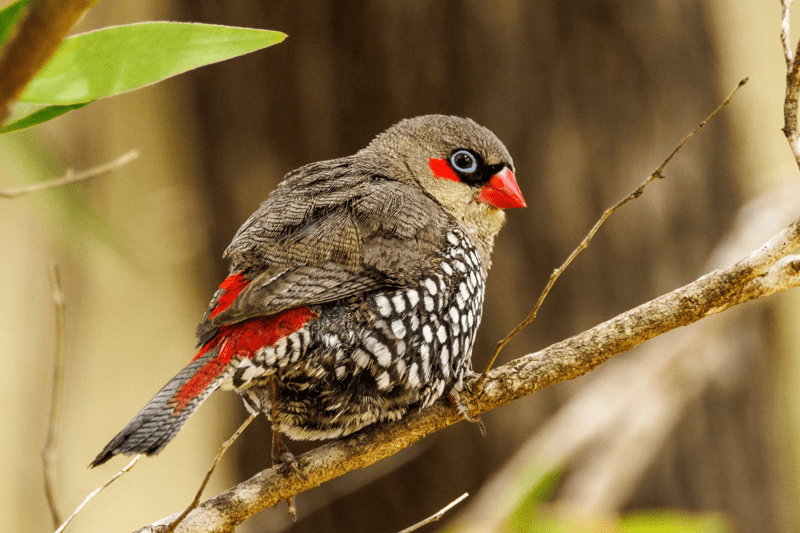
Red-eared Firetail
Western Bristlebird
Western Shrike-tit
Western Spinebill
Carnaby's Black-Cockatoo
Western Rosella
Leader
Max Breckenridge
Primary Leader
Australian bird guide and conservationist with deep field experience, known for his sharp ear, adventurous spirit, and dedication to bird protection.
Read MoreItinerary
Click here to download the 2026 itinerary PDF
Day 1
Travel to Australia
Depart the U.S. for Australia, crossing the International Date Line en route to Western Australia.
Day 2
In Transit
Continue international travel toward Australia, with routing through Sydney, Dubai, Doha, or another connecting city depending on flight arrangements.
Day 3
Arrival in Perth
Arrive in Perth, transfer to the Pan Pacific, and gather for lunch and orientation.
Begin birding at one of Perth’s suburban wetlands, where possibilities include Freckled Duck, Musk Duck, Blue-billed Duck, crakes, and roosting Tawny Frogmouth.
Day 4
Perth to Narrogin
Travel southeast through the Darling Range, with a birding stop at Ellis Brook Valley Reserve for Western Australian endemics such as Red-eared Firetail, White-breasted Robin, Red-winged Fairywren, Red-capped Parrot, and Western Rosella.
Continue toward Narrogin, watching for flocks of Carnaby’s, Baudin’s, and Red-tailed black-cockatoos.
Day 5
Dryandra State Forest
Spend the day in Dryandra State Forest, a beautiful wandoo woodland oasis and one of the best places to seek the endangered, day-active Numbat.
Look for standout birds including Painted Buttonquail, Square-tailed Kite, Regent Parrot, Western Shrike-tit, Blue-breasted Fairywren, and Western Thornbill.
Watch for native mammals such as Short-beaked Echidna, Brush-tailed Bettong, Tammar Wallaby, Western Brush Wallaby, and Western Gray Kangaroo.
Day 6
Dryandra to Albany
Enjoy a final morning birding session in Dryandra before traveling south and west through spring landscapes toward Albany.
Arrive in Albany, gateway to Western Australia’s rugged southern coast, with a chance to scan King George Sound for Southern Right Whale.
Day 7
Two Peoples Bay Nature Reserve
Begin exploring Two Peoples Bay Nature Reserve and nearby coastal heath, with a focus on the legendary Noisy Scrub-bird.
Search for other highly localized specialties including Western Bristlebird and Western Whipbird.
Day 8
Albany Area Birding
Continue birding the coastal heath, banksia woodland, granite outcrops, and sedge-bordered lakes around Albany.
Look for Southern Emuwren, Western Fieldwren, White-breasted Robin, Red-eared Firetail, and the elusive Honey-possum.
Day 9
Stirling Range and Surrounding Habitats
Visit additional birding areas such as Corackerup Nature Reserve, Stirling Range National Park, and Albany wetlands.
Search for rare and localized species including Mallefowl, Southern Scrub-Robin, Purple-gaped Honeyeater, Hooded Plover, and Elegant Parrot.
Day 10
Albany to Pemberton
Depending on weather, visit Torndirrup National Park to watch for seabirds such as Yellow-nosed Albatross, Great-winged Petrel, and Australian Gannet from the dramatic Southern Ocean coastline.
Check shorebird roosts around Shoal Bay for the vulnerable Fairy Tern before continuing west into the towering karri forests near Pemberton.
Watch for Western Rosella, Red-capped Parrot, White-breasted Robin, and Red-tailed Black-Cockatoo around the forested lake setting.
Day 11
Pemberton to Perth via Cape Leeuwin and Cape Naturaliste
Travel toward Cape Leeuwin and Augusta at the southwestern tip of the continent, searching coastal areas for Rock Parrot, Hooded Plover, Pacific Gull, and Pied and Sooty oystercatchers.
Visit Lake McLarty Nature Reserve if time allows, an important wetland for waterbirds, migrant shorebirds, Freckled Duck, and Australian Shelduck.
Return to Perth for a final evening and dinner together.
Day 12
Departure from Perth
Transfer to Perth Airport for the scheduled morning flight to Sydney, with onward international connections later in the day.
Travelers continuing on Grand Australia Part I will be provided with a prepaid overnight reservation in Sydney before that tour begins.
What’s Included
Accommodations & Dining
Settle into comfortable accommodations with modern amenities. Enjoy freshly prepared meals that highlight local flavors and international favorites, with consideration for any dietary needs.
Guided Services & Gratuities
Experience each destination with the help of Leaders who share history, culture, and wildlife insights. Gratuities for crew and local guides are included, ensuring seamless service without extra concerns; tipping for your Leaders is discretionary and not included.
Active Essentials
Every tour includes the core elements that make our field experiences possible so you can stay engaged with a range of activities. All outings include the necessary equipment and full safety support, making it easy to join at your own pace.
Transportation & Logistics
We coordinate every transfer, from airport pickup to port boarding. Whether traveling by bus, boat, or charter, our team ensures smooth connections and stress-free travel.
FAQs
Similar Trips
Loading calendar...