


Departure Date: January 10 - 17, 2026
Compiled By: David Ascanio
Trip Leaders: David Ascanio, Local Leader
Toll Free: 800.328.8368
Phone: 512.328.5221



A Birding Adventure in the Llanos of Colombia 1/10/2026-1/17/2026

A Birding Adventure in the Llanos of Colombia
https://ebird.org/tripreport/467696
Co-leader: Daniel Camilo Orjuela.
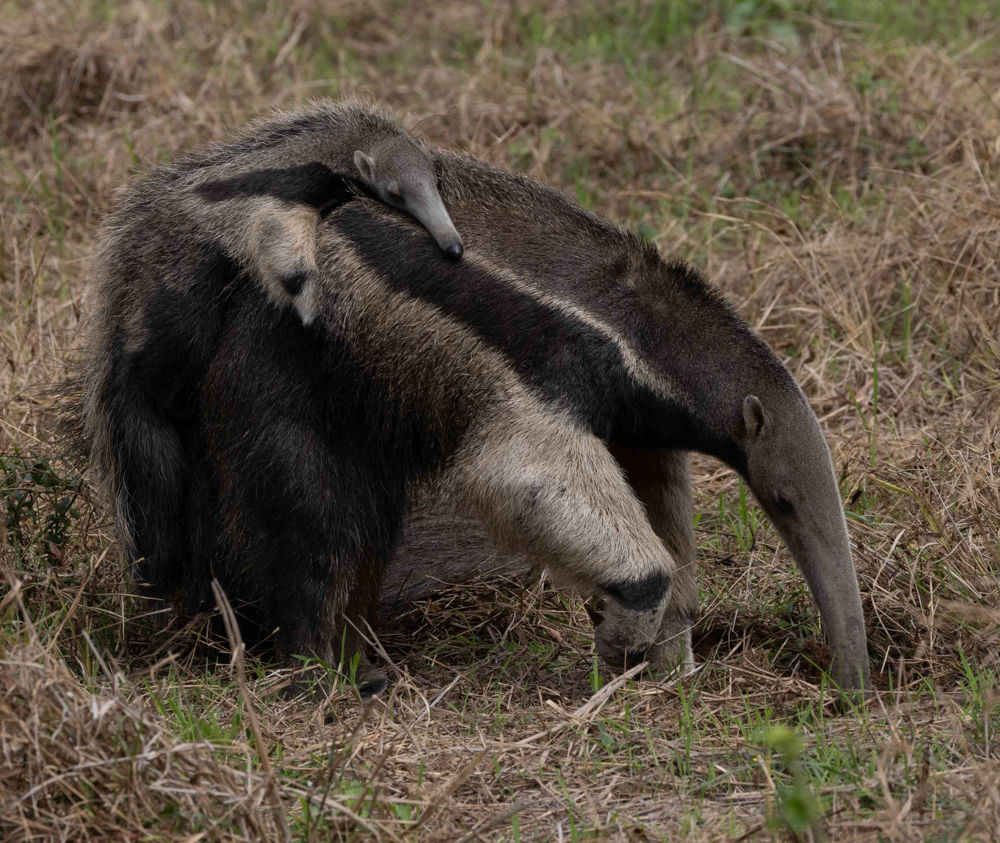
Giant Anteater. Photo: D. Ascanio.
Between 1799 and 1804, the great naturalists Alexander von Humboldt and Aimé Bonpland explored more than 1500 miles of the Orinoco River by canoe. As they journeyed across the Llanos, or Eastern Plains, they reported impressive numbers of caimans and crocodiles, massive waterbirds, and large groups of Orinoco Goose. They also conducted the first studies of electric eels. Their work, a true milestone in the history of scientific investigation, has been retold in historical accounts, legends, and novels. Inspired by the journey of Humboldt and Bonpland, we flew to Yopal, capital of the Colombian Llanos, where we found ourselves surrounded by beauty and mystery on the tour of a lifetime.
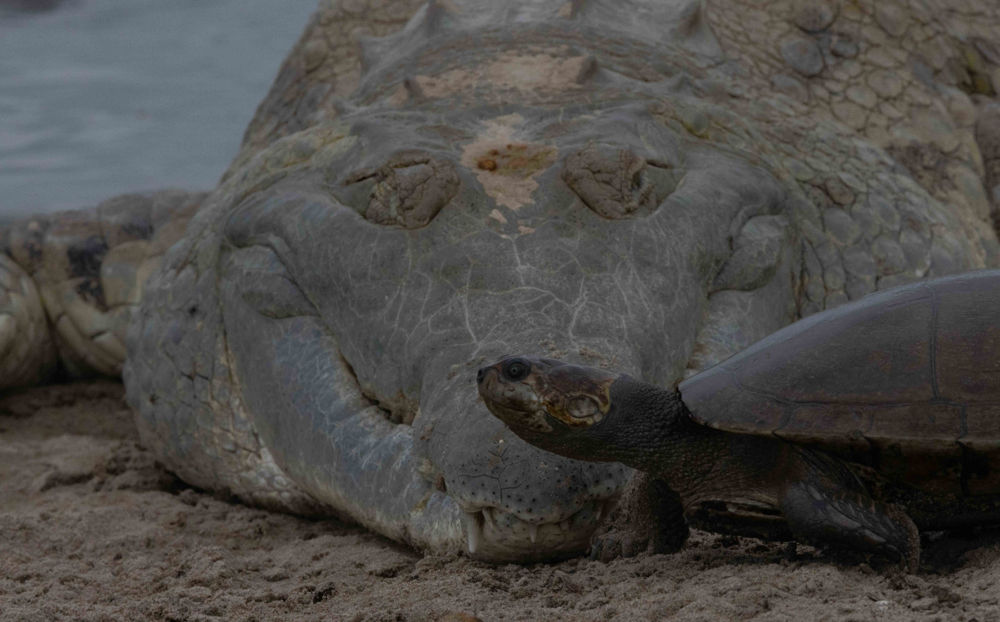
Orinoco Crocodile. Photo: D. Ascanio.
Once in Yopal, we made the short drive to Casa Cumbres Lodge, where we would spend the night before heading into the heart of the Colombian Llanos. The lodge is part of Cumbres Borrascosas, a farm whose name translates the title of the novel Wuthering Heights. The farm is home to a great variety of birds of the Andean foothills. Our first short afternoon outing was an opportunity to see the Violaceous Jay, Purple-throated Euphonia, Little Woodpecker, and Blue Dacnis. The next day provided an even richer birding experience; among our highlights were a perched male Ruby-topaz Hummingbird, Scaled Piculet, Bright-rumped Attila, and tanagers including White-lined, White-shouldered, Silver-beaked, Palm, Burnished-buff, and the diminutive Chestnut-vented Conebill.
Looking forward to experiencing ranch life, we headed to Paz de Ariporo; from there, we made a detour to Mata de Totumo and on to the famous Reserva Casanare and Juan Solito Lodge. It was a real challenge not to stop constantly along these roads. Drying ponds offered large concentrations of Jabirus, several Wood Storks, and dozens of egrets and herons. The real treat was getting to see most of Colombia’s ibis species: the Bare-faced, Buff-necked, Sharp-tailed, Green, Scarlet, and White.
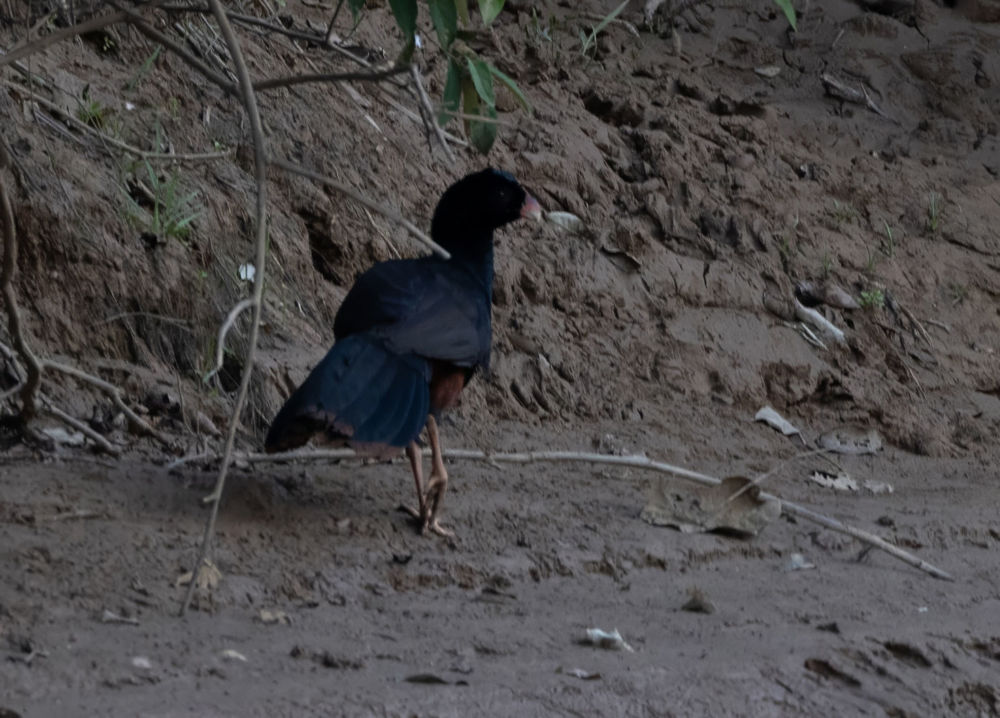
Crestless Curassow. Photo: D. Ascanio.
Once at the ranch, we enjoyed a superb lunch followed by a short break, after which we reconvened to bird the grounds around the main house. Bird activity was ceaseless, and we were able to enjoy the near-endemic Pale-headed Jacamar and White-bearded Flycatcher, as well as pairs of Bicolored Wrens and icterids including the Giant Cowbird and Yellow-rumped Cacique. The day ended with the evening serenade of a Double-striped Thick-knee and the loud duets of a pair of Gray-cowled Wood-Rails.
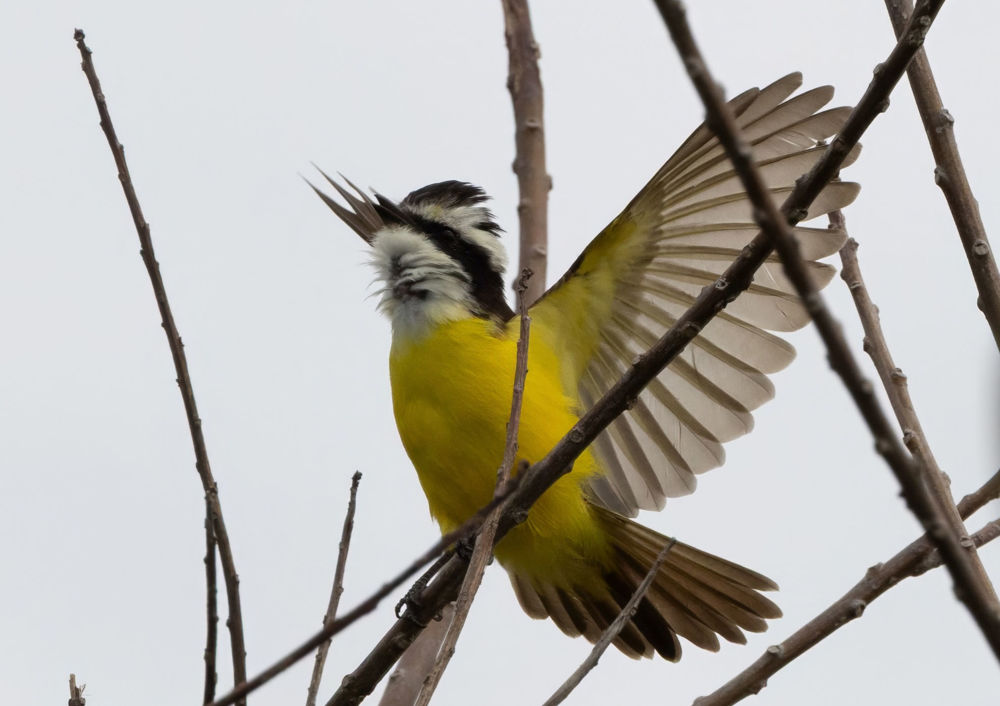
White-bearded Flycatcher. Photo: D. Ascanio.
Three full days followed where we explored scrubby vegetation, gallery forest, mata woodland, wetlands, sand dunes and grasslands. Each habitat provided special moments and here are some of them:
SCRUBBY VEGETATION
This habitat was rich in insectivorous species and allowed us to see Smooth-billed and Groove-billed anis as well as the Two-banded Puffbird, Northern White-fringed Antwren, Black-crested Antshrike, Plain Thornbird, Black-faced Tanager, Rufous-tailed Jacamar, Common Tody-Flycatcher, and Pale-eyed Pygmy-Tyrant. Ruddy and Blue ground doves and Rufous-vented Chachalacas also made their presence known.
GALLERY FOREST
Perhaps the most interesting of the habitats we visited, these forests were home to beauties such as the Wire-tailed Manakin and the drab Fuscous Flycatcher. Birding the forest was challenging, as this had been a wet year and birds weren’t as active as in years before. But those same weather conditions allowed us to record a new species for the ranch, the Large-headed Flatbill. We also found the threatened Crestless Curassow and the ubiquitous Hoatzin.
MATA WOODLAND
This special habitat is unique to the Llanos, consisting of a group of trees in the middle of a grassland with no apparent reason. The buildup of sediment during the flooded season allows higher ground to accumulate mud and eventually to form islands, which encourage the growth of higher vegetation and, eventually, trees. This habitat serves as a refuge for wildlife escaping the flooded areas, and it also provides a place for the Llaneros to build their houses safe from rising water even at the peak of the rainy season. In the matas of the ranch, we found the Dwarf and Striped cuckoos, Venezuelan Troupial, Tropical Screech-Owl, and Aplomado Falcon. A special treat was a roosting Great Potoo.
WETLANDS
Here in the most beautiful and poetic of Llanos habitats, we saw pairs of Orinoco Goose and their goslings, hundreds of whistling-ducks, pairs of the bizarre Horned Screamer, shorebirds, Capped Herons, Brazilian and Blue-winged teals, Pied Plover, and various ibis species. The scenery was breathtaking, enhanced by two species of terns in flight and Capybaras rushing to the water.
SAND DUNES
The Orinoco basin is the site of both active sand dunes and “fossilized” dunes. We enjoyed nesting Burrowing Owls and a dozen ground-roosting Nacunda Nighthawks—this is the preferred habitat for the nighthawk, a local migrant species. Groups of adult and juvenile Oriole Blackbirds were hunting the ground for insects here.
GRASSLANDS
This was one of the most extensive habitats on the reserve. Yellow-browed Sparrows and Southern Lapwings were abundant. In the taller grass, we recorded both Red-breasted and Eastern meadowlarks. In the shorter grass, the Double-striped Thick-knee, Ruddy-breasted Seedeater, Whistling Heron, and Crested Caracara were observed.
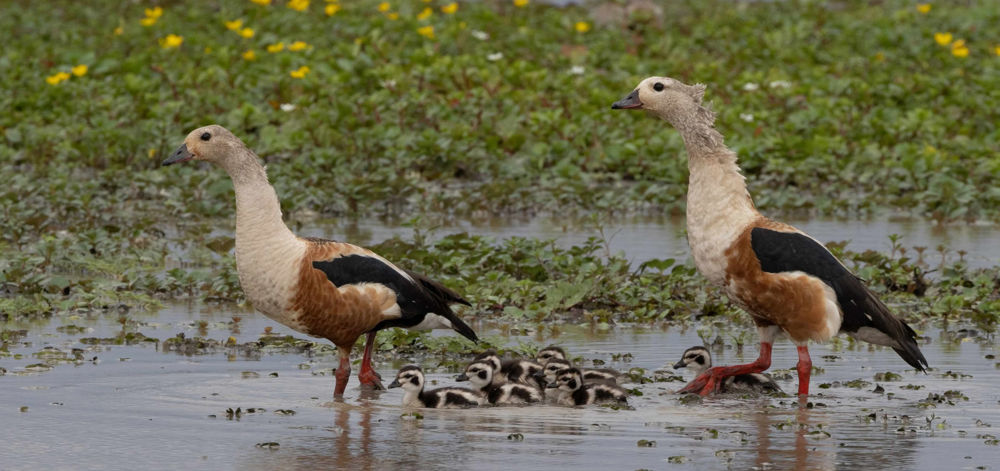
Orinoco Goose. Photo: D. Ascanio.
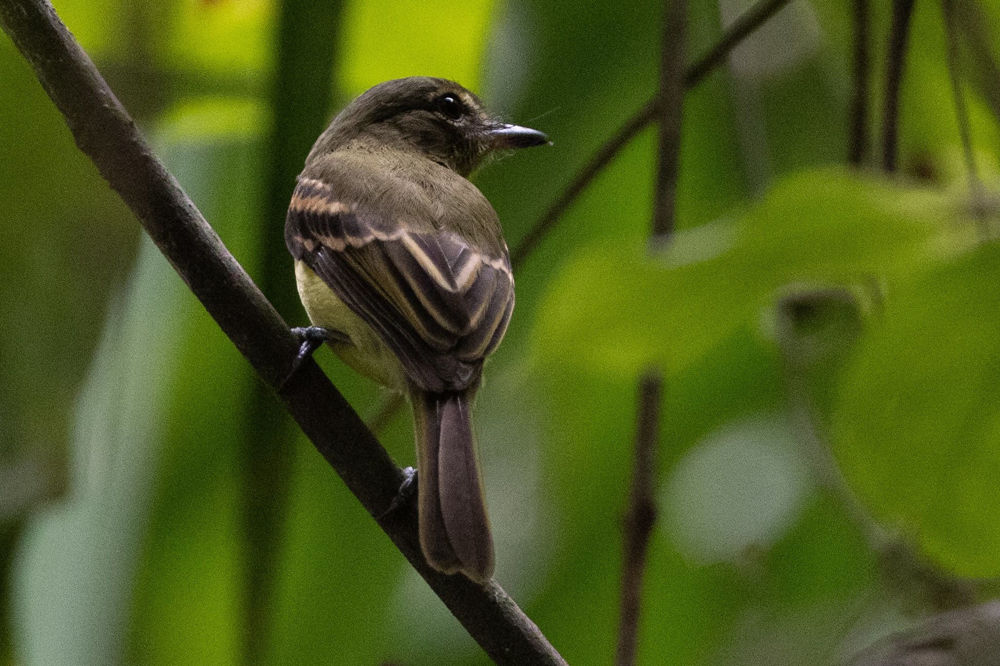
Large-headed Flatbill. Photo: D. Ascanio.
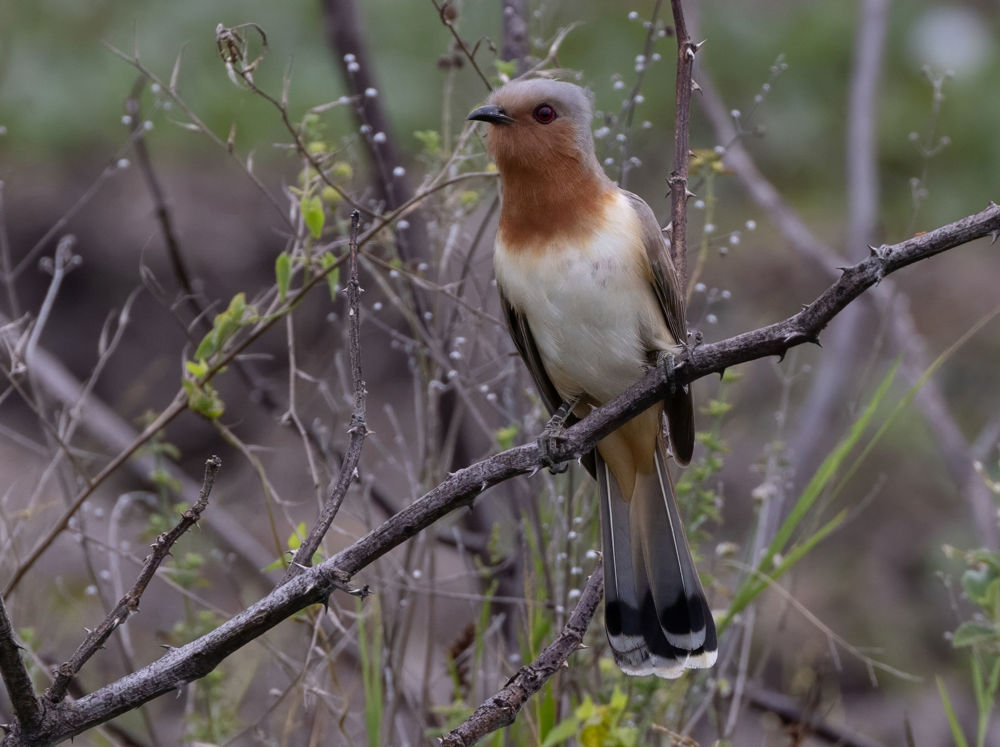
Dwarf Cuckoo, Photo: D. Ascanio.
Our visits to these habitats proved just how rich and diverse the homogenous-seeming Llanos really are. We learned not only about the wildlife but also about the conservation project behind this amazing reserve. And meeting the Llaneros and enjoying their view of life, their music, and their great sense of humor was a big bonus for all of us.
On the last evening, we watched the horizon turn glistening red, orange, and yellow as the sun set and dozens of Scarlet Ibis flew to the roost. Purple Gallinules and Green Ibis called, and a Rufescent Tiger-Heron mooed like a cow. It was magical.
Our trip had already surpassed our highest expectations, and then came the icing on the cake: on our way back to Yopal, we encountered a female Giant Anteater with a young one on her back. It was a sight just like what the great explorers of the Plains of the Orinoco might have experienced more than two centuries ago.
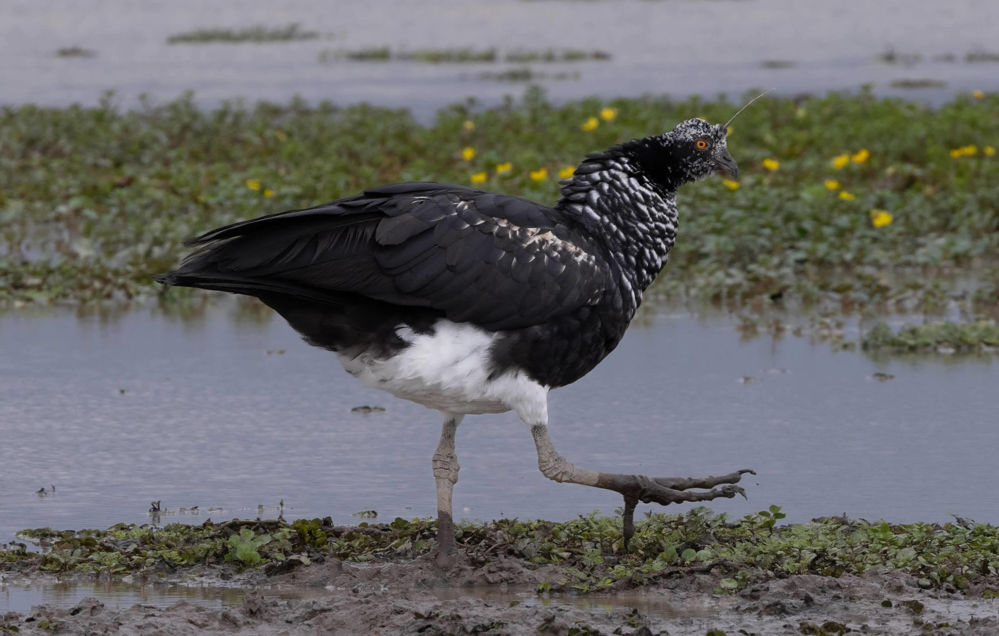
Horned Screamer, Photo: D. Ascanio.
A complete list of the birds recorded on our tour can be found at: https://ebird.org/tripreport/467696
Photo gallery: https://www.flickr.com/photos/davidascanio/albums/72177720332170580

