Departure Date: December 27, 2025 - January 17, 2026
Compiled By: Max Breckenridge
Trip Leaders: Max Breckenridge
Toll Free: 800.328.8368
Phone: 512.328.5221



Antarctica, South Georgia & the Falkland Islands 12/27/2025-1/17/2026

Antarctica, South Georgia & the Falkland Islands
https://ebird.org/tripreport/455326
A visit to Antarctica is special for countless reasons, even more so when it is one’s first time, as it was for all of us who assembled at the lovely Arakur Resort & Spa. The hotel is perfectly situated overlooking the scenic Bahia de Ushuaia and the eclectic port city that lines its northern shore.
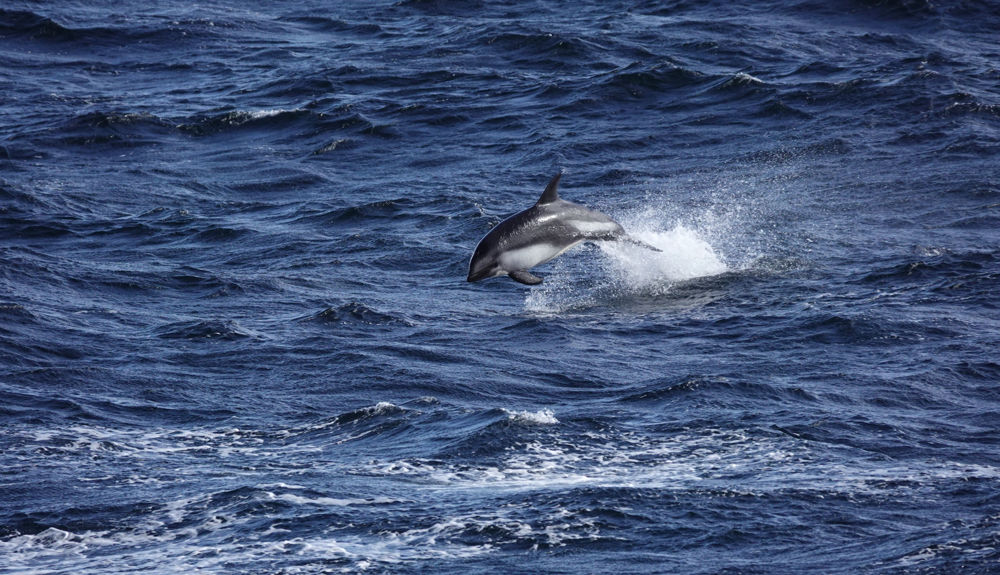
The following day we were set to board our ship and home for the next 18 nights, the MS Seaventure, but first beckoned the elfin beech forests of the beautiful Tierra del Fuego National Park. In the company of local guide, Marcelo, and under crystal-blue skies, we spent a very enjoyable morning in the park racking up over 30 species. Highlights included a pair of Magellanic Woodpeckers foraging terrestrially for worms; a point-blank Magellanic Snipe; Andean Condor and Black-chested Buzzard-Eagle overhead; confiding Crested Caracara and Patagonian Sierra Finch looking for handouts at lunch; Great Grebe with chicks; and a pair of gorgeous Black-necked Swans. We even had time to visit the local dump before boarding the ship, where the pretty White-throated Caracara was seen well. After settling in onboard and meeting some of the wonderful crew and staff, we began cruising eastwards along the Beagle Channel, heading for open ocean and the Drake Passage. Chilean Skua, Southern Giant-Petrel, Black-browed Albatross, South American Tern, Kelp and Dolphin gulls, and hundreds of Imperial Cormorants were all duly noted from the very spacious and pleasantly heated aft deck as we cruised the channel. A few Magellanic Penguins, Dusky Dolphins, and even Sei Whales were also spotted in the glassy conditions, with a gorgeous fjordland backdrop of snow-capped, forested peaks.
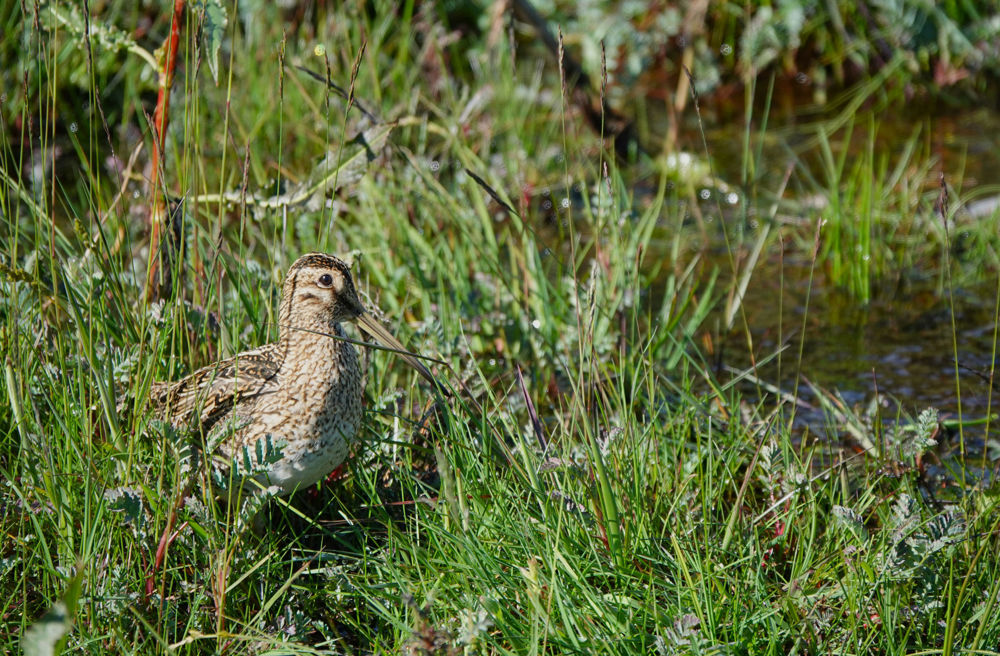
Magellanic Snipe in Tierra del Fuego NP (C) Max Breckenridge
The Drake Passage graciously lived up to its alternative name during our voyage—the “Drake Lake.” We motored southwards over the next two days and nights in very pleasant conditions, making for a gentle start to our time onboard. Seabirding from the back deck was productive, with a good array of species noted, including Northern and Southern Royal, Snowy, Light-mantled, and Gray-headed albatrosses; Sooty Shearwater; Wilson’s and Black-bellied storm-petrels; Antarctic Prion; Southern Fulmar; and Pintado, White-chinned, and Blue petrels. Some of us were even fortunate enough to observe the rarely encountered Strap-toothed Beaked Whale.
We first sighted the “White Continent” on New Year’s Eve and, to our surprise, discovered that we would be making our first outing that same evening with a Zodiac cruise around the Melchior Islands. It was a memorable affair, with our first Chinstrap and Gentoo penguins; a Weddell Seal hauled out on the ice; Snowy Sheathbills hanging out around an old Argentine base station; and champagne in the Zodiacs!
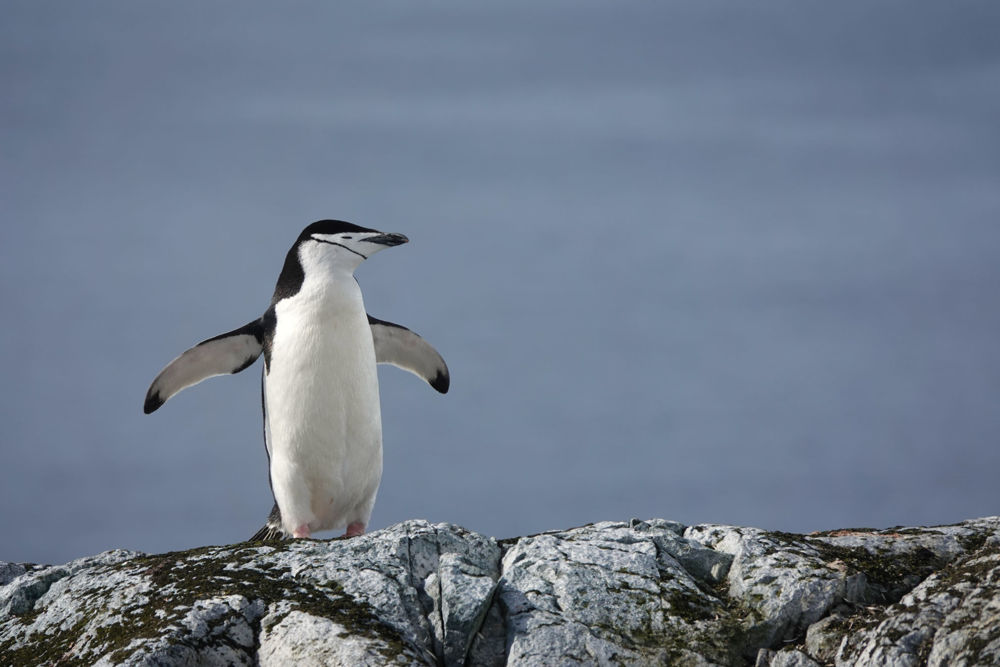
Chinstrap Penguin (C) Max Breckenridge
The first day of 2026 dawned after an eventful night for the crew, who had attended a “PAN-PAN” distress call, transferring an injured Russian sailor from a small yacht onboard the Seaventure and then onto a sister ship returning to Ushuaia. Most of us, however, slept through the night, blissfully unaware, and awoke to clear blue skies over the Gerlache Strait, motoring towards Cuverville Island. Here, we had our first landing amongst an impressive colony of Gentoo Penguins. The setting was amazing, with towering icy peaks surrounding us and calm waters offshore brimming with small icebergs. More Weddell Seals allowed close studies, and some of us even had great views of a Leopard Seal hauled out on an iceberg as we approached Cuverville. Our first Humpback Whales certainly made their presence felt, and we would rarely lose that presence over the following week. In the afternoon, we made our first landing on the mainland of the continent in Paradise Bay at another Argentine base—Almirante Brown.
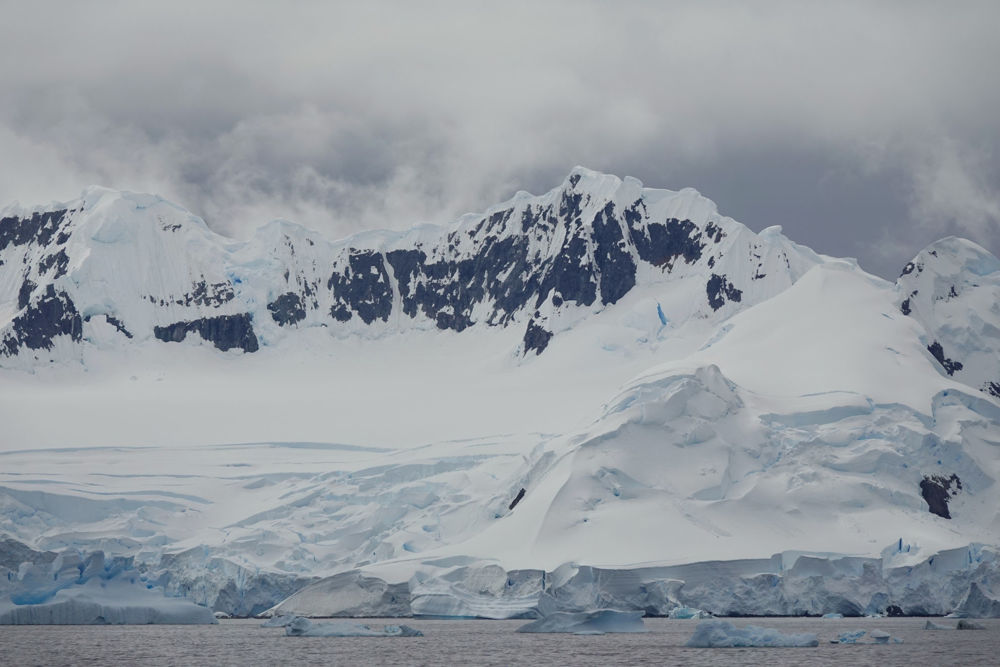
We continued to explore more locations along the Antarctic Peninsula over the next two full days. The scenery and wildlife were continually impressive, and the weather fantastic. We Zodiac cruised amongst the icebergs and breaching Humpback Whales at Charlotte Bay; wandered through the raucous Chinstrap Penguin colony at the aptly-named Palaver Point; and landed at Half Moon Island with jaw-dropping views over to Livingstone Island—impressive ice-laden peaks towering over cold blue waters under a dramatically clear sky—something the crew onboard said they had never witnessed here before. That same afternoon we were treated to another rare experience when we encountered a huge drift of pack ice that had been pushed out of the Weddell Sea into the Bransfield Strait by winds and currents. Remarkably, in over 2,000 ft of open ocean, we were able to Zodiac cruise amongst the pack ice—another highly memorable experience, being able to appreciate the calm and silence as the pack occasionally reacted to the faint swell rolling through. To cap it off, our first Snow Petrel of the trip casually glided right over our Zodiac before disappearing amongst the icy backdrop.
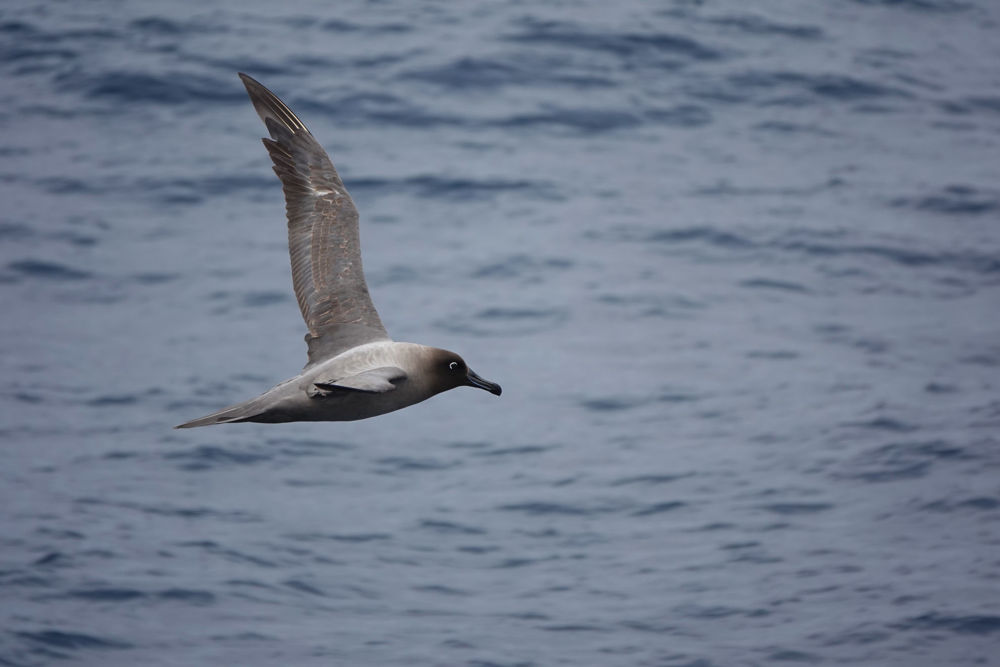
Light-mantled Albatross (C) Max Breckenridge
From the peninsula we began to trace Shackleton’s escape route across the southern edge of the Drake Passage towards Elephant Island. Arriving here in the early afternoon, we were once again treated to uncharacteristically calm conditions and were privileged enough to be able to Zodiac cruise around the infamous Point Wilde (where most of Shackleton’s crew were marooned for many frigid months on the tiniest scrap of beach imaginable).
The time had come to depart Antarctic waters and make for South Georgia. There was some great seabirding on offer during our two-day crossing, but the undoubted highlight came on the morning of the second day when we were able to track down iceberg B15ab. While not as famous as A23, the scale of this iceberg still proved difficult for us to comprehend. We cruised between two giant sections, close to the edge of one that towered above our ship. The sea was covered with brash ice and larger chunks of ice that we could observe and hear carving, and there were birds everywhere—hundreds of Pintado Petrels and Antarctic Prions swarmed around the ship, while Snow Petrels and giant-petrels arced through the throngs of other birds. It was incredible to witness this floating ecosystem and all the life it had attracted.
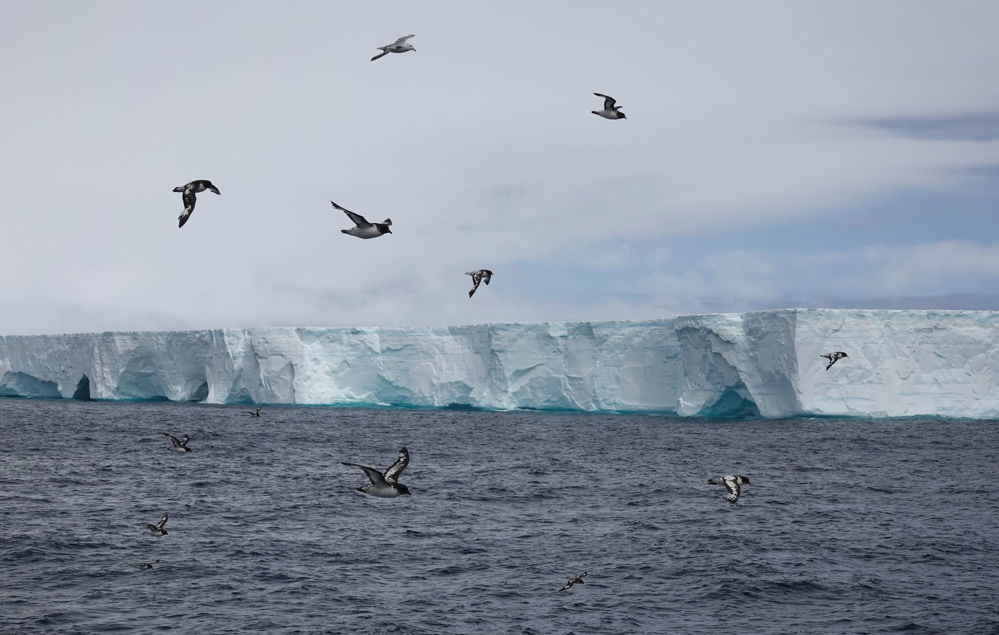
Pintado Petrels and Southern Fulmar at B15ab (C) Max Breckenridge
We spent an unforgettable four days exploring South Georgia. From the eastern end of this savagely beautiful island, we worked our way westwards along the north coast, landing and cruising at a number of different and varied sites. Each location left a different impression, and the sheer scale of the wildlife was simply breathtaking. Our first landing at Gold Harbour was highlighted for many by their first experience of being amongst a massive colony of regal King Penguins, but for me, encountering the infamous South Georgia Pipit (famous for being the most southerly passerine and its impressive rebound after the removal of rats on the island) was most memorable. That same day, at St. Andrew’s Bay, we witnessed another spectacularly huge colony of King Penguins and a beachfront strewn with groups of Elephant and Antarctic Fur seals. The next day was bookmarked by a Zodiac cruise in balmy conditions at Hercules Bay, where our first real Macaroni Penguins delighted, and in the afternoon by a highly anticipated visit to Grytviken. Here we toasted to “the boss” Shackleton at the graveyard, which looks over the old remains of a once bustling whaling port that bears the appearance of a place abandoned almost overnight. Most of us visited the wonderfully restored church, post office, and museum, all the while sharing the little streets with penguins and fur seals while huge rusting machinery and vats loomed over—telling reminders of a more utilitarian past in this part of the Southern Ocean.
Our next two days on South Georgia were spent exploring Fortuna Bay, where young Brown Skuas and giant-petrels showed well, and some embarked on a hike over to Stromness to trace Shackleton’s steps back to civilization. Salisbury Plain lived up to its reputation the next morning—a complete spectacle of wildlife, with wonderfully close views of the giant King Penguin colony here amongst the tussock grass. From here, we cruised further west to our final site on South Georgia—Elsehul. On the way we encountered our first South Georgia Diving-Petrel and several huge rafts of Antarctic Prions probably numbering well over 100,000 birds. Elsehul provided a remarkable sendoff to our time in South Georgia, with touching-distance views of Gray-headed Albatross from the Zodiac; cliffs covered in nesting albatross; and even a Southern Right Whale that casually surfaced right beside our Zodiac!
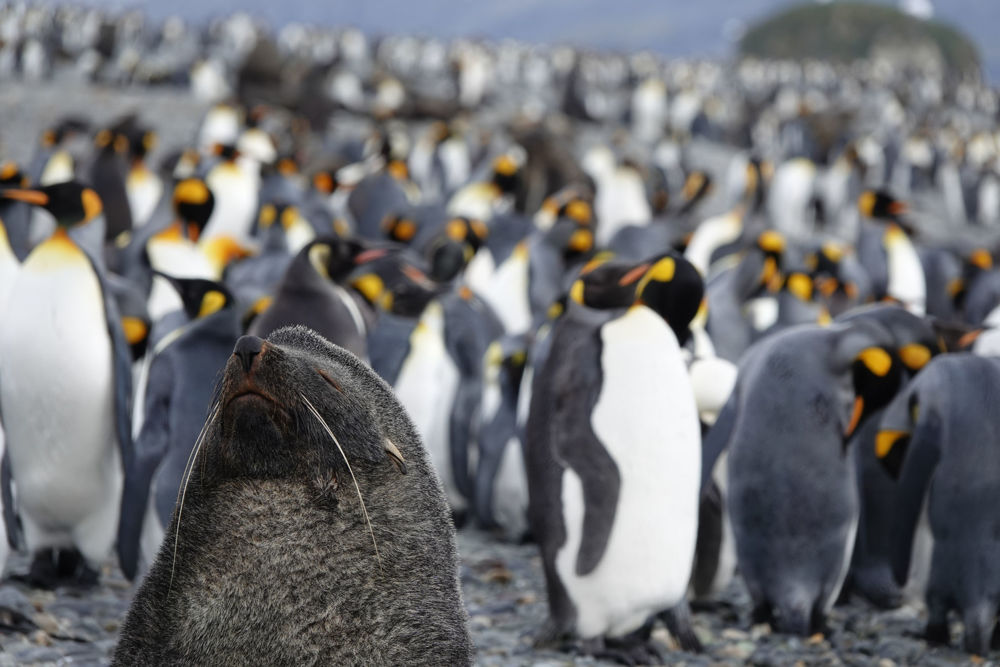
Antarctic Fur Seal and King Penguins at South Georgia (C) Max Breckenridge
From South Georgia, we ventured westwards to our final archipelago—the Falkland Islands. Sea conditions en route were once again pleasingly calm, almost bordering on tropical, and so we reached the port of Stanley on the third morning since leaving South Georgia. Here we were finally met by the anticipated wind typical of these latitudes, with 40–60 knot gusts making for an exhilarating Zodiac transfer from ship to shore—it was at last a decent test of all our waterproof gear! Once ashore, we enjoyed a quick trip to the nearby Gypsy Cove, where the diversity of terrestrial birdlife made for a nice change—confiding Grass Wren; and Falkland Steamer-Duck, Two-banded Plover, Dark-faced Ground-Tyrant, and White-bridled Finch, to name a few. The afternoon was spent cruising along the southern edge of the Falklands to avoid the brunt of the northerly winds. New seabirds provided a nice accompaniment with Soft-plumaged Petrel and Great and Sooty shearwaters enjoying the breeze.
Our final shore landings of the trip were both on New Isle on the western side of the Falklands. We began the day motoring into sheltered waters, but not before encountering large numbers of Slender-billed Prions and our first Sei Whales since leaving the Beagle. Both landings were wonderfully satisfying, with enjoyable walks across grassy moors in beautifully sunny and warm conditions to two different breeding colonies of majestic Black-browed Albatross, and comical Western Rockhopper Penguins, along with hundreds of Imperial Cormorants. These sites, situated on cliff edges overlooking the sea, provided a spectacular setting as birds came and went, either by graceful soaring flight, or intrepid jumping and scaling of rocks from the crashing waves below. Around the grassy sections of the island, we encountered a great diversity of waterfowl with flocks of Upland Geese and smaller numbers of Ruddy-headed foraging, and Kelp Geese lining the shores of the tranquil coves. The confiding Striated Caracara were also observed, as were stunning Red-breasted Meadowlark, Blackish Oystercatcher, and close looks at Magellanic Penguins.
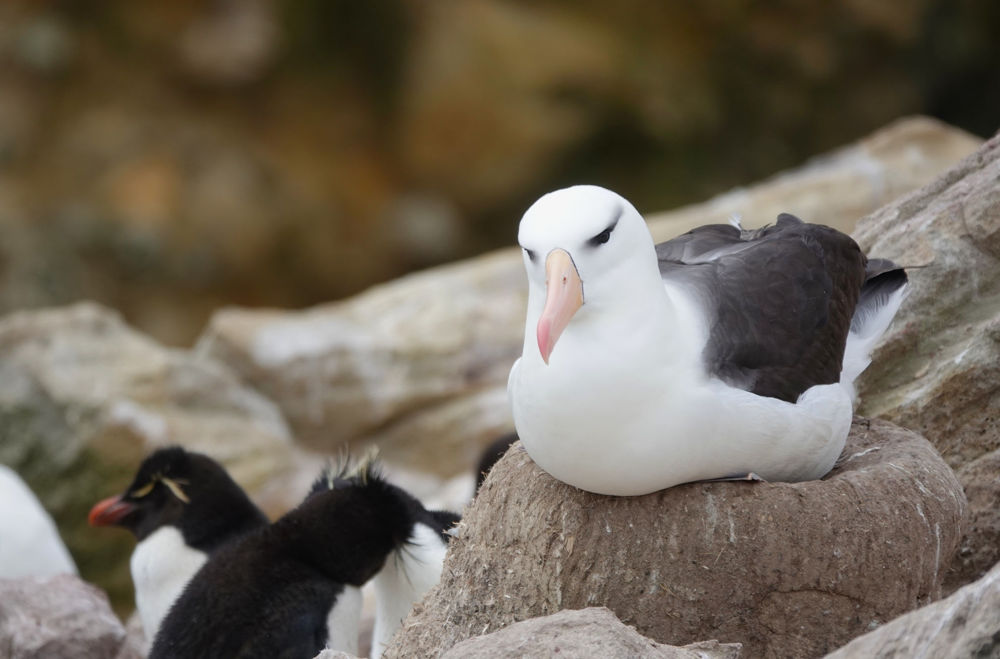
Black-browed Albatross and Western Rockhopper Penguins at New Isle (C) Max Breckenridge
It was with some sadness that we departed the Falklands that evening, knowing that our last short crossing awaited and our final port of Ushuaia shortly after. An impressive abundance of Black-browed Albatross and Sooty Shearwaters highlighted the final part of our cruise into the Beagle Channel, and we added our last new seabird of the trip with a single Manx Shearwater. A peaceful night was spent aboard the Seaventure in the calm waters of the Beagle Channel, and we enjoyed a very merry sendoff from the crew, including a wonderful final recap and dinner. The next morning we disembarked during the short window that the ship could dock and were soon on our separate ways, but all still connected by an incredible trip in exceedingly good company and with a lifetime of memories.
A complete list of the birds recorded on our tour can be found at: https://ebird.org/tripreport/455326
Description for the next departure of this tour.
Max Breckenridge's upcoming tour schedule.
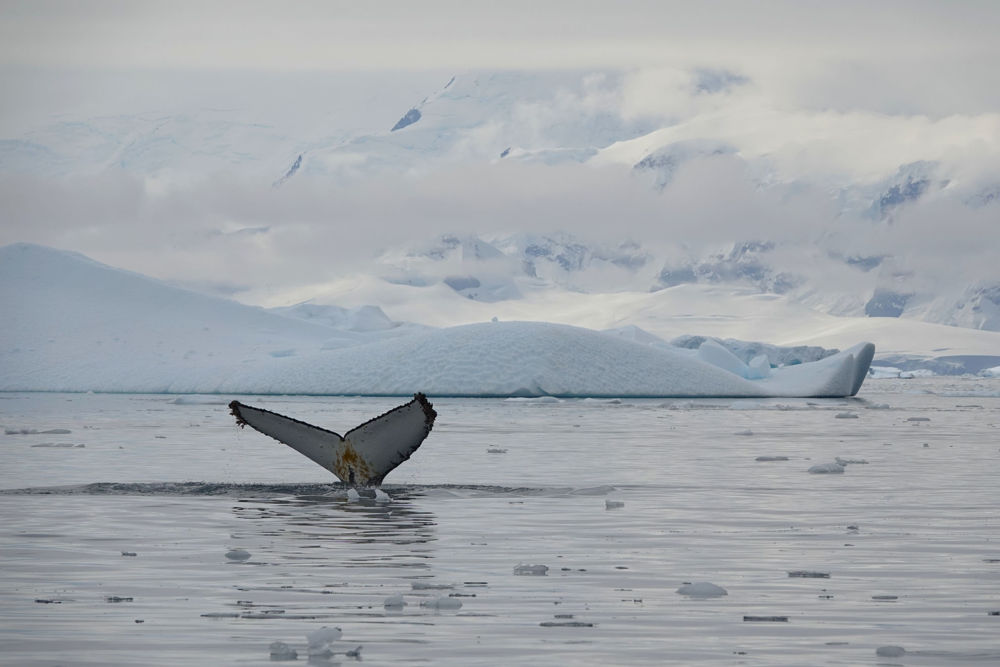
Humpback Whale fluke in Paradise Bay (C) Max Breckenridge
ITINERARY:
Day 1 – Dec 29, 2025: (AM) Tierra Del Fuego NP; (PM) Ushuaia landfill, aboard M/S Seaventure, Beagle Channel (at sea), Drake Passage (at sea).
Day 2 – Dec 30, 2025: (AM/PM) Drake Passage (at sea).
Day 3 – Dec 31, 2025: (AM) Drake Passage (at sea); (PM) Antarctica – Melchior Islands (Zodiac cruise).
Day 4 – Jan 1, 2026: (AM) Gerlache Strait (at sea); (PM) Cuverville Island (landing), Paradise Bay – Almirante Brown Station (landing).
Day 5 – Jan 2, 2026: (AM) Charlotte Bay (Zodiac cruise); (PM) Two Hummock Island – Point Palaver (landing).
Day 6 – Jan 3, 2026: (AM) Half Moon Island (landing); (PM) Bransfield Strait – pack ice (Zodiac cruise).
Day 7 – Jan 4, 2026: (AM) Drake Passage (at sea); (PM) Elephant Island – Point Wilde (Zodiac cruise).
Day 8 – Jan 5, 2026: (AM/PM) Scotia Sea (at sea)
Day 9 – Jan 6, 2026: (AM) Scotia Sea – iceberg B15ab (at sea); (PM) Scotia Sea (at sea)
Day 10 – Jan 7, 2026: (AM) South Georgia – Gold Harbour (landing); (PM) South Georgia – St Andrew’s Bay (landing).
Day 11 – Jan 8, 2026: (AM) South Georgia – Hercules Bay (Zodiac cruise); (PM) South Georgia – Grytviken (landing).
Day 12 – Jan 9, 2026: (AM) South Georgia – Fortuna Bay (landing); (PM) South Georgia – Stromness (landing)
Day 13 – Jan 10, 2026: (AM) South Georgia – Salisbury Plain (landing); (PM) South Georgia – Elsehul (Zodiac cruise)
Day 14 – Jan 11, 2026: (AM/PM) South Atlantic Ocean (at sea)
Day 15 – Jan 12, 2026: (AM/PM) South Atlantic Ocean (at sea)
Day 16 – Jan 13, 2026: (AM) The Falklands – Stanley, Gypsy Cove; (PM) The Falklands (at sea)
Day 17 – Jan 14, 2026: (AM/PM) The Falklands – New Isle
Day 18 – Jan 15, 2026: (AM) South Atlantic Ocean (at sea); (PM) Beagle Channel (at sea)
Day 19 – Jan 16, 2026 (AM) Ushuaia; (PM) Departures.
MAMMALS:
RABBITS & HARES (LEPORIDAE)
European Rabbit (I) (Oryctolagus cuniculus) – Singles observed on New Island in the Falkland Islands.
EARED SEALS (OTARIIDAE)
South American Fur Seal (Arctocephalus australis) – Tens observed in the Beagle Channel and around the Falkland Islands.
Antarctic Fur Seal (Arctocephalus gazella) – Many hundreds/thousands observed around South Georgia. A few individuals also observed at sea and on Elephant Island.
South American Sea Lion (Otaria flavescens) – Several individuals observed around Stanley in the Falkland Islands.
SEALS (PHOCIDAE)
Leopard Seal (Hydruga leptonyx) – Several individuals observed during the trip at different points, but only seen well by most on one occasion while in Antarctica.
Weddell Seal (Leptonychotes weddellii) – Excellent looks at multiple individuals on ice and onshore in Antarctica.
Crabeater Seal (Lobodon carcinophaga) – Just a single confirmed sighting of an individual on ice floe in the Gerlache Strait.
Southern Elephant Seal (Mirounga leonina) – Tens/hundreds observed onshore at most landings on South Georgia.
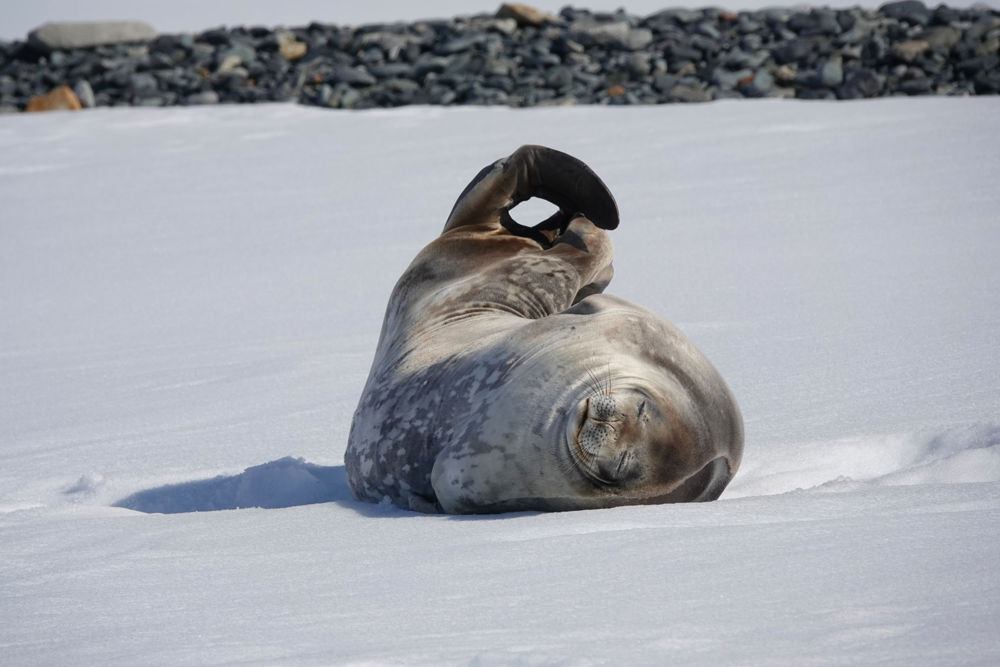
Weddell Seal at Half Moon Island (C) Max Breckenridge
WHALES (BALAENIDAE)
Southern Right Whale (Eubalaena australis) – A single animal gave us a most memorable experience when it spent almost half an hour at the surface in close proximity to our Zodiac in the calm waters of Elsehul, South Georgia.
RORQUALS (BALAENOPTERIDAE)
Sei Whale (Balaenoptera borealis) – Small pods/singles observed in the Beagle Channel and in sheltered seas around the Falkland Islands.
Fin Whale (Balaenoptera physalus) – Several small pods observed at sea around the northern Antarctic Peninsula, Scotia Sea, and South Atlantic between South Georgia and the Falkland Islands.
Humpback Whale (Megaptera novaeangliae) – Abundant in waters around the Antarctic Peninsula and South Georgia. Tens observed most days of the trip, with some spectacular observations of breaching, spy-hopping, flukes, and lunge-feeding.
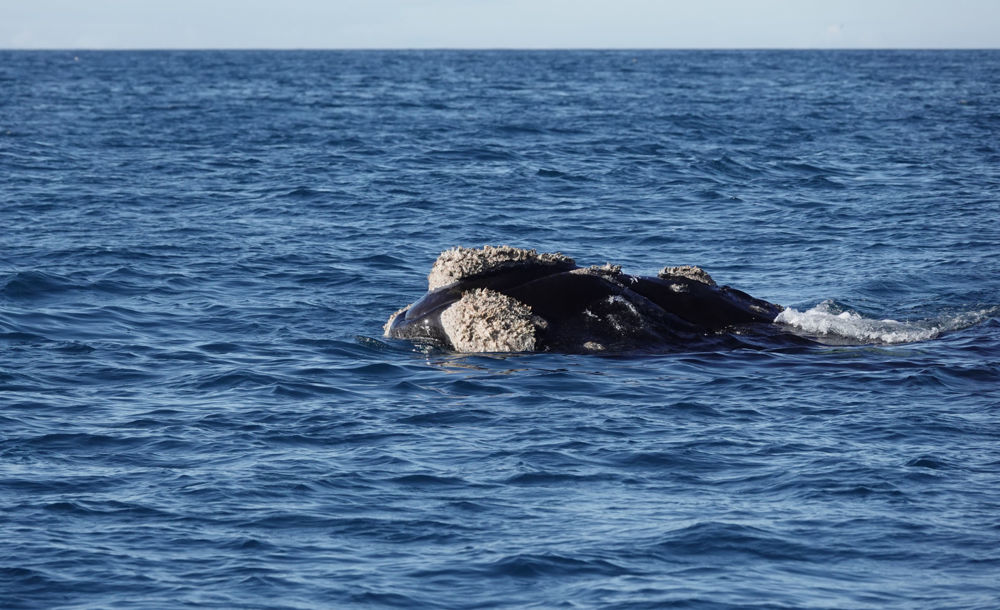
Southern Right Whale at Elsehul (C) Max Breckenridge
BEAKED WHALES (ZIPHIDAE)
Strap-toothed Whale (Mesoplodon layardii) – A remarkable sighting of a small pod surfacing repeatedly in calm seas and at close range on the first morning of our Drake Passage crossing. A seldom observed and very poorly-known species.
Gray’s Beaked Whale (Mesoplodon grayi) – At least one male observed breaching repeatedly at a distance during the crossing between Elephant Island and South Georgia.
MARINE DOLPHINS (DELPHINIDAE)
Commerson’s Dolphin (Cephalorhynchus commersonii) – Several observed by some at sea on the crossing between South Georgia and the Falkland Islands.
Peale’s Dolphin (Sagmatias australis) – Great views of several pairs/small pods around the Falkland Islands, including bow-riding our Zodiac.
Dusky Dolphin (Lagenorhynchus obscurus) – Good numbers (+30) observed in the Beagle Channel during both passages. A few also seen in the Le Maire Strait.