


Departure Date: November 19 - 23, 2025
Compiled By: Paul Greenfield
Trip Leaders: Paul Greenfield, Remigio Grefa
Toll Free: 800.328.8368
Phone: 512.328.5221



Galapagos Islands: Tandayapa Extension 11/19/2025-11/23/2025

Galapagos Islands: Tandayapa Extension
https://ebird.org/tripreport/429454
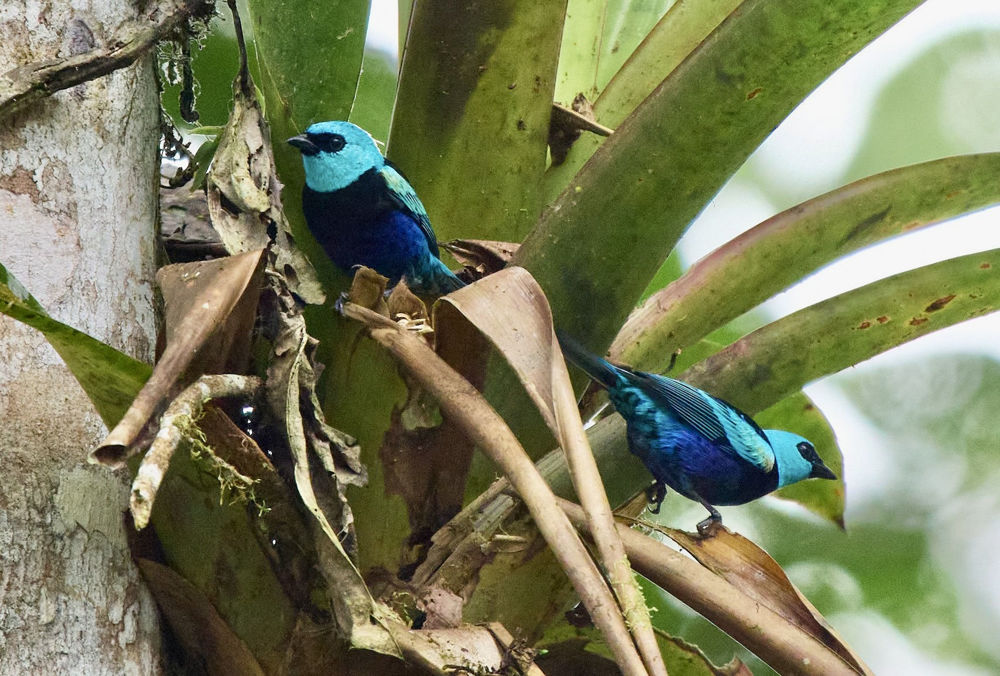
Blue-necked Tanagers © Ed Yong
What can we possibly achieve in three days? I suppose that might have been the question on anybody’s mind when considering the brief Tandayapa Extension designed to ‘second’ VENT’s Galapagos Island Cruise. As what the French might call an “amuse bouche,” this itinerary was conceived to offer a mere sample of the natural megadiversity and nature-viewing conditions that mainland Ecuador has to offer during an easy to navigate excursion. This is a land where nature takes center stage, and the local population has learned to embrace their biodiversity.
We initiated our trip driving westward from our lodge—San José de Puembo—located in the interAndean valley (where we picked up a pair of Blue-and-yellow Tanagers and a Vermilion Flycatcher, etc.) with a brief stop at a reservoir just past Quito’s airport: White-cheeked and Yellow-billed pintails, Andean Teals, Slate-colored Coots, Cocoi Heron, Osprey, Black-chested Buzzard-Eagle, and Tropical Mockingbird were among the species we saw there. We continued across the valley (and the Equator) and then up and over the western ridge of the Andes’ cordillera and downslope through a zone of temperate forest and into the subtropics, where we made a coffee break/birding/rest stop at Los Armadillos restaurant, right along the main highway. The fun began to manifest itself with a nice selection of hummingbirds: White-whiskered and Tawny-bellied hermits, White-throated Daggerbill,
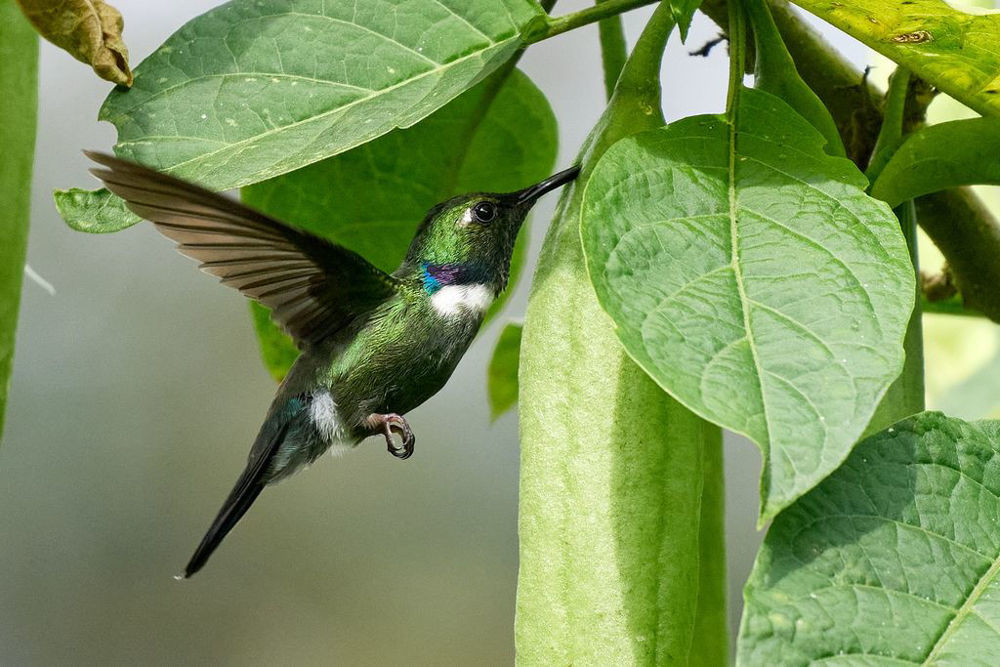
White-throated Daggerbill © Ed Yong
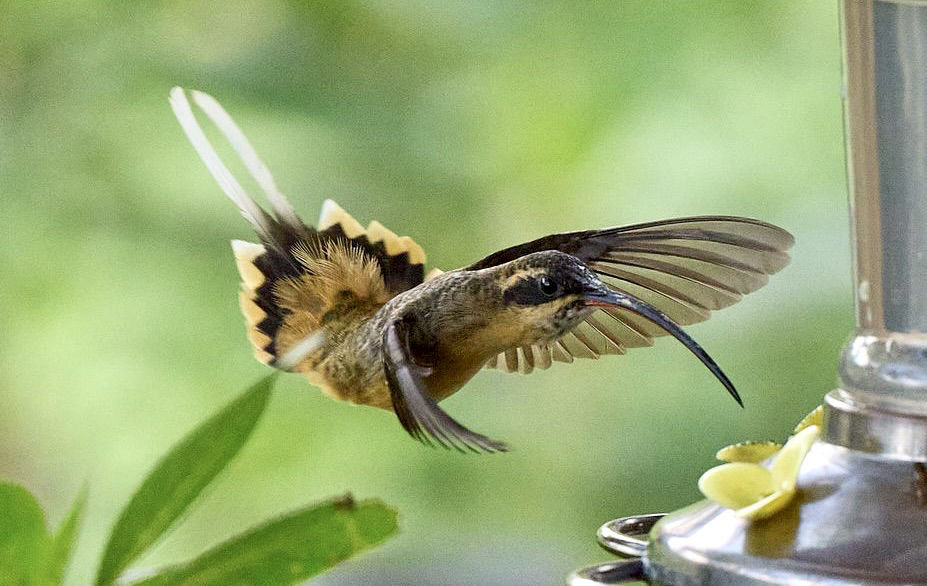
Tawny-bellied Hermit © Ed Yong
Speckled Hummingbirds, Violet-tailed Sylphs, Buff-tailed Coronets, White-booted Racket-tail, Purple-bibbed Whitetips, Fawn-breasted and Green-crowned brilliants, Purple-throated Woodstars, and Andean Emeralds among them. These were ‘served-up’ with a nice helping of colorful Thick-billed and Orange-bellied euphonias, our first White-winged Brushfinch, and Summer, Golden-naped, and Golden tanagers. Time to move on, this time winding upslope along the Paseo del Quinde EcoRoute to Bellavista Cloud Forest Lodge, where another set of montane species awaited us. Gorgeted Sunangel and Collared Inca were our new hummer highlights, and we also recorded Golden-bellied
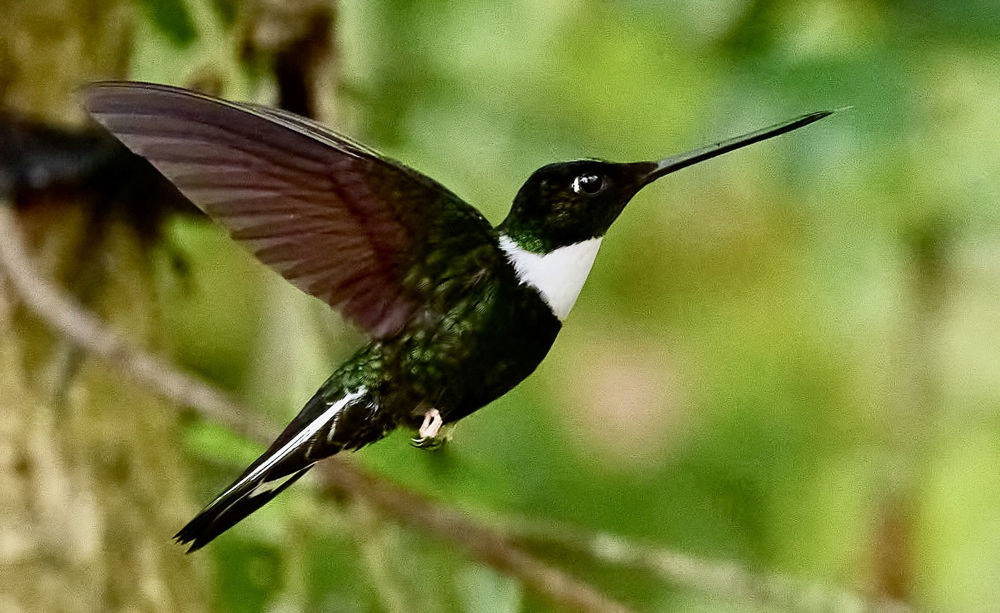
Collared Inca © Ed Yong
Flycatcher, Brown-capped Vireo, Turquoise Jays (up-close and personal!), Gray-breasted Wood-Wren, Russet-crowned and Blackburnian warblers, Blue-winged Mountain-Tanagers, Beryl-spangled and Flame-faced tanagers, and White-sided and Masked flowerpiercers before continuing our journey. At this point, the EcoRoute is somewhat less meandering, and the extensive forest that hugs the road is quite impressive; we came across an active mixed-species foraging flock along with other scattered activity, to the tune of: a female Masked Trogon, spectacular Toucan Barbets, Broad-winged and Sharp-shinned/Plain-breasted hawks, Streaked Tuftedcheeks, Pearled Treerunner, Cryptic Becard, White-tailed Tyrannulet, and Capped Conebill. We then continued downslope to Séptimo Paraíso Lodge, with a few more hummers (adding Brown Inca and Crowned Woodnymph) before settling in.

Chocó Toucan © Ed Yong
Today was our full-day in and around the Mindo Valley and with brief mid-morning birding at the nearby Milpe Bird Sanctuary. But first, our pre-breakfast stroll around Séptimo Paraíso’s grounds did not disappoint, with Pallid Dove, a Golden-headed Quetzal, Pale-mandibled Araçari, Yellow-throated and Chocó toucans, Guayaquil Woodpecker,

Pale-mandibled Araçari © Ed Yong
Zeledon’s Antbirds, Slaty-capped and Ornate flycatchers, Marble-faced Bristle-Tyrant, Scale-crested Pygmy-Tyrants, Red-faced Spinetail, Ecuadorian Thrushes, Chocó Brushfinch, Flame-rumped/Lemon-rumped Tanager, and Buff-throated Saltator. We also added our first Velvet-purple Coronet and Empress Brilliant! Milpe Bird Sanctuary also produced for us: Green Thorntails; Blue-tailed/Chocó Trogon; Broad-billed Motmot; Red-headed Barbets; Smoky-brown Woodpecker; Bronze-winged Parrots; Scaly-throated and Buff-fronted foliage-gleaners; Chivi Vireos; Yellow-throated and Dusky Chlorospinguses; Orange-billed Sparrow; Tropical Parula; Three-striped and Buff-rumped warblers; Dusky-faced Tanagers; Blue-necked, Silver-throated, and Swallow tanagers; Green Honeycreeper; and a Bananaquit, among quite a few additional species. Back at Séptimo for lunch and a bit of R&R, we then transferred a short distance uphill to San Tadeo Birding for yet another unique bout of birding fun at this family-run operation . . . a Pacific Hornero showed itself before we even entered the birding garden. At their plantain banana feeders, birds showed up little by little, and we enjoyed close-up looks at several species of now familiar euphonias and tanagers and a new one—Black-chinned Mountain-Tanager! Black-winged Saltator also showed itself but did not come in close. We then ventured downhill to what would turn out to be the ultimate hummingbird show; with an impressive backdrop of the Mindo Valley beyond, San Tadeo’s nectar feeders were buzzing, and small hand-held nectar ‘caps’ (with a little patience) enticed a fantastic array of these minute (and not so) gems to these tiny feeders, posing on fingers, buzzing about to the awe of us onlookers! Violet-tailed Sylphs, Velvet-purple Coronets, White-booted Racket-tails, Purple-bibbed Whitetips, Empress Brilliant, Purple-throated Woodstars—some of the most spectacular hummingbirds on earth—literally in the hand!
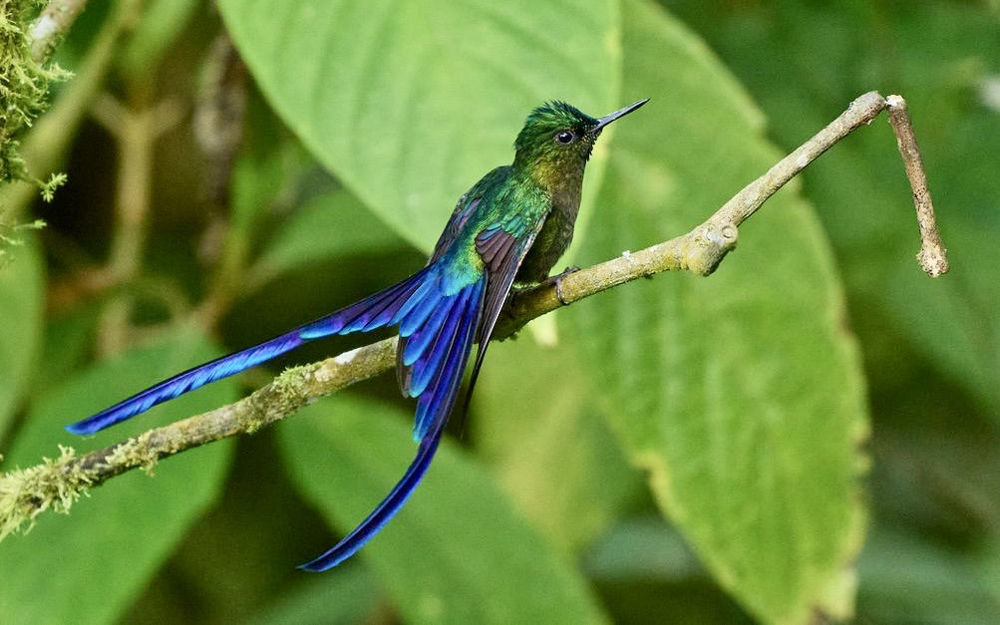
Violet-tailed Sylph © Ed Yong
With that act so tough to follow, our final day came upon us (much too quickly!), and we had to take advantage of our time remaining. Some early, pre-breakfast, birding around the lodge ‘nailed’ three more Golden-headed Quetzals and a Chocó Tyrannulet. We then headed out for the rest of the morning, first stopping at the Mindo turnoff, just uphill from our lodge where, amazingly, the blasting noise of passing traffic didn’t seem to bother the bird activity there. A male Masked Trogon and a Black-striped Sparrow were notable among the more familiar species we saw. We then continued north-eastward along the highway to another entrance to the Paseo del Quinde EcoRoute and advanced upslope to Guaycapi Lodge—stopping for nice looks at a juvenile, light-phase Gray-headed Kite! We spent a few hours birding from the lodge deck,
 2_1000.jpeg)
Gray-headed Kite (Imm.) © Ed Yong
adding a female Western Emerald, in-flight Barred Parakeets, White-crested and Sierran elaenias, Mountain Wrens, along with Blue-capped and Black-capped tanagers, among the 50 species we encountered there. We drove up the EcoRoute a bit to see what we could find, and lo-and-behold, a male Crested Quetzal called in, four Plate-billed Mountain-Toucans showed up all too quickly, and two wonderful Grass-green Tanagers perched out in the open for all to enjoy! Back to Séptimo Paraíso for our farewell lunch, we then packed our gear and began our return to the highlands . . . but not without two birding stops to close out our adventure.
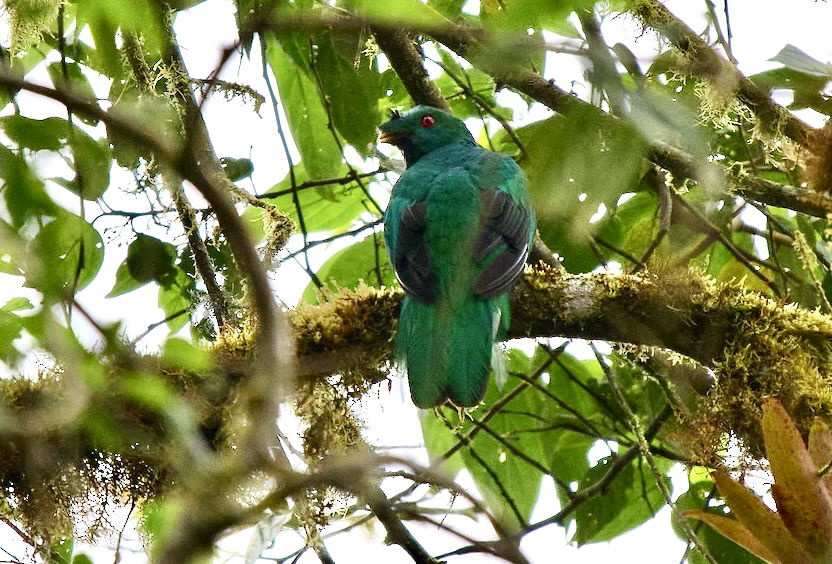
Crested Quetzal © Ed Yong
Alambi Cloud Forest Reserve was our first stop, which was planned more or less as a ‘going away’ event for our group, where we could enjoy some last visits with so many of the species we had been seeing during the last two days, basically not expecting anything new; but of course nothing ever goes exactly as planned, and a short walk along the shoreline of the narrow Río Alambi produced Torrent Tyrannulets, White-capped Dippers, and then under the bridge that supports the main highway we came upon an active Andean Cock-of-the-rock nest with two nestlings! The female showed herself only to Ed—lucky him! We then aimed higher up the western Andean slope to a roadside pull-off—MarakSacha—yet another family-run birding hotspot where more avian delights were waiting. The papayas, grapes, corn husks, and surrounding vegetation were alive with a number of species, including Andean Guans, White-tipped Doves, quite a few Collared Incas, White-bellied Woodstars, a Red-crested Cotinga, Gray-browed Brushfinch, Black-crested Warblers, Spectacled Redstarts/Whitestarts, Golden Grosbeaks, a first-year Rose-breasted Grosbeak, Hooded Mountain-Tanagers, and a Cinereous Conebill.
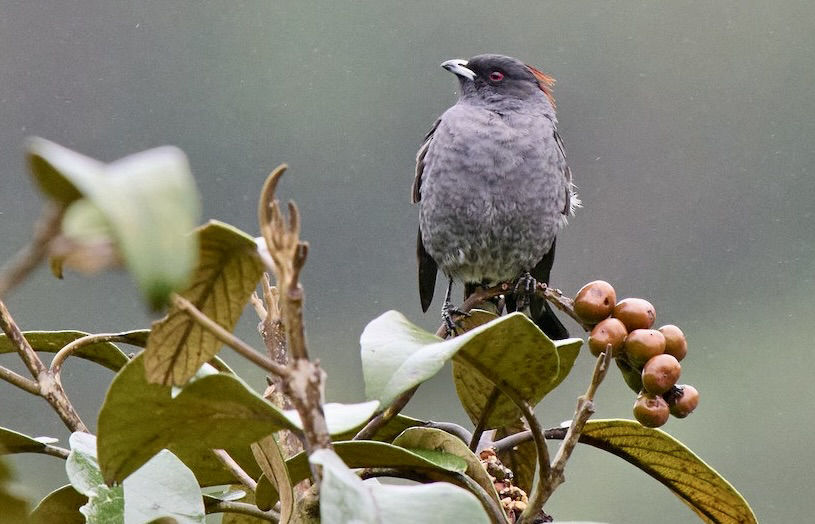
Red-Crested Cotinga © Ed Yong
Alas, our Tandayapa Extension had come to an end. We shared memorable experiences and many special sightings of a number of western Ecuador’s most sought after bird species—in record time! So I guess the answer to that initial one million dollar question is . . . a lot!
We would like to thank Ed Yong for sharing some of his excellent photos.
A complete list of the birds recorded on our tour can be found at: https://ebird.org/tripreport/429454
Description for the next departure of this tour.
Paul Greenfield's upcoming tour schedule.
Remigio Grefa's upcoming tour schedule.
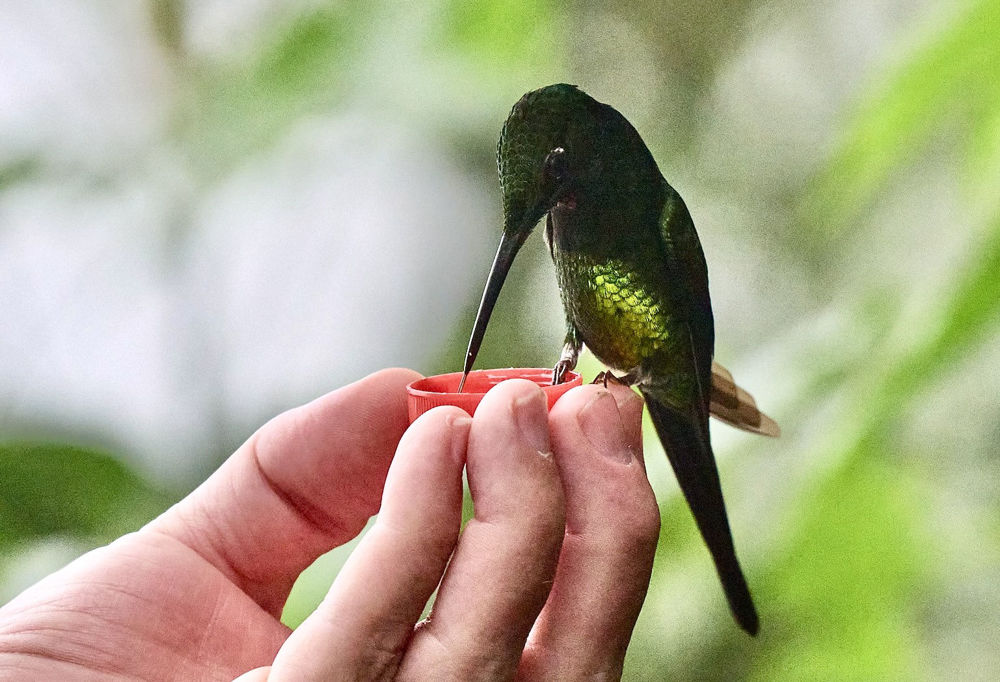
A handy Empress Brilliant © Ed Yong
ITINERARY:
Day 1: November 19, 2025—Arrival at San José de Puembo (Overnight: San José de Puembo)
Day 2: November 20, 2025—San José de Puembo: Drive Northwestward through the InterAndean Valley (brief birding stop at the Quito Airport Reservoir) and up and over the western cordillera of the Andes, downslope with a rest- /coffee- /birding-break at Los Armadillos Restaurant; then turnoff and uphill drive along the Paseo del Quinde EcoRoute to Bellavista Cloud Forest Reserve/Lodge (2nd rest- /coffee- /birding-break); continuing driving with a couple of birding stops along the EcoRoute to Séptimo Paraíso Lodge, with some birding along the entrance drive (Overnight: Séptimo Paraíso)
Day 3: November 21, 2025—Séptimo Paraíso Pre-breakfast birding; Post-breakfast drive to Milpe Bird Sanctuary; return for lunch and optional birding/R&R; Afternoon a short distance away to San Tadeo Birding… excellent plantain and nectar feeders! (Overnight: Séptimo Paraíso)
Day 4: November 22, 2025—Final day. Early morning birding briefly at the Mindo turnoff; Drive to and birding at and around Guaycapi Lodge; Return to Séptimo Paraíso for lunch, packing up and departure; Drive back to San José de Puembo with two birding breaks: at Alambi Cloud Forest Reserve/Lodge and MarakSacha. Final checklist session and farewell dinner (Overnight: San José de Puembo
Day 5: November 23, 2025—Departure

