


Departure Date: October 12 - 29, 2025
Compiled By: Scott Baker
Trip Leaders: Scott Baker, Local Leader
Toll Free: 800.328.8368
Phone: 512.328.5221


Grand Australia Part II 10/12/2025-10/29/2025

Grand Australia Part II
https://ebird.org/tripreport/422895
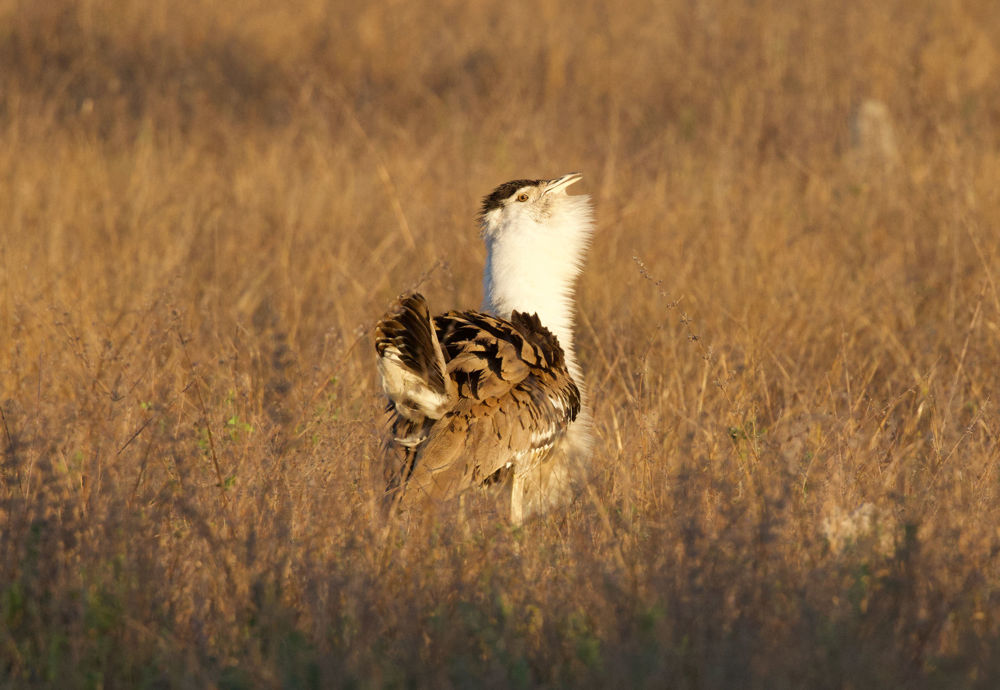
Witnessing the remarkable courtship display of the Australian Bustard as the sun sets on Mt. Carbine, north Queensland. Photo: Scott Baker
Kicking off our journey in the sunny and bird-rich state of Queensland was a great way to impress our international guests. Many of those participating in this 2025 edition of our Grand Australia Part II tour were visiting Australia for the first time. Thankfully, southeast Queensland lived up to expectations!
We started out in the state capital of Brisbane. From there we enjoyed a bus transfer to the World Heritage listed Lamington National Park, picking up some of the iconic ‘Aussies’ en route, including the Koala (in fact, two animals), Laughing Kookaburra, and the Pretty-faced Wallaby. A very encouraging start.
The O’Reilly’s Rainforest Retreat, where we stayed, is set amongst an ancient Gondwanan-era rainforest and has a well-deserved reputation for pairing luxury lodging and unforgettable wildlife experiences for almost 100 years now. And the birding is spectacular. These forests host many of the East Coast subtropical specialists. Green Catbird, Regent Bowerbird, Satin Bowerbird, Australian Logrunner, Russet-tailed Thrush, Noisy Pitta, Wompoo Fruit-Dove, Eastern Whipbird, and Paradise Riflebird (for example) are some of the regular ‘garden birds’ that we observed.
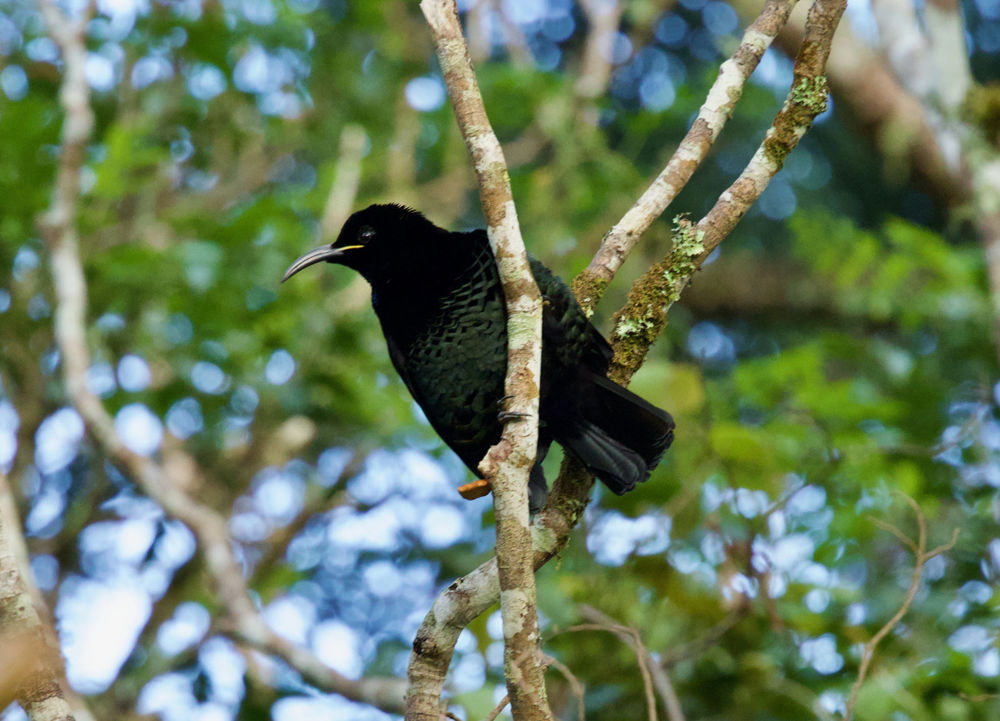
The Paradise Riflebird is one of four Bird-of-Paradise (BOPs) species found in Australia. Photo: Scott Baker
Of particular note were four separate encounters with the typically elusive Albert’s Lyrebird, which included a foraging pair and displaying male. These large pheasant-like birds form part of a relic and unique avian lineage found only in Australia. A big thank you to Kyle, our local guide, who put in the extra effort on our behalf, running nocturnal sessions on both nights, adding Greater Sooty Owl (briefly) and walkaway views of the rare and range-restricted Marbled Frogmouth—much appreciated!
We departed O’Reilly’s with all the key targets in the bag. The next leg of our journey involved a flight from Brisbane, north to Cairns, and gateway to the wet tropics. For some context, the greater Cape York region (essentially the northernmost point of mainland Australia), which includes Cairns and nearby ‘Tablelands,’ is the most biologically diverse and endemic-rich region in the country. It is also home to the Southern Cassowary—a large flightless and prehistoric-looking species that inhabits the rainforests of north Queensland. It is one of those ‘must-see’ birds! For this purpose, we headed for the ‘Cassowary Coast,’ a one-hour drive south of Cairns. After ‘dipping’ at our regular spot, the pressure was on; thankfully, some fresh gen paid off (thanks Max!), and we connected with a family group of three Cassowaries—an adult male and two very curious semi-dependent juveniles.
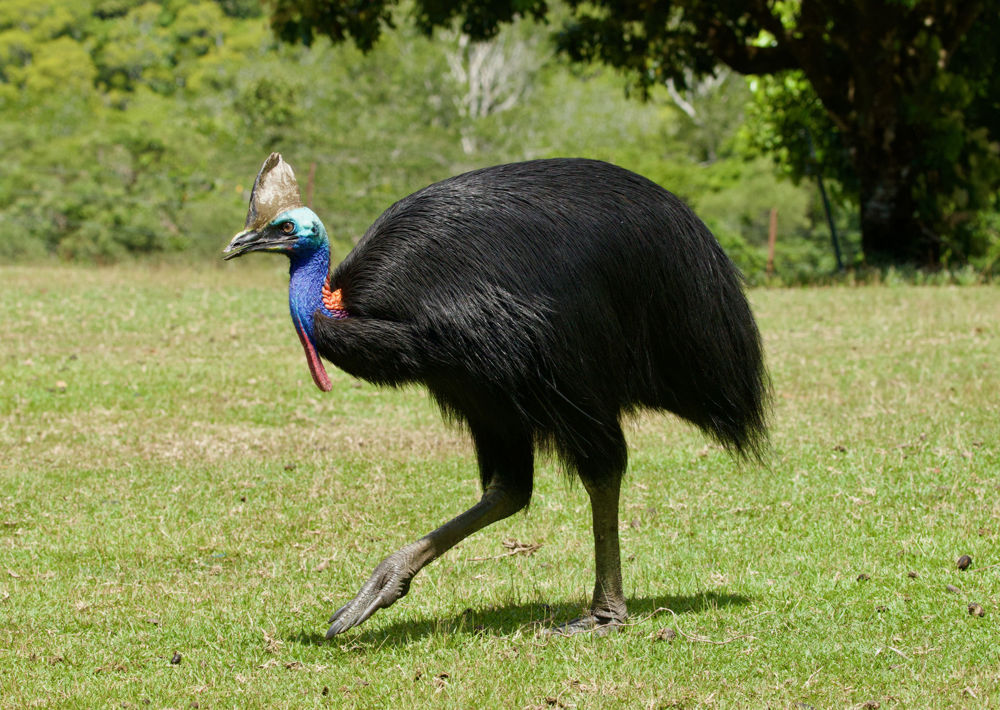
Southern Cassowary. A personal, close-up encounter with the world’s most ‘dangerous’ bird is something to remember! Photo: Scott Baker
Later, we arrived at the famous Kingfisher Park Birdwatching Lodge, located on the northern edge of the Tableland region. The rooms here, set in the rainforest, benefit from the many feed-stations and water points, attracting an irresistible array of birds and even some mammals, literally at the doorstep.
We had three nights to appreciate the tranquil setting and superb hospitality. A big thank you to our hosts Carol and Andrew! Some of the standout sightings in this period would include the Papuan Frogmouth (roosting by the river); Macleay’s, Yellow-spotted, and Cryptic honeyeaters; Pacific Emerald Dove; Gray-headed Robin; Pied Monarch; and Yellow-breasted Boatbill—all recorded locally, many on the KPL grounds.
A real highlight was the secretive Red-necked Crake, a very tough subject. This time, two birds were observed in clear view, frequenting a water point in the garden, and we had front-row seats.
The next day we focused on the higher elevation Tableland specialists. Starting with sunrise at the Cathedral Fig Tree and a morning chorus featuring the unmistakable vocal repertoire of the Chowchilla (the northern ‘Logrunner’), plus local stars Victoria’s Riflebird, Spotted Catbird, and Bridled Honeyeater, this was a great way to start the day.
We also had the opportunity to pursue another highly localized avian gem, the Golden Bowerbird. This involved staking out a ‘bower’ (courtship arena) deep in the forest. Our patience was rewarded when a lovely full-plumaged adult male arrived to defend the bower, in this case a maypole structure adorned in lichen.
The big surprise, however, was a Lumholtz’s Tree-Kangaroo, a specially adapted arboreal macropod (one of only two species in Australia), endemic to the Tablelands. I think it was the comment, “don’t worry, it’s just a monkey” that really got our attention. A very welcome and somewhat comical interruption to our picnic lunch at a site near Nerada. Well spotted Kris!

One of the many strange and wonderful creatures we encountered was the Lumholtz’s Tree-Kangaroo, an arboreal macropod that feeds on leaves. Photo: Scott Baker
The following morning found us on our boat tour of the Daintree River with local expert Murray Hunt. The Daintree Rainforest is, in fact, part of the oldest tropical rainforest system in the world, and Murray’s keen eye and informative commentary provided a fascinating perspective, with excellent sightings of Black Bittern (2), Little Kingfisher, and Spotted Whistling-Duck some of the standouts amongst more than 50 bird varieties recorded on the day.
We concluded a circuit of the wet tropics with a day cruise on the Great Barrier Reef, stopping at Michaelmas Cay—a small, low-lying sandy island sanctuary around 43 kms east of Cairns, fringed in coral reef and supporting several thousand nesting seabirds. I would estimate 2–3,000 Sooty Terns and Brown (Common) Noddies made up the big numbers, with Lesser and Greater Crested terns also very well represented. Bridled Tern, Black-naped Tern, Great Frigatebird, and a trifecta on the Boobies (Brown, Red-footed, and a single Masked) were also in the mix.
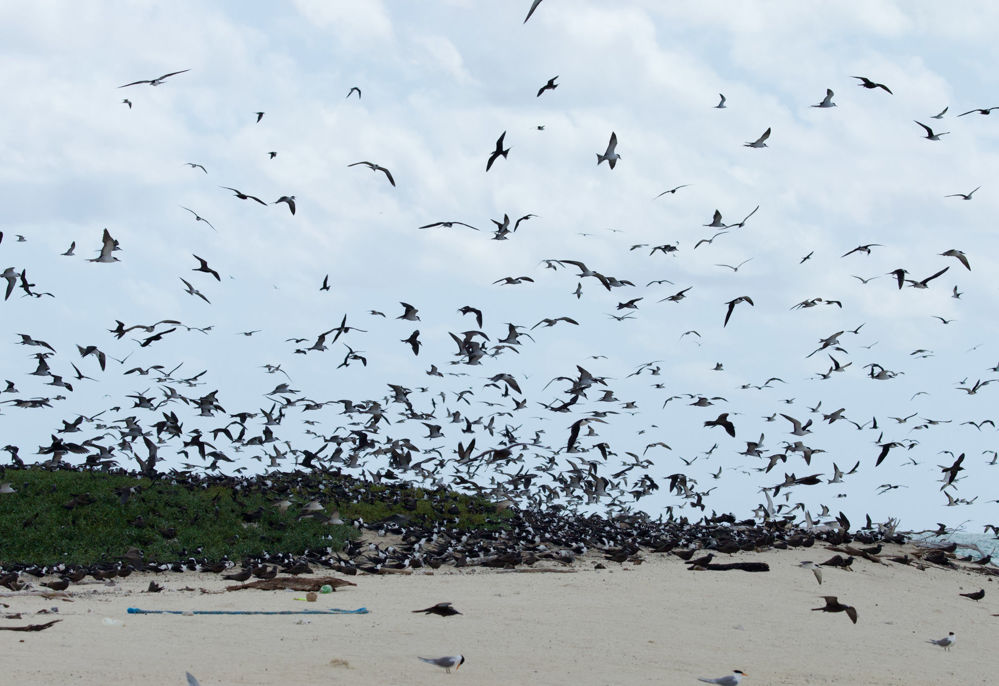
Greeted by an epic avian spectacle on our approach to Michaelmas Cay. Photo: Scott Baker
It was hard to resist an opportunity to swap binoculars for snorkel gear and experience the clear tropical waters from below, the superb array of corals and a kaleidoscope of colorful fish part of a living structure viewable from space, and one of the seven wonders of the natural world.
Departing Cairns, we flew to Melbourne, the state capital of Victoria (1500 kms south of Cairns). Our arrival there marked the start of our journey into the cooler southeastern ‘temperate’ zone—a dramatic contrast in terms of habitat, climate, and new birds.
Our first night was spent in the historic gold-mining township of Bendigo, in central Victoria, part of the so-called ‘golden triangle’, one of the richest alluvial gold deposits in the world (back in the day).
After breakfast, we headed to the Kamarooka block of the Bendigo-Whipstick National Park, one of the local ‘hotspots’ and a great place to start; the mixed open heathland and woodland habitat attract a variety of local ‘bush-birds.’ Honeyeaters are often well represented; we added 10 species including Yellow-tufted, Yellow-plumed, Fuscous, and Purple-gaped. We also had sightings of Brush Bronzewing, Variegated Fairywren, and Shy Heathwren.
We had some ground to cover, so we pushed further west, to the hottest and driest part of Victoria, to the rural town of Ouyen—a regional hub servicing what is often referred to as the Mallee district. This is primarily a wheat and sheep farming area, which (for our purpose) also served as a base for access to several important national parks.
The next day started with a morning tour of a private property east of Ouyen, with local landholders Ricky Marks and his wife Annette. This is, in fact, a private nature reserve managed to protect and enhance the native ‘mallee woodland’ habitat—a (previously widespread) semiarid vegetation type that supports a suite of rare, specialized, and endemic bird varieties. Budgerigar, Southern Scrub-Robin, Regent Parrot, and Crested Bellbird greeted us upon arrival.
The main act here, however, is the Malleefowl—a mound-building ‘megapode.’ The property supports several pairs, and we were fortunate to locate a single bird near an active nest mound and observe for an extended period (from a respectful distance). Ricky also provided a fascinating account of the species’ ecology and breeding cycle, where, after a 60-day incubation, young birds are entirely independent and free-flying just hours after hatching.

A very special encounter with the iconic Malleefowl. Photo: Scott Baker
Later, we visited Hattah-Kulkyne National Park and enjoyed further success with an unexpected and confiding pair of Striated Grasswrens showing well—a very scarce and cryptic denizen of the Spinifex.
The following day, we departed Ouyen and traveled eastward, via Swan Hill. A stop at the Swan Hill Sewage Treatment Plant provided some valuable wetland bird sightings. Here we added Pink-eared Duck, Black-tailed Nativehen (in numbers), Australian Crake, Red-necked Avocet, Whiskered Tern, and Red-kneed Dotterel—just some of those identified amongst the several thousand waterbirds present.
And special mention here for tour participant Ray White, who on this day added bird number 4,000 to his life-list. An incredible birding milestone—well done Ray!
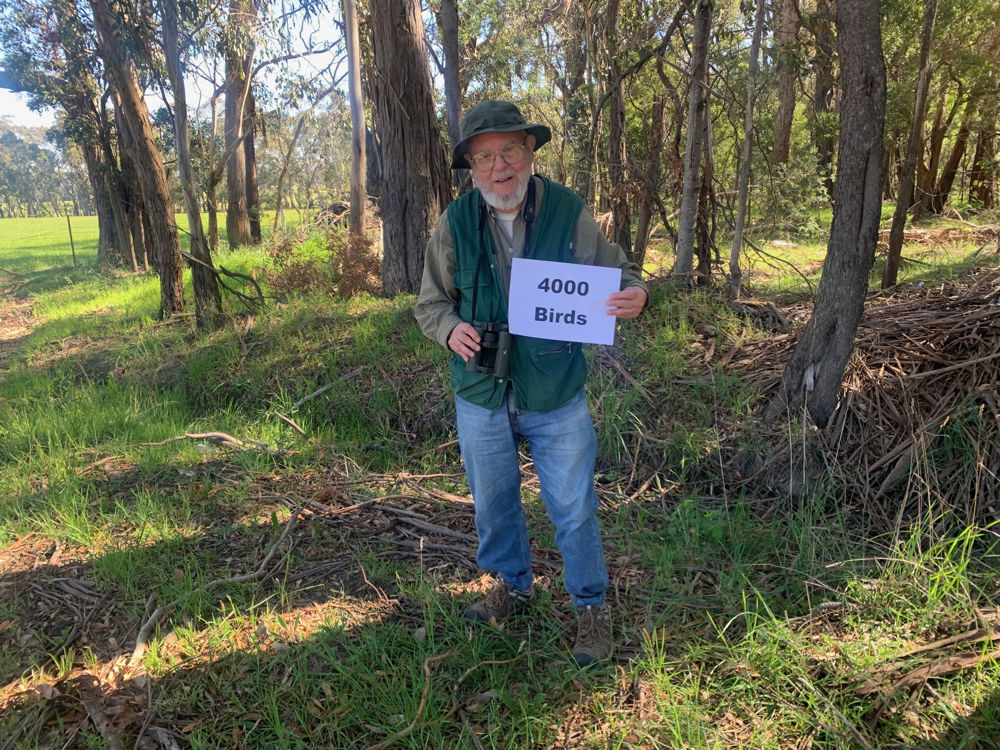
Celebrating 4,000 life birds on this day.
A final full day of birding in the Deniliquin district (part of SW NSW Riverina district) with local legend Phil Maher proved, yet again, a spectacular finale. Starting in the in Red Gum woodland on the Edward’s River, where (after considerable effort) we located the Superb Parrot, a striking green parrot favoring riverine habitat in SE Australia.
Nearby, we admired a nesting pair of dark morph Little Eagles, in addition to Oriental Dollarbird, ‘Yellow Rosella’ (ssp flaveolus), Eastern Shriketit, Western Gerygone, and a stunning adult male Red-capped Robin.
The quality birding continued into the late afternoon and early evening, exploring an area north of the township known as the ‘Hay Plains.’ This is one of the flattest regions in the southern hemisphere and features native grassland areas, home to several significant species, including (importantly) the Plains-wanderer—a rare and secretive quail-like species in its own monotypic family: Pedionomidae—-one of the most unique, enigmatic, and sought-after birds in Australia.
As the sun set, the search began. There are never any guarantees, but with three thermal scopes (and Phil and Robert involved) we could be quietly confident. Thankfully, luck was on our side, and soon enough two birds had been located. We had the great privilege to observe both adult male and female Plains-wanderer at close range in ideal conditions, with the brightly colored female even posing for some photos.
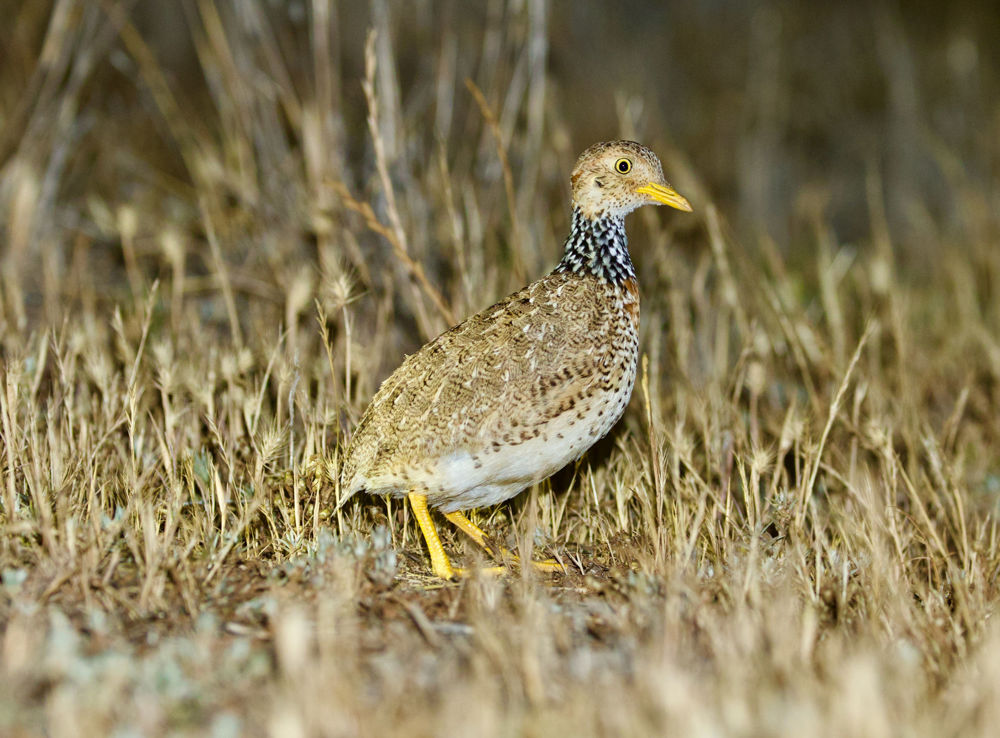
Plains-wanderer (female) was the best possible way to wrap up Grand Australia Part II.
And on that note, we concluded our 2025 Grand Australia Part II tour. Returning to Melbourne the following day, we enjoyed a final farewell dinner and a chance to reflect on an epic 14-day intensive tour of eastern Australia, in which we recorded 325 species of birds (around 40% of regular mainland varieties), in addition to some really iconic and unique mammal and reptile fauna, plus a few nice surprises.
A big thank you to all who participated, and a special shout-out to my co-leader, Tiffany Mason, whose enthusiastic and often hilarious perspective, sharp eyes, and love of Tim Tams made a very positive impression and greatly contributed to the success of this trip.
A complete list of the birds recorded on this tour can be found at: https://ebird.org/tripreport/422895
Description for the next departure of this tour.
Scott Baker's upcoming tour schedule.
ITINERARY
Oct 15 AM: Travel from Brisbane to O’Reilly’s (Lamington NP), stopping via Mt Gravatt TAFE, Fred Bucholz Park & Lions Park Canugra Creek. PM: O’Reilly’s Rainforest Retreat.
Oct 16 Full day at O’Reilly’s /Lamington NP incl Duck Creek rd.
Oct 17 AM: O’Reilly’s (Lamington NP), PM: flight Brisbane to Cairns.
Oct 18 AM: Travel from Cairns to Kingfisher Park via Cassowary Coast (incl Etty Bay & Coquette Point). PM: Tarzali Lakes, Hasties Swamp, and Kingfisher Park Birdwatching Lodge.
Oct 19 Kingfisher Park – Tablelands. AM: Cathedral Fig Tree, Mobo Creek Crater Walk, Mt Hypipamee NP. PM: Nerada Tea Factory, Pickford Rd, Lake Mitchell, Kingfisher Park.
Oct 20 Kingfisher Park to Daintree Village. AM: boat cruise on Daintree River and returning via Newell Beach. PM: Mt Carbine Caravan Park & East Mary rd.
Oct 21 Travel Kingfisher Park to Cairns. AM: Kingfisher Park, Abattoir Swamp, Jack Bethel Park, Lake Eacham /Crater Lake NP. PM: Cairns Botanical Garden, Cairns Esplanade (southern end).
Oct 22 Full day on the Great Barrier Reef incl Michaelmas Cay & Hasties Reef. Late afternoon via Cairns Esplanade (northern end).
Oct 23 AM: Flight from Cairns to Melbourne. PM: Woodlands Historic Reserve then driving to Bendigo.
Oct 24 Travel Bendigo to Ouyen. AM: Kamarooka [Greater Bendigo NP] incl Millwood Dam/Campbell rd/Diamond Dove Dam. PM: Mt Korong Nature Cons Reserve, Lake Tyrell Wildlife Reserve.
Oct 25 Ouyen and surrounds. AM: Annuello (Ricky Mark property). PM: Hattah Kulkyne NP incl Southern Truck Stop & Nowingi Track.
Oct 26 Travel Ouyen to Deniliquin. AM: Ouyen Lake, Chinkapook Hall & Swan Hill Sewage Treatment Plant. PM: Goschen Bushland Reserve, Round Lake.
Oct 27 Full day with Phil Maher. AM: Deniliquin area-Murray Valley Regional Park incl Deniliquin Town Block & Island Sanctuary. PM: Vartas Drive Wetland, Travelling Stock Route (Pretty Pine) & Wanganella (plains north of Deniliquin).
Oct 28 Traveling from Deniliquin to Melbourne. AM: Murray Valley Regional Park. PM: Castlemaine Botanical Gardens.
MAMMALS
Platypus
Platypus (Ornithorhynchus anatinus): Several observed at Tarzali Lakes
Marsupial Mice, Quolls & relatives
Fat-tailed Dunnart (Sminthopsis crassicaudata): 2 animals, whilst spotlighting on the Hay Plains
Bandicoots
Northern Brown Bandicoot (Isoodon macrourus): Feeding on deck at Kingfisher Park

Koala
Koala (Phascolarctos cinereus): 2 animals easily located at Mt Gravatt TAFE
Ringtail Possums & relatives
Common Ringtail Possum (Pseudocheirus peregrinus): Seen well at O’Reilly’s Rainforest Lodge, just outside our accommodation
Green Ringtail Possum (Pseudocheirus archeri): Resting in tree (daytime) at Mt Hypipamee
Rat Kangaroo
Musky Rat Kangaroo (Hypsiprymnodon moschatus): Several (briefly) at Cathedral Fig Tree
Macropods
Western Gray Kangaroo (Macropus fulignosus): Recorded near Annuello (Ricky Marks property) and Wanganella.
Red Kangaroo (Macropus rufus): Single animal at Annuello (Ricky Marks property), common on Hay Plains.
Eastern Gray Kangaroo (Macropus giganteus): Widespread. Various sites incl Mareeba (Atherton Tablelands), Woodlands Historic Park (Melbourne), Annuello and Deniliquin district
Pretty-faced Wallaby (Macropus parryi): 3–4 animals observed on road to O’Reilly’s (Lamington NP)
Agile Wallaby (Macropus agilis): Common macropod of north Qld.
Swamp Wallaby (Wallabia bicolor): Well observed at Deniliquin Town Block.
Lumholtz’s Tree-Kangaroo (Dendrolagus lumholtzi): Single animal located at Nerada Tea Plantation.
Red-legged Pademelon (Thylogale stigmatica): Recorded at Kingfisher Park
Red-necked Pademelon (Thylogale thetis): Several observations from O’Reilly’s Rainforest Lodge.
Flying Foxes / Fruit Bats
Spectacled Flying-fox (Pteropus conspicillatus) The common Pteropus in Cairns. Many hundreds at night.
Gray-headed Flying-fox (Pteropus poliocephalus) Large roost (of several 1000s) at Canugra Creek -SE Qld.
Mice, Rats & relatives
Fawn-footed Melomys (Melomys cervinipes) Also feeding on deck at Kingfisher Park.
Dogs
Red Fox (Vulpes vulpes): In transit – northern Vic.
Pigs
Pig (Sus scrofa): Spotted in canefield near Port Douglas
Rabbits & Hares
European rabbit (Oryctolagus cuniculus): Most days in northern Vic & NSW
European Hare (Lepus europaeus): Single observation from Deniliquin area
REPTILES
Turtles
Eastern Saw-shelled Turtle (Myuchelys latisternum): Photographed at Tarzali Lakes
Dragons
Eastern Water Dragon (Intellagama lesuerii): Common (10+) at Canugra Creek
Skinks
Shingleback (Tiliqua rugosa): 2 separate encounters in NW Vic. 1 at Mt Korong, another crossing road near Annuello.
Northern Red-throated Skink (Carlia crypto) Photographed at Kingfisher Park
Land Mullet (Egernia major) 1 observation from O’Reilly’s Rainforest Lodge.
Snakes
Carpet Python (Morelia spilota) We stopped to assist medium size Morelia crossing track near O’Reilly’s Rainforest Lodge.
AMPHIBIANS
Tyler’s Tree Frog (Litoria tyleri) Heard only. Lamington NP
Eastern Dwarf Tree Frog (Litoria fallax) Heard only. Lamington NP
Cane Toad (Rhinella marina) Too common in the Tablelands

