


Departure Date: October 4 - 21, 2025
Compiled By: Max Breckenridge
Trip Leaders: Max Breckenridge, David James
Toll Free: 800.328.8368
Phone: 512.328.5221



Grand Australia Part II 10/4/2025-10/21/2025

Grand Australia Part II
https://ebird.org/tripreport/418836
Five participants continued on from our Grand Australia Part I adventure and were joined by three more keen travelers in Brisbane, where Part II begins. Our first stop on our way out of Brisbane was the grounds of an unassuming tertiary college. This area of Brisbane is known for its high density of furry, leaf-eating bears, and it didn't take long for Ed to spot our first Koala up in a large gum tree. After a couple of other productive stops, we made it to the famous O'Reilly's Lodge nestled up in the ranges of Lamington National Park, looking over an ancient caldera known as the Scenic Rim.
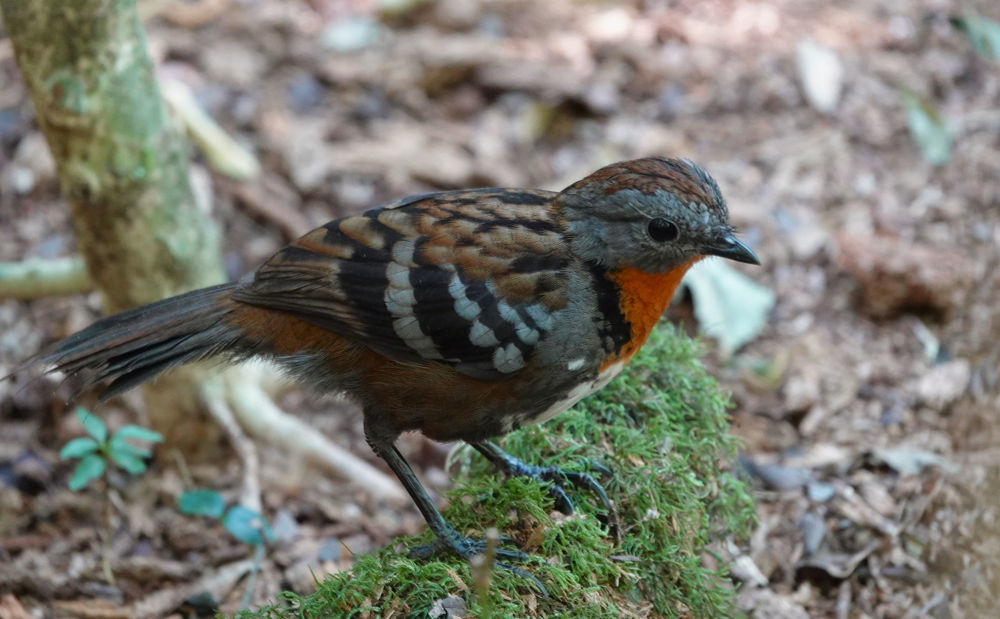
A female Australian Logrunner from O'Reilly's (C) Max Breckenridge
We enjoyed two days of excellent birding around the lodge and adjacent national park. The highlight of our first day was a quick spotlight session before dinner, when we had a wonderful sighting of the localized southern subspecies of Marbled Frogmouth. Albert's Lyrebird proved to be shy this year, but eventually we all locked eyes on these huge songbirds scratching away in the rainforest understory. Noisy Pitta, Bassian Thrush, and Australian Logrunner were comparatively confiding this year, with great views of multiple individuals. We also enjoyed a trifecta of monarchs—Black-faced, Australian Spectacled, and the scarce White-eared. The latter was seen while we were enjoying a wonderful afternoon session at a small pond where numerous forest species were coming in to drink in the dry conditions. Other memorable sightings included the spectacular and obnoxious parrots and bowerbirds, as well as Paradise Riflebird, Rose Robin, confiding Eastern Shrike-tit, several impressive Carpet Pythons, and close looks at a Rainforest Dragon.
From O’Reilly's we wound our way back into Brisbane for our flight to Cairns in the endemic-rich, far north region of Queensland, arriving at the lovely Kingfisher Park lodge that same evening. Based at the lodge (run by the wonderful Carol and Andrew) for three nights, we made excursions out to the drier western parts of the northern Atherton Tablelands, local patches of mountain rainforest, and along the tropical lowland waterways of the Daintree. Our boat trip on the Daintree River (with the capable Murray Hunt at the wheel) was full of highlights this year—with the tiny Little Kingfisher contrasting spectacularly with the hulking Great-billed Heron. Around Julatten and the lodge itself, we racked up an impressive list of species, with one afternoon session alone yielding close looks at Yellow-breasted Boatbill, Pied Monarch, Lovely Fairywren, and Barred Cuckooshrike. A visit to the drier woodlands around Mt. Carbine and Maryfarms was enjoyable, with Pale-headed Rosella, Blue-winged Kookaburra, Great Bowerbird, Squatter Pigeon, and displaying Australian Bustard making for another memorable outing.
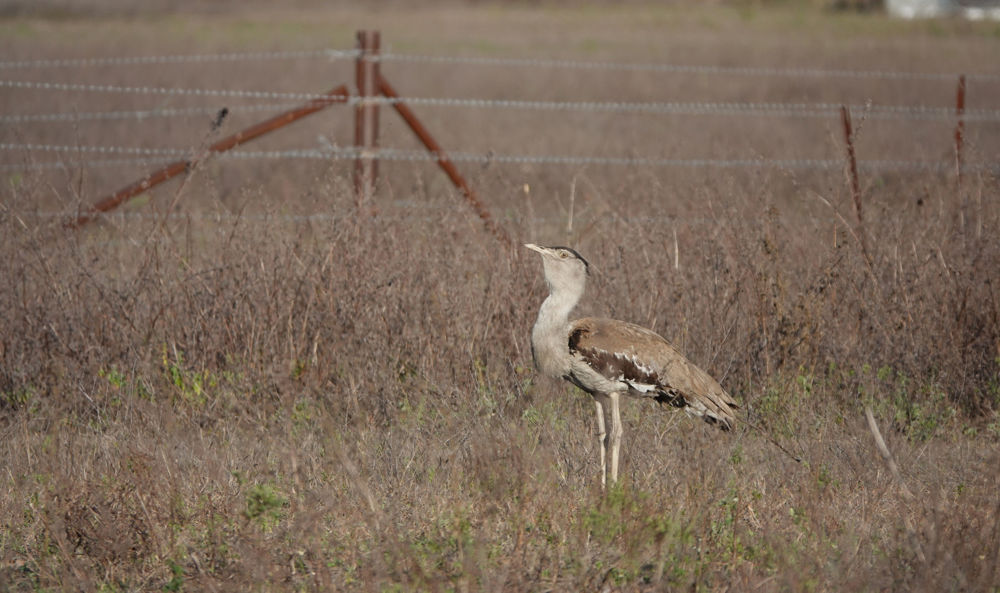
A male Australian Bustard from Maryfarms (C) Max Breckenridge
Our time in Julatten had come to an end, but before heading to Cairns, we spent an action-packed day exploring the southern parts of the Atherton Tablelands. We began in the cloud forests of Mt. Hypipamee NP, where a cosmic male Golden Bowerbird was waiting for us at his bower! If that weren't enough, we located a male Victoria's Riflebird displaying from his perch over the bathrooms. The hits kept coming, and we added Tooth-billed Bowerbird, Gray-headed Robin, and Atherton Scrubwren (three classic endemics of the wet tropics) to our growing list. After a great start, we lunched at the excellent Tarzali Lakes, where several Platypus obliged. The rest of the day continued in a similar fashion, with better looks at Tooth-billed Bowerbird calling above his display perch, Sarus Cranes in the fields near Yungaburra, and a pair of charismatic Chowchillas foraging along a rainforest creek.
The following day we traded the highlands for the lowlands around Cairns and Innisfail. A pre-breakfast outing to the Cairns Esplanade (across the road from our hotel) helped kick off our list of shorebirds, and then later, just south of Cairns, we successfully twitched a pair of Little Curlews; for our efforts we were additionally rewarded with a bonus pair of Eastern Yellow Wagtails (rare migrants) and a flock of Crimson Finches. The patches of lowland coastal rainforest around Innisfail are known haunts for cassowaries, but this year we visited a different site instead of our usual location (where the birds have become unnervingly habituated) and immediately struck gold when a pair of adult Southern Cassowaries were spotted standing in the shade beside the road! The afternoon involved a relaxed visit to the parklands of Centenary Lakes in Cairns, where a roosting Rufous Owl was a great find. A quick check at the north end of the esplanade also yielded Torresian Kingfisher and a gorgeous Rose-crowned Fruit-Dove.

A male Golden Bowerbird from Mt. Hypipamee NP (C) Max Breckenridge
We timed our day out on the Great Barrier Reef perfectly this year, as we enjoyed perfect conditions on the water, whereas heavy rain persisted for most of the day onshore. Michaelmas Cay was marvelous, with birds everywhere we looked and stunning blue seas lapping at the white sand. We spent almost an hour on the cay studying a variety of terns, three species of boobies, and thousands of Brown Noddies, all while Greater Frigatebirds wheeled over. After lunch onboard, we motored over to Hastings Reef and enjoyed a bout of snorkeling over a relatively healthy section of reef with a particularly impressive variety of large fish.
The next morning we had a relaxed transfer to the airport and flight to Melbourne in the southern state of Victoria. We were soon on the road in our brand-new bus and headed north towards the goldfields city of Bendigo. Before arriving at our hotel for the night, we spent a short afternoon session birding around Crusoe Reservoir, getting nice looks at a variety of totally new species more typical of the drier grassy box-woodlands found in southeastern Australia.
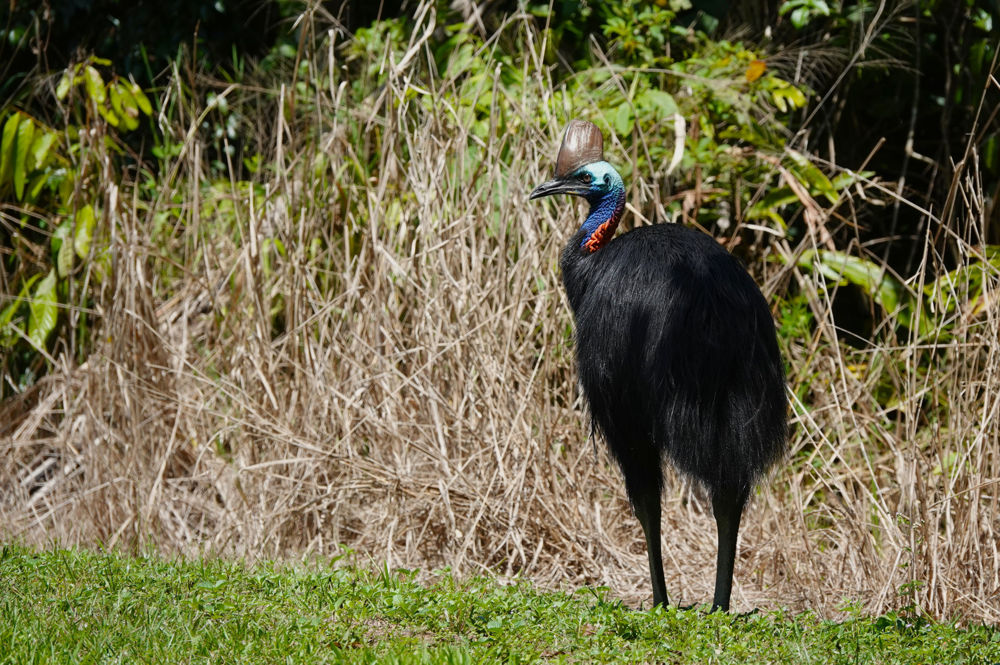
Southern Cassowary near Innisfail (C) Max Breckenridge
Pleasant conditions and our first bakery breakfast of the trip made for a cheery start the next day. Not long after, we were birding the whipstick mallee and box woodlands of the Greater Bendigo NP. Purple-crowned and Musk lorikeets were located in a small grove of flowering eucalypts, while further into the mallee began an onslaught of new honeyeater species: Yellow-plumed, Purple-gaped, Brown-headed, Yellow-tufted, White-fronted, and Tawny-crowned, just to name a few! Excellent views of the scarce Black-eared Cuckoo and Shy Heathwren added to an already fantastic morning. From Bendigo we traveled northwest, making several more stops before arriving in the small town of Ouyen for two nights.
We spent a full day around Ouyen and the nearby Hattah-Kulkyne NP, with local Ricky Marks keeping us company for the morning. Ricky took us to a local patch of private mallee and revegetation owned by his family, where a Southern Scrub-Robin welcomed us. A short walk later led us to the mound of the mysterious Malleefowl, where a well-trained pair were already in attendance. We often have great views of Malleefowl at this location; however, this year we witnessed a truly remarkable session as the pair progressed from casual scratching to full-blown excavation and eventual egg-laying—all while we stood less than 10 feet away! It was a seriously special encounter and one all of us will certainly remember. Our afternoon outing was another great success—kicking off with wonderful views of stunning Regent Parrots in giant river red gums beside Lake Hattah, before happening across a remarkably confiding family of the usually-devilish Striated Grasswren.
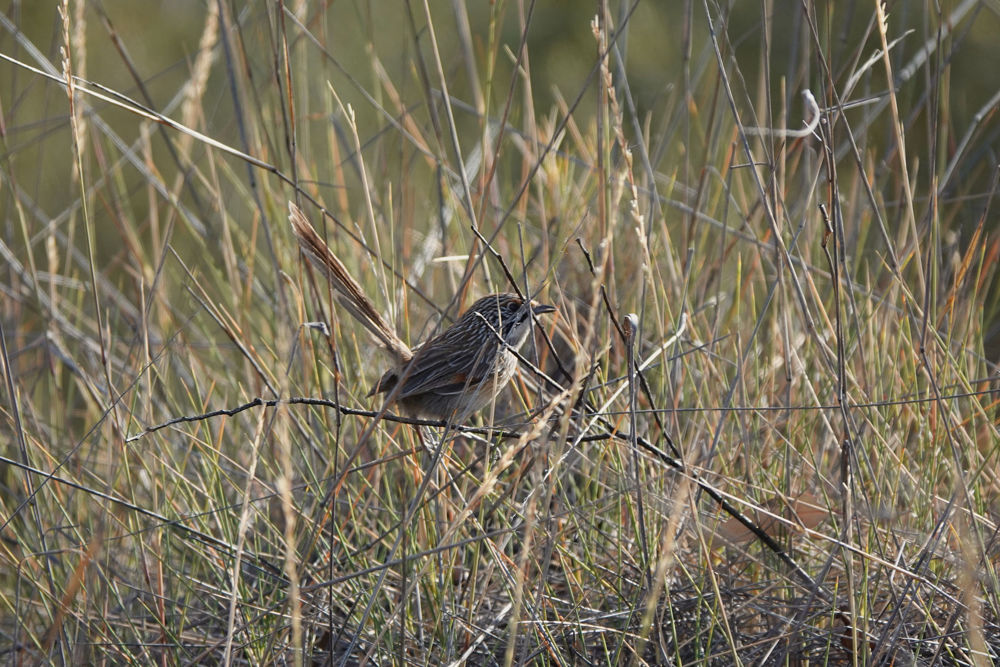
Striated Grasswren from Hattah-Kulkyne NP (C) Max Breckenridge
A pair of glamorous Pink Cockatoos on the wires provided a fitting farewell as we departed Ouyen the next morning for the riverina town of Deniliquin (or “Deni”). Along the way we stopped in at several wetland sites adjacent to the Murray River. Near Swan Hill, thousands of ducks of several varieties were observed, plus Australian and Baillon's crakes, Red-necked Avocet, Black-tailed Nativehen, and a Black Falcon that circled over our heads. Closer to the Murray River, another wetland held a pair of graceful Brolgas and an assortment of herons and ibis.
Our big day around Deni was upon us, and we were wonderfully guided by local Phil Maher, who worked tirelessly all day. We started close to the center of town in the river red gum forests, where a great array of small passerines were dutifully located, but the great highlight was undoubtedly the breathtaking views we had of a trio of Superb Parrots. Phil had all the birds on a string, and we enjoyed uninterrupted views of nesting Tawny Frogmouth and the scarce Square-tailed Kite amongst others. In the afternoon, we ventured north out of town towards the vast, treeless Hay plain. On the way, we stopped at several sites where Phil has personally revegetated areas of cleared public land into wonderfully diverse oases. Striped, Black, and Painted honeyeaters were all great additions here. Out on the plains, even further north, mobs of Red and Western Gray kangaroos mingled with Emus as the sun set over this remarkable area of native grassland carefully managed by local sheep farmers. The quality of the habitat is reason why the enigmatic Plains-wanderer can be found here, and once the darkness had settled in, we did just that—encountering at least four separate males in this unique grassland (with the assistance of thermal monoculars).
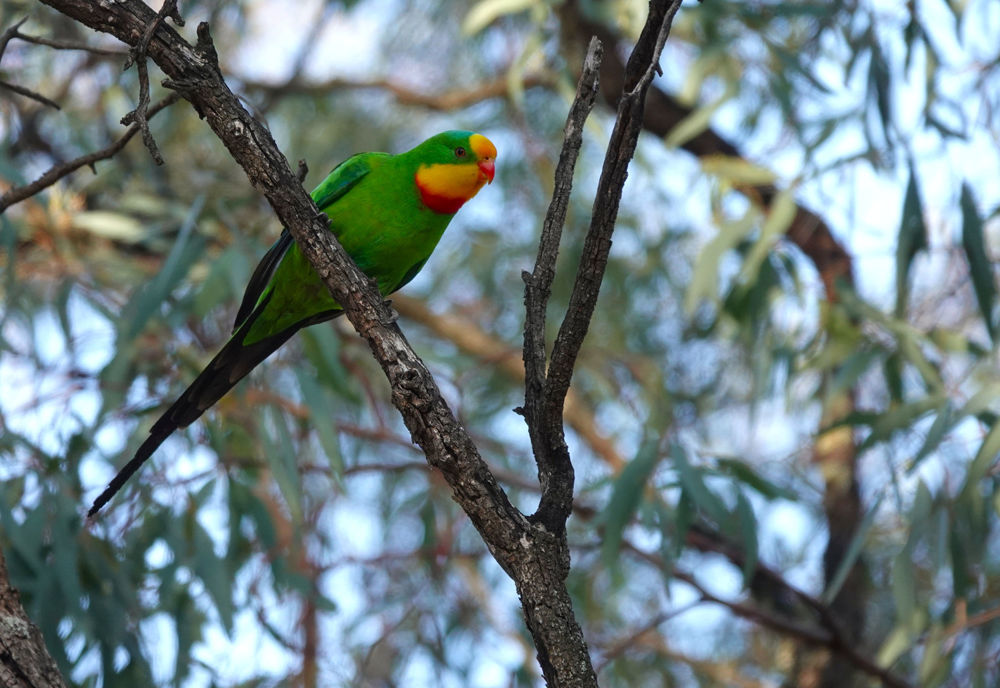
A male Superb Parrot from Deniliquin (C) Max Breckenridge
The following morning we bade Deni farewell and made for Melbourne. Of course, we stopped along the way for some final birding and were rewarded with nice looks at several new species around Heathcote—Black-chinned and Fuscous honeyeaters and the songful Speckled Warbler. We made it to Melbourne in the early afternoon and savored one more excellent meal together as a group, reminiscing on a fantastic trip full of many memorable moments!
Top Birds:
- Malleefowl
- Golden Bowerbird
- Albert’s Lyrebird
- Tawny Frogmouth
- Regent Bowerbird
- Marbled Frogmouth
- Victoria’s Riflebird
- Plains-wanderer
A complete list of the birds recorded on our tour can be found at: https://ebird.org/tripreport/418836
Description for the next departure of this tour.
Max Breckenridge's upcoming tour schedule.
David James's upcoming tour schedule.
ITINERARY:
Day 1: October 7, 2025: (AM) Brisbane, Mount Gravatt, Fred Bucholz Park; (PM) O’Reilly’s, Lamington NP, Duck Creek Rd (spotlighting)
Day 2: October 8, 2025: (AM) O’Reilly’s, Lamington NP, Duck Creek Rd; (PM) Gravel Pit
Day 3: October 9, 2025: (AM) O’Reilly’s, Lamington NP; (PM) BNE-CNS, Julatten
Day 4: October 10, 2025: (AM) Daintree River, Stewart Creek Rd; (PM) Julatten – Kingfisher Park; Mt Carbine Caravan Park, West Maryfarms
Day 5: October 11, 2025: (AM) Julatten – Kingfisher Park, Jim Weir Rd, Abattoir Swamp, McDougall Rd; (PM) Julatten – Pinnacle Rd
Day 6: October 12, 2025: (AM) Mt Hypipamee NP, Tarzali Lakes; (PM) Yungaburra, Lake Eacham, Mobo Creek, Cathedral Fig
Day 7: October 13, 2025: (AM) Cairns Esplanade, Edmonton, Coquette Point; (PM) Innisfail, Centenary Lakes, Cairns Esplanade
Day 8: October 14, 2025: (AM) Great Barrier Reef – Michaelmas Cay; (PM) Great Barrier Reef – Hasting’s Reef
Day 9: October 15, 2025: (AM) CNS-MLB; (PM) Bendigo – Crusoe Reservoir
Day 10: October 16, 2025: (AM) Greater Bendigo NP – Kamarooka; Mt Korong NR; (PM) Wedderburn, Lake Tyrrell, Ouyen
Day 11: October 17, 2025: (AM) Ouyen – “The Farm”, Ouyen Lake; (PM) Hattah-Kulkyne NP
Day 12: October 18, 2025: (AM) Ouyen, Swan Hill STW, Round Lake; (PM) Lake Tutchewop, McDonald Swamp, Deniliquin
Day 13: October 19, 2025: (AM) Deniliquin – Island Sanctuary, Murray Valley RP; (PM) Wanganella, Warwillah Station
Day 14: October 20, 2025: (AM) Mt Ida; (PM) One Eye SF, Melbourne
Day 15: October 21, 2025: (AM) MLB-
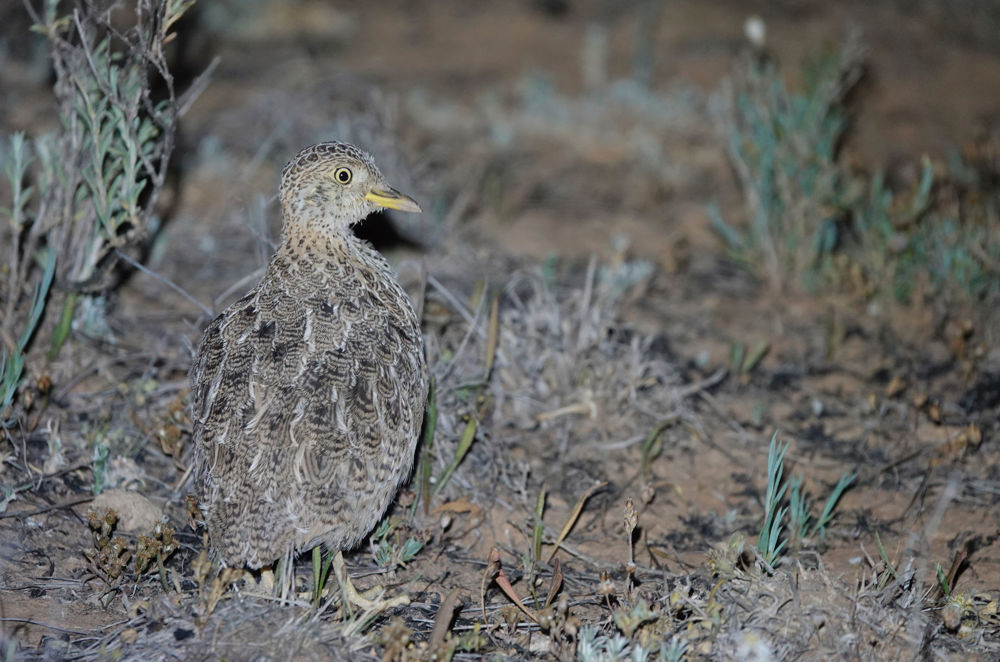
A male Plains-wanderer from Deniliquin (C) Max Breckenridge
MAMMALS:
ORNITHORHYNCHIDAE (Platypus)
Platypus (Ornithorhynchus anatinus) - Tarzali Lakes
TACHYGLOSSIDAE (Echidnas)
Short-beaked Echidna (Tachyglossus aculeatus) - Mt Korong
DASYURIDAE (Marsupial Mice, Quolls & relatives)
Yellow-footed Antechinus (Antechinus flavipes) - Kingfisher Park
Fat-tailed Dunnart (Sminthopsis crassicaudata) - Deniliquin
PERAMELIDAE (Bandicoots)
Long-nosed Bandicoot (Perameles nasuta) - Kingfisher Park
Northern Brown Bandicoot (Isoodon macrourus) - Kingfisher Park
PHASCOLARCTIDAE (Koala)
Koala (Phascolarctos cinereus) - Brisbane
PHALANGERIDAE (Brushtail Possums & Cuscuses)
Common Brushtail Possum (Trichosurus vulpecula) - Deniliquin
PSEUDOCHEIRIDAE (Ringtail Possums & relatives)
Common Ringtail Possum (Pseudocheirus peregrinus) - O'Reilly's
MACROPODIDAE (Macropods)
Western Gray Kangaroo (Macropus fuliginosus) - Ouyen, Deniliquin
Red Kangaroo (Macropus rufus) - Ouyen, Deniliquin
Eastern Gray Kangaroo (Macropus giganteus) - Deniliquin
Agile Wallaby (Macropus agilis) - Mt Carbine
Red-legged Pademelon (Thylogale stigmatica) - Kingfisher Park
Red-necked Pademelon (Thylogale thetis) - O'Reilly's
PTEROPODIDAE (Flying Foxes / Fruit Bats)
Black Flying-fox (Pteropus alecto) - Canungra
Spectacled Flying-fox (Pteropus conspicillatus) - Kingfisher Park
MURIDAE (Mice, Rates & relatives)
Bush Rat (Rattus fuscipes) - Kingfisher Park
Fawn-footed Melomys (Melomys cervinipes) - Kingfisher Park
Giant White-tailed Rat (Uromys caudimaculatus) - Kingfisher Park
SUIDAE (Pigs)
Pig (I) (Sus scrofa)
LEPORIDAE (Rabbits & Hares)
European Rabbit (I) (Oryctolagus cuniculus)
European Hare (I) (Lepus europaeus)
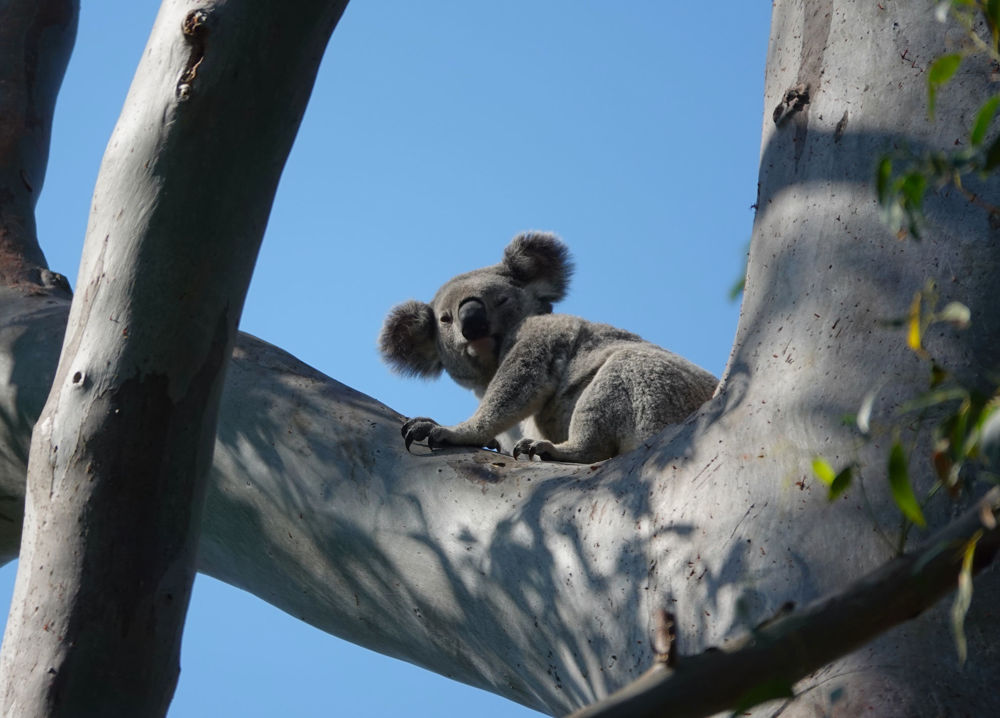
Koala (C) Max Breckenridge
REPTILES
Saltwater Crocodile
Eastern Longneck Turtle
Gould’s Sand Monitor
Eastern Bearded Dragon
Mallee Dragon
Rainforest Dragon
Shingleback
Eastern Water Skink
Major Skink
Dubious Dtella
Asian House Gecko
Amethystine Python
Carpet Python
Green Tree Snake
Eastern Brown Snake
Hooded Scalyfoot
Red-bellied Black Snake
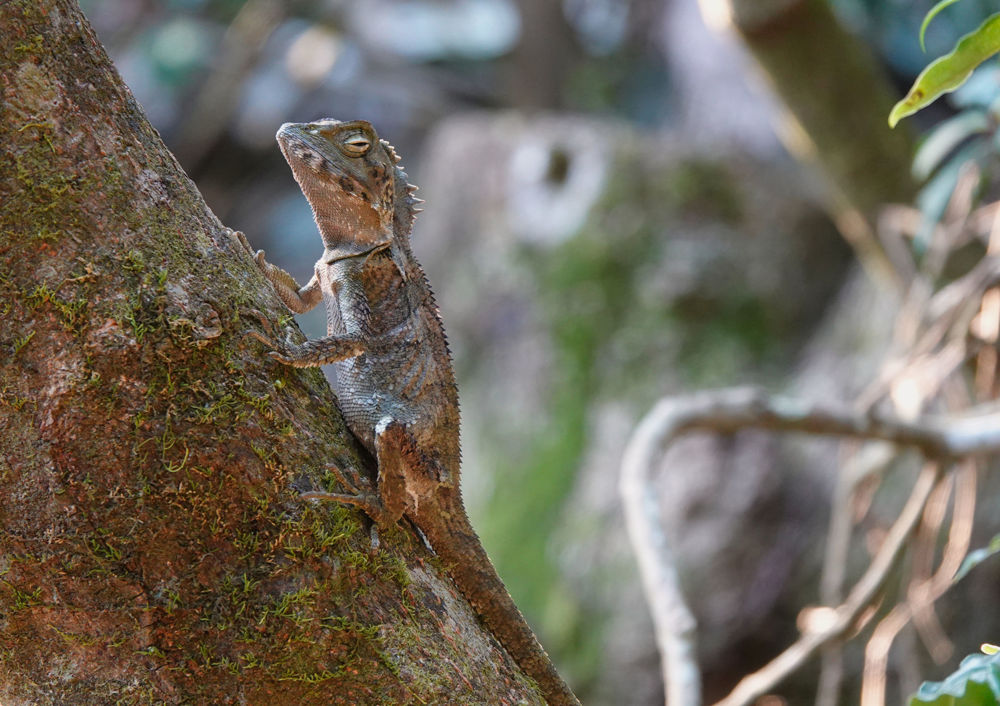
Rainforest Dragon (C) Max Breckenridge

