


Departure Date: October 29 - November 4, 2025
Compiled By: Scott Baker
Trip Leaders: Scott Baker
Toll Free: 800.328.8368
Phone: 512.328.5221


Grand Australia: Tasmania Extension 10/29/2025-11/4/2025

Grand Australia: Tasmania Extension
https://ebird.org/tripreport/427567
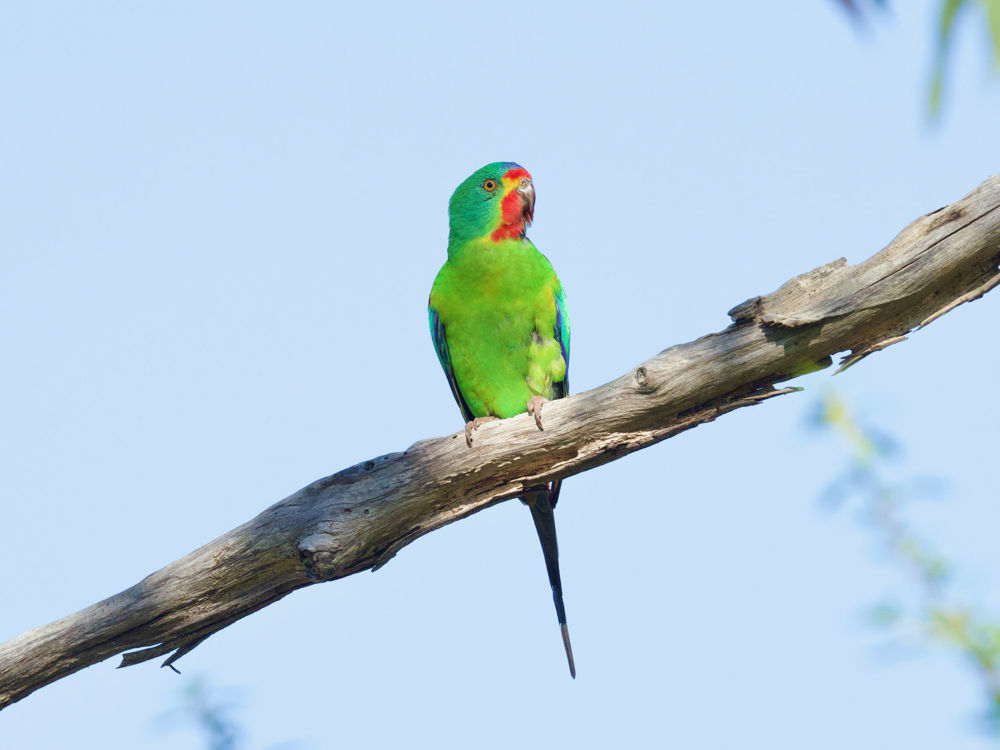
A special encounter with the critically endangered Swift Parrot. Photo: Scott Baker
Our group of 5 ‘field-hardened’ participants arrived in Launceston (northern Tasmania) for the start of our journey to the island state. This was the final leg of our Grand Australia tour series for 2025. All of those taking part, on this occasion, had just completed the Grand Australia Part II tour and had traveled direct from mainland Australia.
Despite a minor flight delay, our scheduled lunch and birding activity was not severely impacted. We had time enough to sample the local coffee and make a few purchases.
Our first stop was at the Tasmanian Arboretum, a botanical garden that also hosts some great wildlife and presents a very pleasant and gentle introduction to Tasmania. It is also, arguably, the best place (anywhere in the world) to see a Platypus—an egg-laying mammal with a duck-like bill—once dismissed as an elaborate hoax.
And we were not disappointed, with 4–5 individuals counted on a circuit of the main lake.
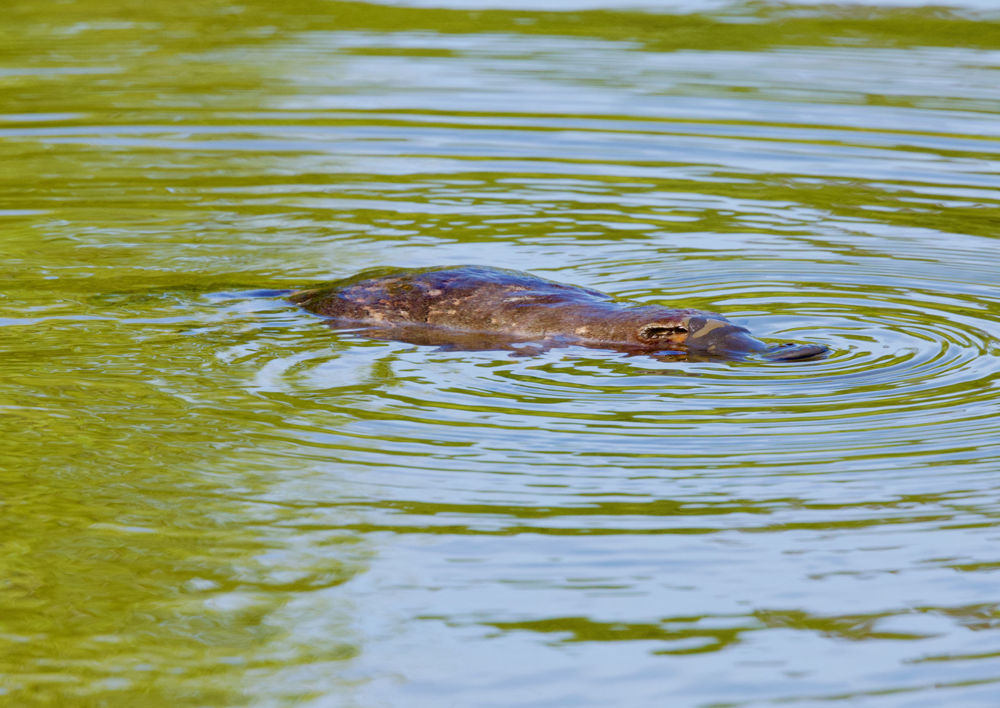
Platypus: one of the strangest and most unique animals on the planet. Photo: Scott Baker
Here, also, is where we observed the first of the Tasmanian endemic birds, adding Tasmanian Nativehen (a flightless Rallid), Green Rosella, and Yellow Wattlebird to our list.
That evening we enjoyed some good old-fashioned hospitality at Mountain Valley Wilderness Lodge. This cozy and well-appointed venue set in a remote forested region of the Leven Valley is best known for sightings of the increasingly rare Tasmanian Devil—the world’s largest (and still living) marsupial carnivore.The devil, however, did not make an appearance on this occasion.
Frosty conditions the following morning did not deter our birding ambitions. Black Currawong, Forest Raven, and Tasmanian Thornbill led the morning chorus, with welcome guest appearances from Black-headed Honeyeater (endemic) and Shining Bronze-Cuckoo, as well as a lovely adult male Pink Robin, which proved a very popular subject.
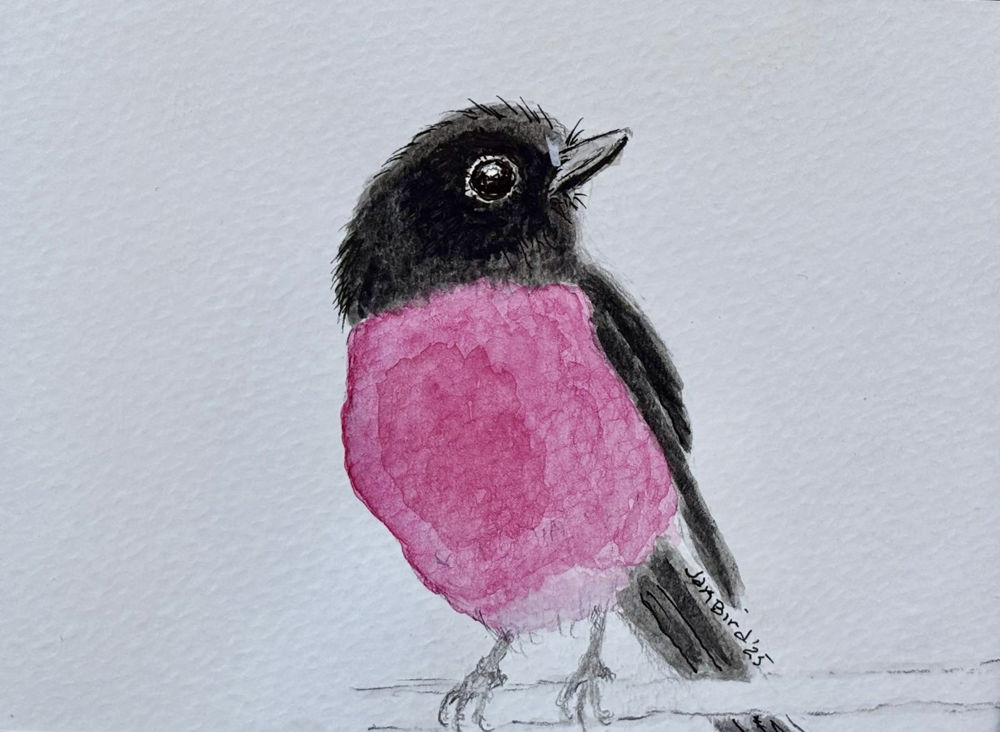
Pink Robin: field sketch by tour participant Jan Loomis
Later that day we continued the journey, winding our way up into the central highlands. Our destination, the Cradle Mountain National Park, is part of the World Heritage listed ‘Tasmanian Wilderness area,’ a 6,000-square-mile protected area, most famous for its dramatic landscapes and specialized alpine ecology.
Staying at the Cradle Mountain Lodge provided both superb lodging and some fine dining, something we certainly took advantage of. But it is the unique alpine ecology, the Button-grass meadows, and ancient moss-covered temperate rainforest that really defines this location.
The birds, in fact, were somewhat scarce, but did include a few of the priority endemics, such as Scrubtit (which is difficult elsewhere), Tasmanian Scrubwren, and both Yellow-throated and Strong-billed honeyeaters.
We also enjoyed some nice mammal sightings. There are several grazing varieties including Tasmanian Pademelon, Bennett’s (Red-necked) Wallaby, and Common Wombat, which have become very relaxed and easily observed around the lodge itself. There was also a memorable encounter with a rare ‘blonde’ Short-beaked Echidna on the entrance road. A first for me!
Another fantastic evening was spent in the coastal village of Burnie, where a specially constructed boardwalk and viewing platform provides access to the local Little (Fairy) Penguin colony. And in this case, basically our own private parade—an endlessly entertaining experience, as adult birds returning from a day at sea were accosted by hungry, noisy youngsters.

Fairy Penguin: field sketch by tour participant Jan Loomis
Next on our agenda was a day of travel, southwards, to the state capital of Hobart. A couple of stops on the way included eBird hotspot ‘Dam at Illawarra rd,’ where we picked up Cape Barren Goose and Musk Duck, and later Gould’s Lagoon for Freckled Duck, Australasian Shoveler, and Latham’s Snipe (briefly)—representing some valuable contributions to our trip list.
The charming and historic port city of Hobart is perched on the bank of the Derwent River, with a vibrant harbour district, featuring some excellent restaurants and world-class galleries. Its relaxed and welcoming atmosphere makes this an appealing base for our final few days in Tasmania.
A day-trip to Bruny Island was probably the most important day (bird-wise) of the trip. All of the key ‘endemics’ are found here, and there was, of course, some unfinished business, so we were on the first boat!
We enjoyed some early success with incredible eye level views of the critically endangered Swift Parrot, in fact, multiple birds at several sites. With an estimated population of less than 750 wild birds (and declining), any encounter with the Swift Parrot is significant.
In addition, we observed Blue-winged Parrot, Pallid Cuckoo, Dusky Robin (endemic), and both Yellow-throated and Black-headed honeyeaters. Some shorebirds of note would include Australian Pied and Sooty oystercatchers and the handsome Hooded Plover, now a threatened species. We searched several beaches and located a single bird.
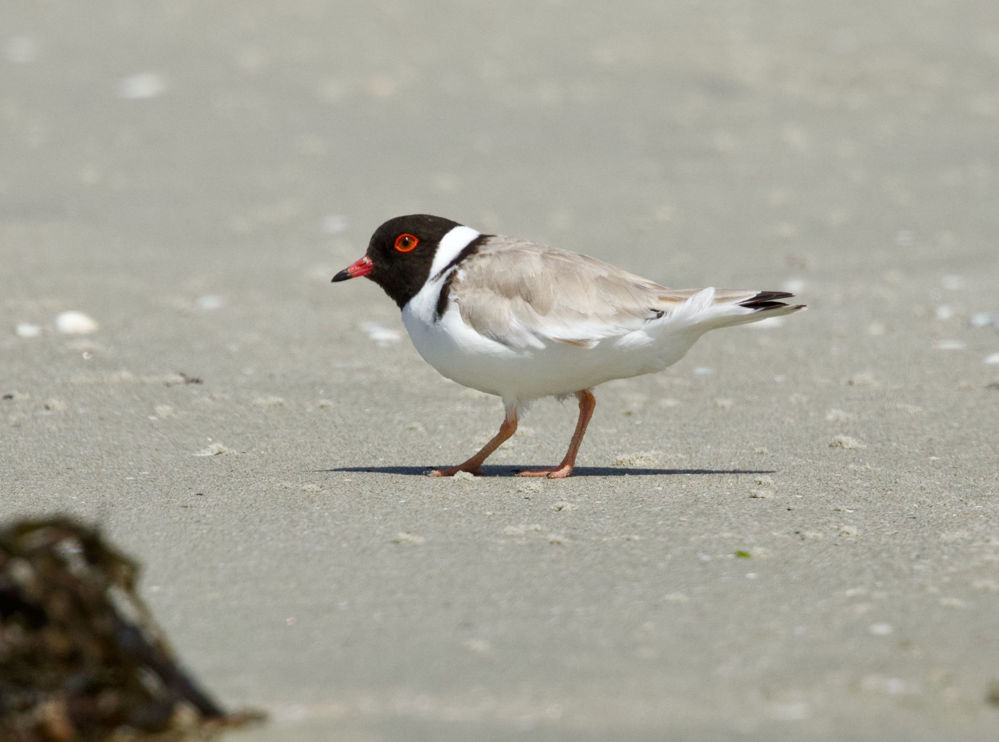
Hooded Plovers favor sandy beaches of southern Australia. Photo: Scott Baker
It was a wet and foggy final full day of birding in the Hobart area. Conditions were very challenging, but we persisted. A visit to Mt. Wellington (with umbrellas) provided some value, with Olive Whistler observed. It was, in fact, our only encounter with this species (another endemic taxa). A pair of Beautiful Firetails sighted at the nearby Waterworks Reserve also deserves a mention.
And with that we concluded our 2025 Grand Australia: Tasmania Extension. Again, this proved to be a very satisfying chapter in the Australia tour series. Tasmania is such a great destination. Of course, it is the special birds (including many endemics) and fantastic array of mammals that feature in the highlights reel, but also the wild areas, the fresh air, and the delicious local food and wine that really stand out. And honestly, this was a fun group to be a part of. Thank you, everyone, for making this such a positive and memorable experience!
A complete list of the birds recorded on our tour can be found at: https://ebird.org/tripreport/427567
Description for the next departure of this tour.
Scott Baker's upcoming tour schedule.
ITINERARY
Oct 29 Arrive Launceston, travel to Mountain Valley Wilderness Lodge. PM: Dam at Illawarra rd, Tasmanian Arboretum, Mountain Valley Wilderness Lodge.
Oct 30 Travel to Cradle Mountain. AM: Mountain Valley Wilderness Lodge, Bicentennial Park (Ulverstone). PM: Cradle Mountain National Park incl Enchanted Walk.
Oct 31 Cradle Mountain area, incl drive to Burnie. AM: Cradle Mountain NP. PM: Fern Glade Reserve (Burnie) & Burnie West Beach (Little Penguin Observation Centre).
Nov 1 Travel Cradle Mountain – Hobart. AM: Cradle Mountain NP, Dam at Illawarra rd. PM: Gould’s Lagoon Wildlife Sanctuary.
Nov 2 Full day on Bruny Island. AM: Missionary Rd, Apollo Bay Rd, Alonnah. PM: Adventure Bay, Missionary Rd.
Nov 3 Full day in Hobart area. AM: Mt. Wellington (incl Organ Pipes Track & The Summit), Waterworks Reserve, Ridgeway Reserve. PM: Queens Domain (Bot Gardens), Gould’s Lagoon Point.
Nov 4 Tour conclusion.

