


Departure Date: November 30 - December 18, 2025
Compiled By: Dion Hobcroft
Trip Leaders: Dion Hobcroft, Local Leader
Toll Free: 800.328.8368
Phone: 512.328.5221


New Zealand Highlights 11/30/2025-12/18/2025

New Zealand Highlights
https://ebird.org/tripreport/436430
We all met up as planned at our very convenient and comfortable airport hotel. Our first stop was in urban Auckland, where we had a bit of luck finding a vagrant Common Sandpiper that had been reported previously. The rest of the day went well as we explored Tawharanui and various coastal estuaries north to One Tree Point. There was a rush of new birds, as there often is on a first day in a new country, and we had great views of Paradise Shelduck, Brown Teal, New Zealand Pigeon, Variable Oystercatcher, Red-breasted Dotterel, Sacred Kingfisher, New Zealand Kaka, Tui, New Zealand Bellbird, Gray Gerygone, Whitehead, New Zealand Fantail, and North Island Robin.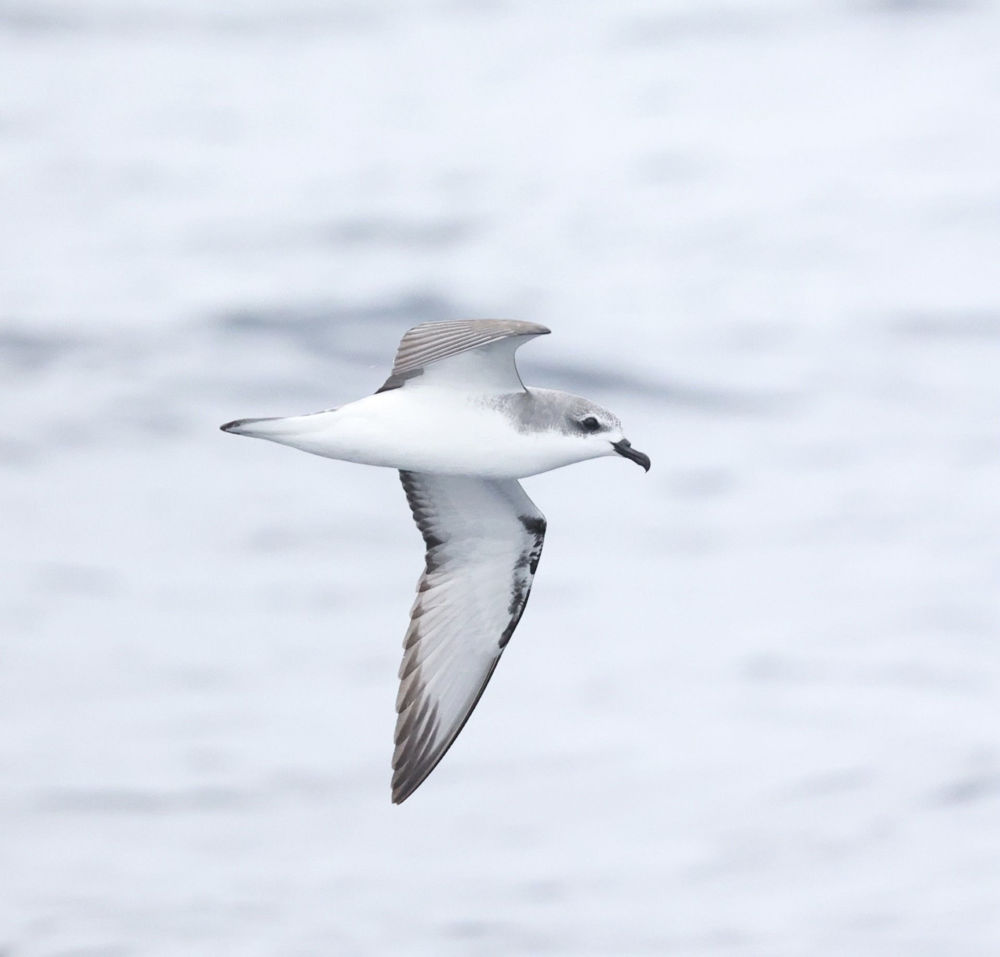
Cook's Petrel © Dion Hobcroft
The next day we were lucky to get out to sea in the Hauraki Gulf, and there was a bit of rock and roll in the swell. We were on board the Sumo with Steve, and he soon had us positioned in a great spot to feed a throng of pelagic birds. Fifteen species of albatross and petrel were recorded with major highlights being White-capped Albatross; White-faced Storm-Petrel; Gray-faced, Black-winged, Cook’s, and Pycroft’s petrels; Fairy Prion; Parkinson’s Petrel; Little, Buller’s, Sooty, Short-tailed, and Flesh-footed shearwaters; and dozens of Common Diving-Petrels. Pacific Reef-Heron and Bottlenosed Dolphins were two more notables. Back on land, we had a miraculous bit of luck finding a single Australian Fairy Tern (New Zealand’s rarest breeding bird) and more good luck following up on a report of Australasian Grebe.
The weather continued to be windy with some intense thunderstorms, but again, luckily, we made it across on the ferry to Tiri Tiri Matangi Island. With a few hours and strong winds, it was looking a bit dicey, but we soon had great views of the most unusual Stitchbird, and we had two encounters with the extraordinary North Island Kokako, including one bird feeding on the track! North Island Saddlebacks were in good form and were a delight as they sang away and foraged around us. We also saw the Giant Weta—one of the world’s heaviest insects.
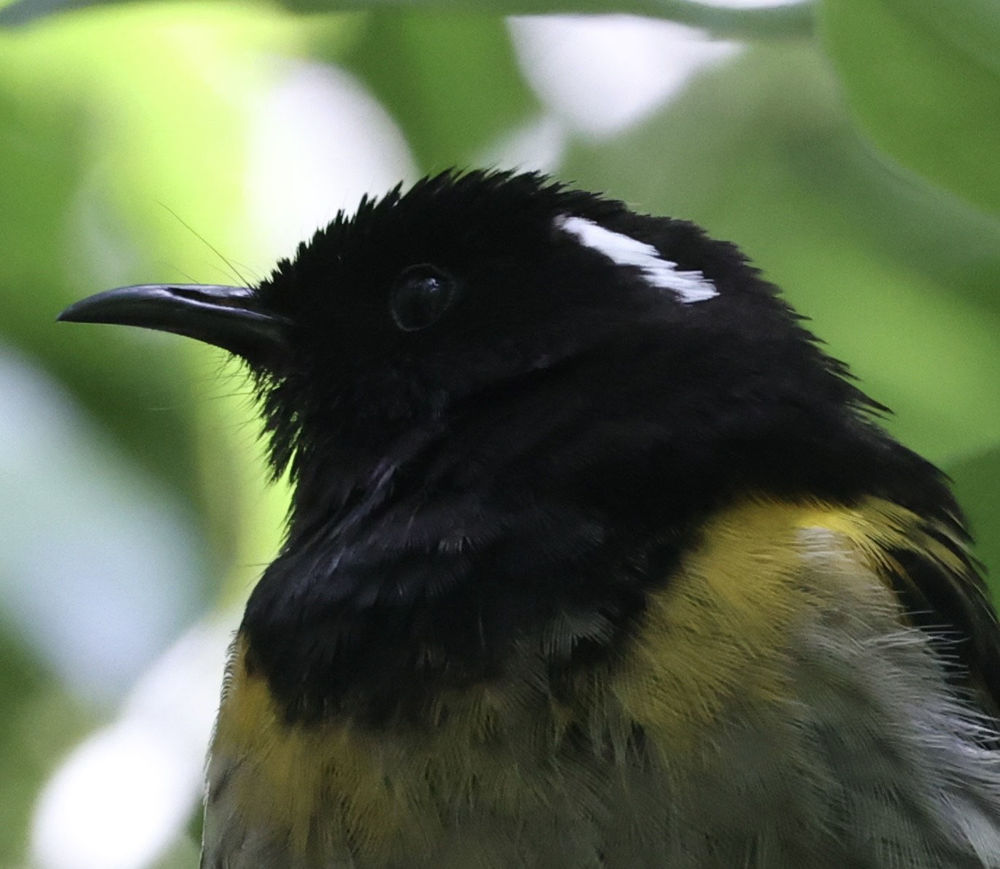
Stitchbird © Dion Hobcroft
We had to make an early start to get the high tide at Miranda, and it worked well; when we arrived at the Stilt Ponds we saw more than 3,000 Bar-tailed Godwits and 200 Red Knots. Searching through this pack of shorebirds, we quickly found several curious Wrybills with their laterally twisted bills, a couple of dapper Double-banded Plovers, Ruddy Turnstones, nearly 50 Pacific Golden Plovers, and a single Curlew Sandpiper. Swamp Harriers sailed around us, and Royal Spoonbills were spectacular in their crested breeding plumage. By afternoon we were in the volcanic plateau watching bubbling mud and steaming vents in Rotorua as we enjoyed great views of New Zealand Grebe, New Zealand Scaup, Black-billed Gull, and Shining Bronze-Cuckoo.
From Rotorua we ventured to Pureora Forest, where in a memorable birding session a superb Long-tailed Koel sailed around and over us repeatedly, male Tomtit perched out, pairs of chattering Yellow-crowned Parakeets gave glowing views, and the tiny Rifleman came down to eye level to say hello. Our good luck continued with a pair of Blue Ducks with ducklings near Turangi, and then an extraordinary Australasian Bittern perched up in the reeds at Lake Taupo. More was to follow with stunning views of Morepork in the evening, and we heard a North Island Brown Kiwi calling. A Puriri Moth—the largest in New Zealand—was a lifer for me. They apparently spend six years as a larva!
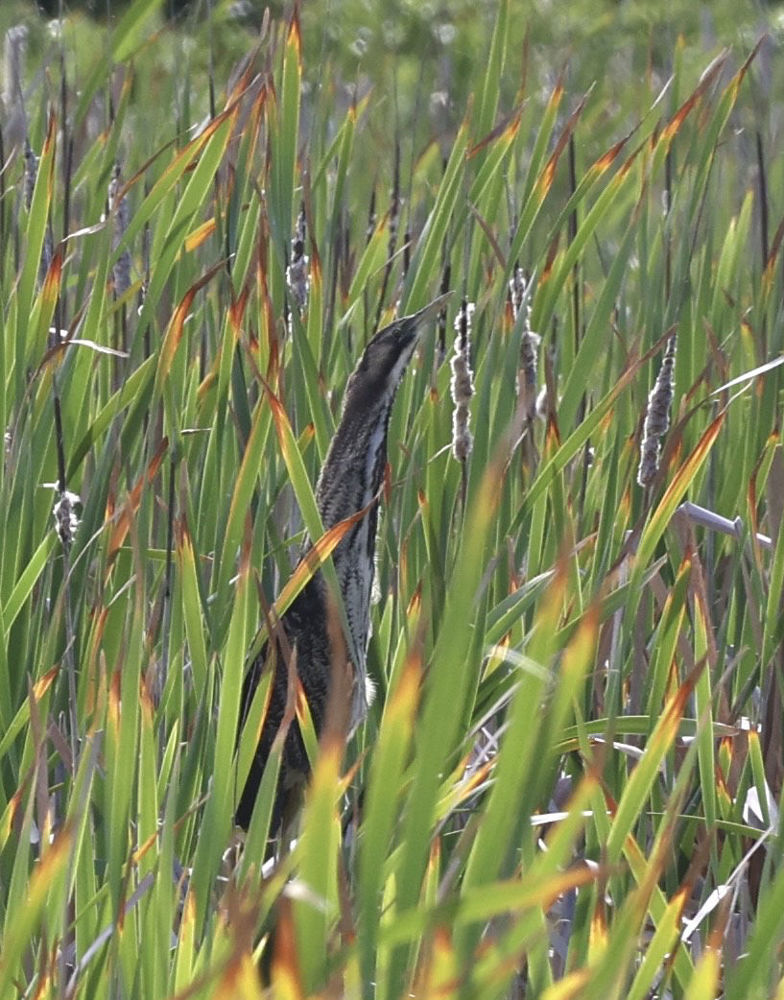
Australasian Bittern © Dion Hobcroft
We made it across to Kapiti Island, first making stops for New Zealand Pipit and the now established Nankeen Night-Herons near Whanganui. Once settled into Kapiti we started exploring, and our good luck continued with three sightings of New Zealand Falcon, our first Wekas, a fortuitous sighting of the pair of South Island Takahe, and, most amazingly, Fernbirds have self-colonized the island and showed well in the swamp behind the lodge. Little Spotted Kiwi proved difficult this year and was seen only by me on the predawn outing. A Little Penguin and geckos were other nocturnal sightings. Photographers were kept busy with a roll call of New Zealand birds from saddlebacks to Red-crowned Parakeets, pigeons, and Whiteheads.
Exploring Wellington, squeezing in a pair of Black-fronted Dotterels and the excellent national museum, we eventually loaded up on the Interisland ferry and crossed Cook Strait. Common Dolphin was probably our best sighting on the crossing. Beautiful weather reigned supreme, and our boat journey on the Marlborough Sounds was quite idyllic. New Zealand King Shag, Malherbe’s Parakeet, and South Island Saddleback were all seen very well. On the water there were big numbers of Fluttering Shearwater, Australasian Gannet, and a few Little Penguins and Parasitic Jaegers. We had great looks at the rare Hector’s Dolphin and a few Dusky Dolphins. A few stops en route to Kaikoura produced Hoary-headed and Great Crested grebes while the New Zealand Furseal rookeries gave a good insight into seal life. We watched mums with tiny pups and jowly males vying to keep their harems protected from other jowly males.
Our pelagic in the Kaikoura Sea Canyon was also successful. We added point-blank views of Northern Royal, Antipodean, and Salvin’s albatrosses, Northern Giant-Petrel, Pintado and Westland petrels, and Hutton’s Shearwaters to our trip list. In the afternoon we tracked down one of the rarer introduced species in New Zealand—a fine male Cirl Bunting.
I should also mention that we recorded the following non-native species on the tour: Graylag Goose, Canada Goose, Mute Swan, Mallard, California Quail, Wild Turkey, Ring-necked Pheasant, Indian Peafowl, Brown Quail, Rock Pigeon, African Collared-Dove, Eastern Rosella, Australian Magpie, Eurasian Skylark, European Starling, Common Myna, Song Thrush, Eurasian Blackbird, Dunnock, House Sparrow, Common Chaffinch, European Greenfinch, Redpoll, European Goldfinch, and Yellowhammer! A whopping 26 species of ferals.
Continuing south, we tried to find a few reported vagrants but had no luck with these. We reached the Mackenzie Country, and Mount Cook sparkled for us as the clouds gave way to blue skies and the Southern Alps looked splendid indeed. Black-fronted Terns were a welcome list addition, but things were looking tight again for the rare Black Stilt. Luckily, at the last gasp we found a pair, and there was a palpable exhalation of relief on the bus! We proceeded on to Bluff and caught the ferry to Stewart Island. We took an extraordinary night walk in very balmy conditions to a backdrop of calling Moreporks and a Long-tailed Koel, as we watched five South Island Brown Kiwis down to a distance of about five meters. We saw a tiny month-old chick and watched two males get into a territorial skirmish. It was fantastic!
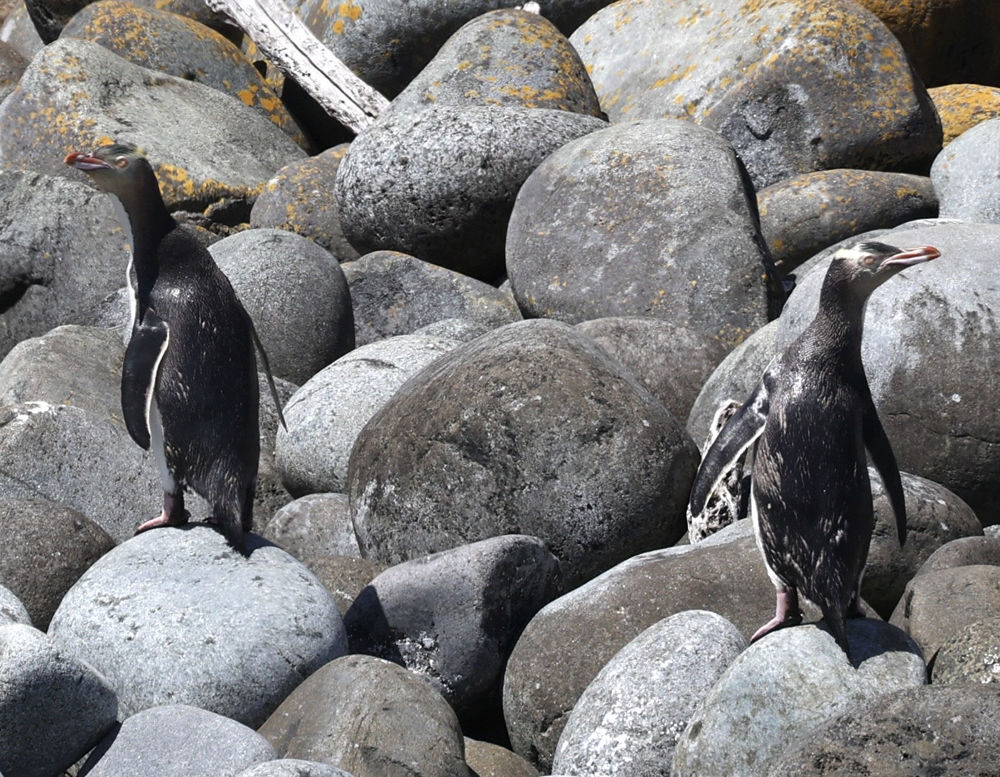
Yellow-eyed Penguins © Dion Hobcroft
With a full day on the island, we explored Ulva and quickly caught up with both Yellowhead and Pipipi. On a boat, we explored further and enjoyed Stewart Island Shags, Brown Skuas, Southern Royal Albatrosses, White-chinned Petrels, a fortuitous Broad-billed Prion, and in a miraculous bit of timing had three Yellow-eyed Penguins swimming around the vessel before they hauled out on Bench Island and wandered into the thick coastal scrub. Stewart Island had been very kind to us.
Our day in Fiordland hit the rainy, cloudy weather, but undaunted we tried our best to see as much as possible. We had excellent luck with Keas—seeing at least 10 individuals—and that was our biggest win for the day. We found a Blue Duck; enjoyed Rifleman and Yellow-crowned Parakeets; found a Weka, Tomtits, and South Island Robin; and had a bit more luck finding a Pacific Black Duck, now largely hybridized out of existence in New Zealand by feral Mallards. Our boat trip on Milford Sound was spectacular with the waterfalls pumping and the mile-high mountains coming in and out of view.
We transferred across to Dunedin and enjoyed a boat trip around Taiaroa Head, where four species of albatross came around the back of the boat. Our trip was at an end, and we flew out the next day. It had been a great trip with a great group. Thank you for traveling with me and Victor Emanuel Nature Tours.
A complete list of the birds recorded on our tour can be found at: https://ebird.org/tripreport/436430

