


Departure Date: January 4 - 16, 2026
Compiled By: Jeri Langham
Trip Leaders: Jeri Langham, Local Leader
Toll Free: 800.328.8368
Phone: 512.328.5221



Panama's Canopy Tower & El Valle's Canopy Lodge 1/4/2026-1/16/2026

Panama's Canopy Tower & El Valle's Canopy Lodge
https://ebird.org/tripreport/464459
Sunrise from the Observation Deck of the Canopy Tower is always a memorable treat! Lights from Panama City can be seen in the distance. Before dawn, we heard Mantled Howler Monkeys claiming their territory every morning, identified the calls of Collared and Slaty-backed forest-falcons and Mottled Owl, and as we enjoyed the dawn chorus, we were treated to excellent views of Keel-billed Toucans, Green Shrike-Vireo, Blue Dacnis, Red-lored Amazons, Brown-capped Tyrannulets, Rufous Motmot, Cinnamon Woodpecker, Geoffroy’s Tamarins, and Brown-throated Three-toed Sloths.
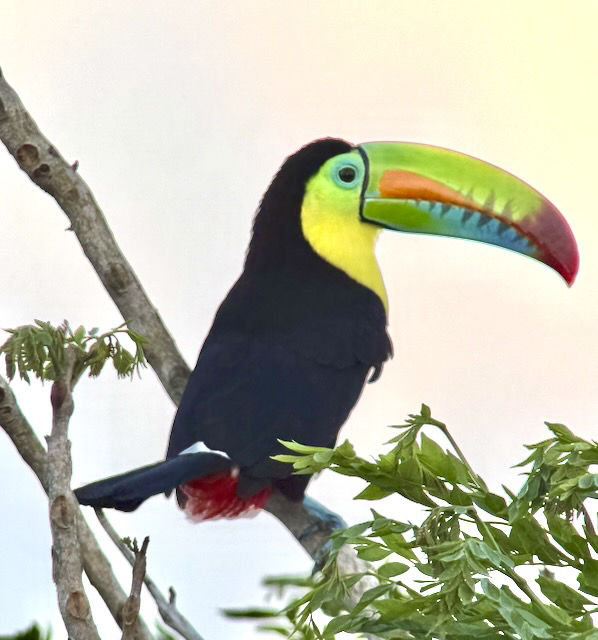
Keel-billed Toucan © Jeri Langham
During other times of the day, King Vulture and Ornate Hawk-Eagle made appearances over the Observation Deck.
The Canopy Tower feeders were swarming each day with White-necked Jacobins, Violet-bellied and Snowy-bellied hummingbirds, Blue-chested Hummingbirds, and Long-billed Hermits.
Our walk down Semaphore Hill was so productive that we made it only halfway down the road. Crimson-crested Woodpecker was a favorite, but we also enjoyed many others like female Red-capped and Velvety manakins, Black-crowned Antshrike, Cocoa Woodcreeper, Southern Bentbill, White-breasted Wood-Wren, Bay-breasted and Chestnut-sided warblers, Blue-black Grosbeak, Summer and Palm tanagers, and Green Honeycreeper.
This year we made two visits to the Ammo Dump Ponds, where highlights were two White-throated Crakes called in by Carlos, Purple Gallinule, Rufescent Tiger-Heron, Orange-chinned Parakeet, Barred Antshrike, Golden-collared Manakin, Yellow-rumped Cacique, Orchard and Baltimore orioles, 4 species of warblers, and 4 species of tanagers.
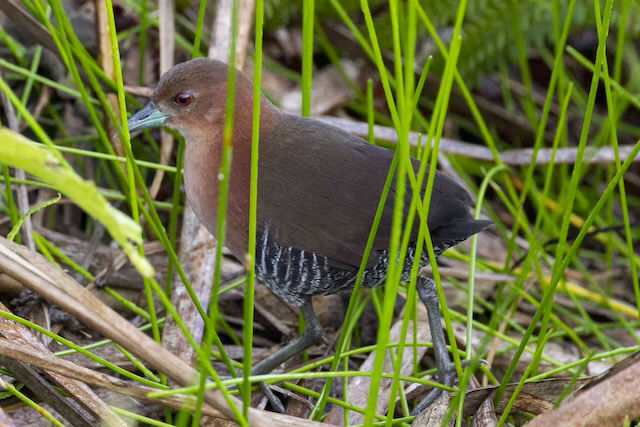
White-throated Crake © John Edmondson
Common Pauraque and Black-bellied Whistling-Ducks were seen on our drive to the Panama Rainforest Discovery Center. The 360-degree views from the top of the 175.5-step stairs to the observation tower make this a great place to bird. Blue Cotinga was a special find, although it was distant. A male Purple-throated Fruitcrow put on a great show. While at the Discovery Center we also found Song Wren, Checker-throated Stipplethroat, Black-striped Woodcreeper, Cinnamon Woodpecker, a pair of Black-tailed Trogons, Spotted Antbird, Slate-colored Seedeater, Smooth-billed Ani, a Black Hawk-Eagle, and all three possible species of motmots.
At the Canopy Family Bed and Breakfast in Gamboa, the feeders allowed great views of Red-legged Honeycreeper, Whooping Motmot, Red-crowned Woodpecker, Gray-headed Chachalacas, and 6 species of tanagers—including the gorgeous Crimson-backed Tanager.
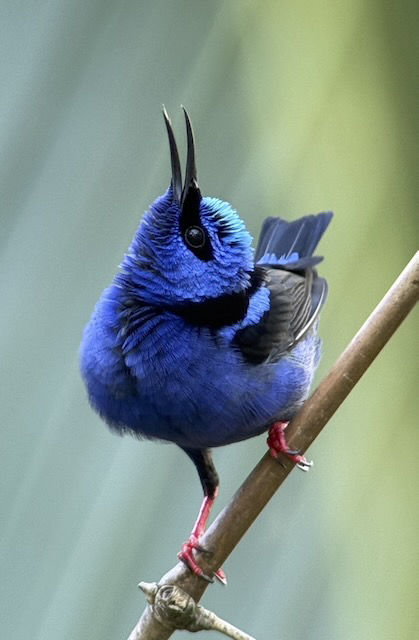
Red-legged Honeycreeper © Jeri Langham
A very early morning departure took us to Cerro Azul where we found the rare, endemic Stripe-cheeked Woodpecker. We were incredibly lucky when a widely dispersed flock moved over us. Golden-winged Warbler, Speckled Tanager, Golden-hooded Tanager, Hepatic Tanager, Crimson-crested Tanager, and Streaked Flycatcher were some of the more colorful birds passing through our area.
We all enjoyed the annual visit to the home of Linda and Jerry Harrison where their feeders attract many types of birds. Two special birds enjoyed today were a male White-ruffed Manakin and a Rufous-winged Tanager. Green and Long-billed hermits, Bronze-tailed Plumeleteer, and Crowned Woodnymph were among the nine species of hummingbirds we observed.
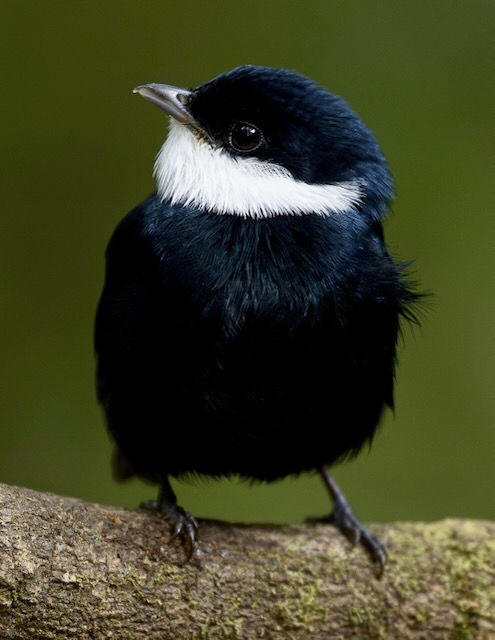
White-ruffed Manakin © Carlos Bethancourt
A quick trip to the Pacific Ocean shoreline added many new species to our list. Some favorite sightings were an incredible number of Short-billed Dowitchers, two Yellow-crowned Night Herons, Tricolored and Cocoi herons, and the recently split Mangrove Yellow Warbler.
Summit Ponds brought us 40 species and great sightings of Boat-billed Heron, 3 species of kingfishers, Lineated Woodpecker, a juvenile Collared Forest-Falcon, Wedge-billed Woodcreeper, Long-billed Gnatwren, Black-bellied Wren, Rosy Thrush-Tanager, and Chestnut-headed Oropendola.
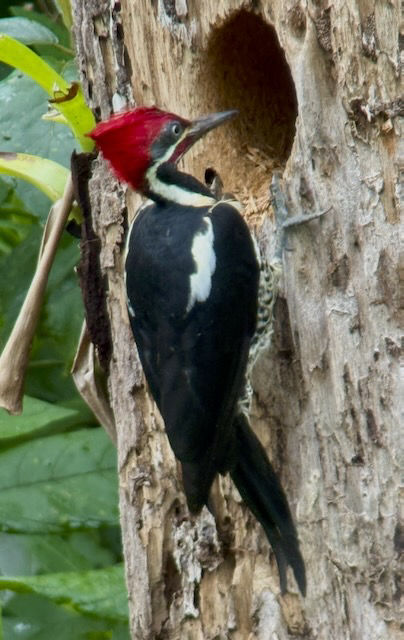
Lineated Woodpecker © Jeri Langham
The full day on Pipeline Road was a fantastic one. At the start, two Crane Hawks flew over us several times, and a Broad-billed Motmot was very cooperative. A Great Tinamou right next to the road was a much-wanted species. Gartered Violaceous and Graceful Black-throated trogons were added today, too, along with both female and male White-whiskered Puffbirds.
An Army Ant swarm on Pipeline Road was icing on the cake, because it provided us with views of many birds like Whooping Motmot, Bicolored Antbird, the tiny Spotted Antbird, Northern Barred-Woodcreeper, Gray-headed Tanager, and record numbers (for me) of the bizarre-looking Ocellated Antbird. A Streak-chested Antpitta took some patience, but Carlos was able to scope it for all of us to see well.
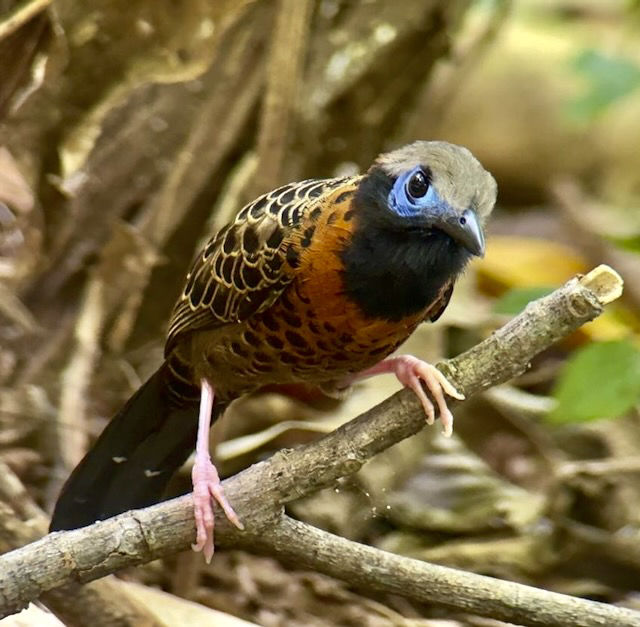
Ocellated Antbird © Carlos Bethancourt
Black-chested Jays were one of our first finds at Parque Metropolitano. Slaty-tailed Trogon, Lance-tailed Manakin, Orange-billed Sparrow, Red-crowned Ant-Tanager, White-necked Puffbird, and the tiny Golden-crowned Spadebill made this a productive visit.
Our arrival at Canopy Lodge could not have had a better surprise. Perched under the Heliconia bushes, that have been planted specifically to attract it, was the very tough-to-find White-tipped Sicklebill. We would see this species again at this location during our stay here. That curved bill has evolved to fit into the decurved yellow flowers and allow the tongue to reach the nectar.
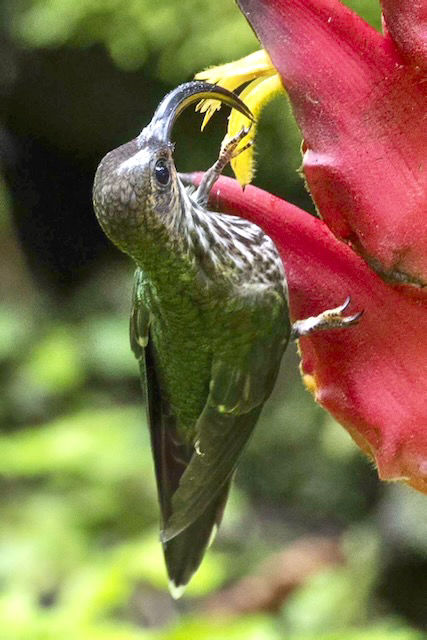
White-tipped Sicklebill © John Edmondson
Time spent at a few feeder areas near Canopy Lodge gave us non-stop action and great views of Tennessee Warbler, Lesson’s Motmot, Streaked Saltator, White-lined Tanager, Spot-crowned Barbet, many species of colorful tanagers, and more.
We took a different road out of El Valle’s crater floor, up over the top, and then down to the Pacific Ocean lowlands where we escaped the rain and enjoyed the sunshine. Once down in the lowlands, we stopped to try for Ferruginous Pygmy-Owl and had immediate success.
There are several roads we always bird down here in the open grassland fields and the rice fields before getting to the beach. Two hummingbirds that are only found down here on this tour, Veraguan Mango and Sapphire-throated Hummingbird, both cooperated.
While scoping the Straight-billed Woodcreeper, Carlos spotted a Chuck-will’s-widow perched on a nearby branch. This was a first for all my tours to Panama!
Crested and Yellow-headed caracaras, a Gray Kingbird, Lesser Yellow-headed Vultures, Wood Stork, Fork-tailed Flycatchers, and Savanna Hawks were good finds on our route to the beach.
Some of the birds we added at the beach were Sandwich Tern, Sanderlings, Hudsonian Whimbrels, Willets, and many Magnificent Frigatebirds. On the way to lunch, we saw a magnificent male Lance-tailed Manakin, but it flew before we were able to get a photograph. We enjoyed lunch and a swim in the warm Pacific Ocean at the beach house of Denise and Raúl.
The weather could not have been more different on our two trips to Altos del Maria. The first day allowed all to see how the rainforest got its name. The second was a beautiful, sunny day.
Even with the rain and fog on the first trip, we did encounter Spotted Woodcreeper, Silver-throated and Golden-hooded tanagers, Rufous-capped Warbler, Collared Trogon, Ochraceous Wren, and Tufted Flycatcher.
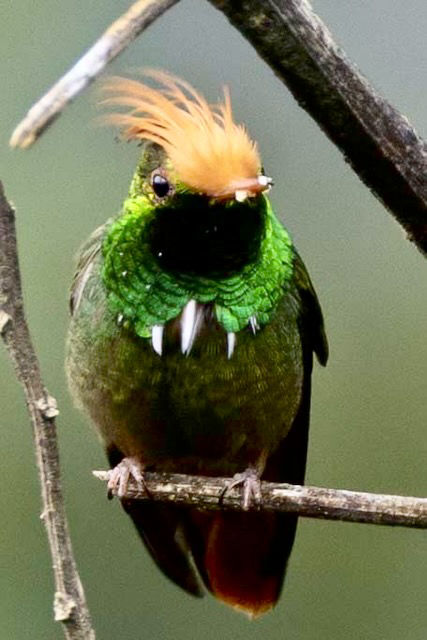
Rufous-crested Coquette © John Edmondson
A male Snowcap was a highlight of our second visit. Time at two feeder areas brought us Flame-rumped Tanager, Green-crowned Brilliant, Crowned Woodnymph, Rufous-crested Coquette, Chestnut-capped Brushfinch, and Northern Emerald-Toucanet.
My favorite Aposto climax rainforest walk was more wet than usual this year. A shy Brown-billed Scythebill was a favorite find, but we had to work very hard to see it. From the balcony of the small building, I always give my mini lecture on compensation point, how it determines where each plant species can survive. Most of my participants have never been taught that the sugars produced by photosynthesis during periods of light must be sufficient to supply the needs of ALL living cells, 24-hours a day.
This wonderful day ended with a walk on Caraiguana Road where all participants had excellent views of the Lesson’s and Rufous motmots, and finally the much-desired and rare Tody Motmot.
On our last morning, we visited the fruit and nectar feeder observation deck created since my last visit to Canopy Lodge. Jose has done an incredible job that brought in dozens of species for us to enjoy before lunch and departure for our Crowne Plaza Hotel in Panama City. This combo tour is a superb one for a birder’s first visit to the Neotropics and one that is so much fun that I have now co-led it 29 times and loved every visit.
https://ebird.org/tripreport/464459

