


Departure Date: January 10 - 18, 2026
Compiled By: Erik Bruhnke
Trip Leaders: Erik Bruhnke, Local Leader
Toll Free: 800.328.8368
Phone: 512.328.5221


Panama's Darien Lowlands: Canopy Camp 1/10/2026-1/18/2026

Panama's Darien Lowlands: Canopy Camp
https://ebird.org/tripreport/469296
Our Canopy Camp tour in charming eastern Panama was filled with thrilling moments from the start. We were in awesome care with Tino Sanchez, a renowned birder and butterflyer and longtime guide for the Canopy Family. I have led many Panama VENT tours with him over the years, and it was a joy to work with him again!
Our tour began where we make our way east of Panama City towards the Canopy Camp, but not without some birding along the way. Our first stop (a bathroom break at a gas station) was surprisingly exciting, with twenty-three bird species being appreciated right in the parking lot! It was fun to see birds such as Orchard Oriole and Common Tody-Flycatcher while being serenaded by a Yellow-green Vireo. A little further along the Pan-American Highway we made an impromptu stop along a vast field, where we scored great views of a Lesser Yellow-headed Vulture, an often tricky species to find throughout the trip. A Common Squirrel-Cuckoo serenaded the airspace with its sweet little notes. Later, an obligatory visit around Bayano Lake was wonderful, as many birds came into view including an Orange-crowned Oriole and Garden Emerald. A lunchtime experience in Torti had us viewing five beautiful hummingbird species while we dined. After a day of commuting to the Canopy Camp, the camp’s entrance road offered a great view of a resting Common Potoo and a tree-perching Spot-breasted Woodpecker. As we checked into the camp, the hummingbird feeders were in full swing and readily visited by Bananaquits galore—plus a plethora of hummingbirds including a rare Blue-throated Goldentail. All of this was on our first day!
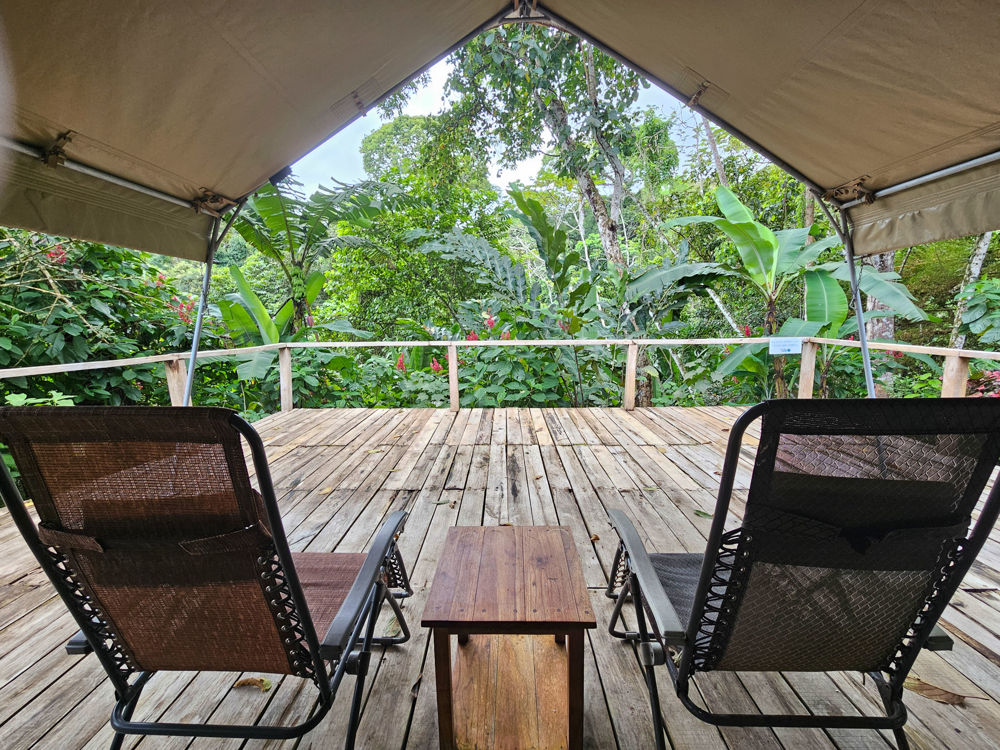
Our Canopy Camp tents are wonderfully comfortable. Here is the "backyard" of one of them © Erik Bruhnke
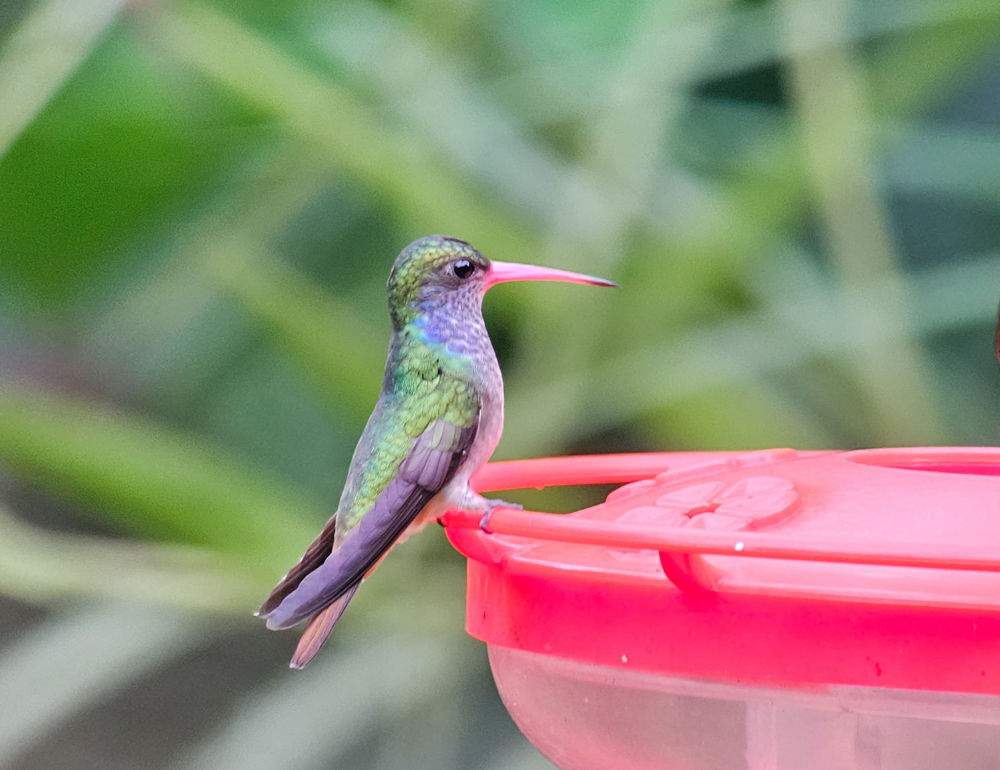
We got to see this rare Blue-throated Goldentail feeding right at the Canopy Camp! © Erik Bruhnke
A tasty breakfast at the camp fueled our morning walk around the grounds. Three King Vultures were seen soaring overhead. A Double-banded Graytail (a regional specialist) fed over our heads while Yellow-throated Toucans yodeled their songs from the canopy. A lovely Gartered Violaceous Trogon perched nearby, while a Purple-crowned Fairy fed on some nearby flowers. There were so many highlights throughout the day. After a fabulous Canopy Camp lunch and a siesta, we did some birding along the Pan-American Highway. While exploring some wetland environments, we enjoyed a remarkable experience with Black-capped Donacobius, essentially a South American species. These wetland specialists are beautiful and fun, with their comical tail swaying and not-shy vocalizations. We set our scopes on several adorable Spectacled Parrotlets that afternoon—a treat to end our day!
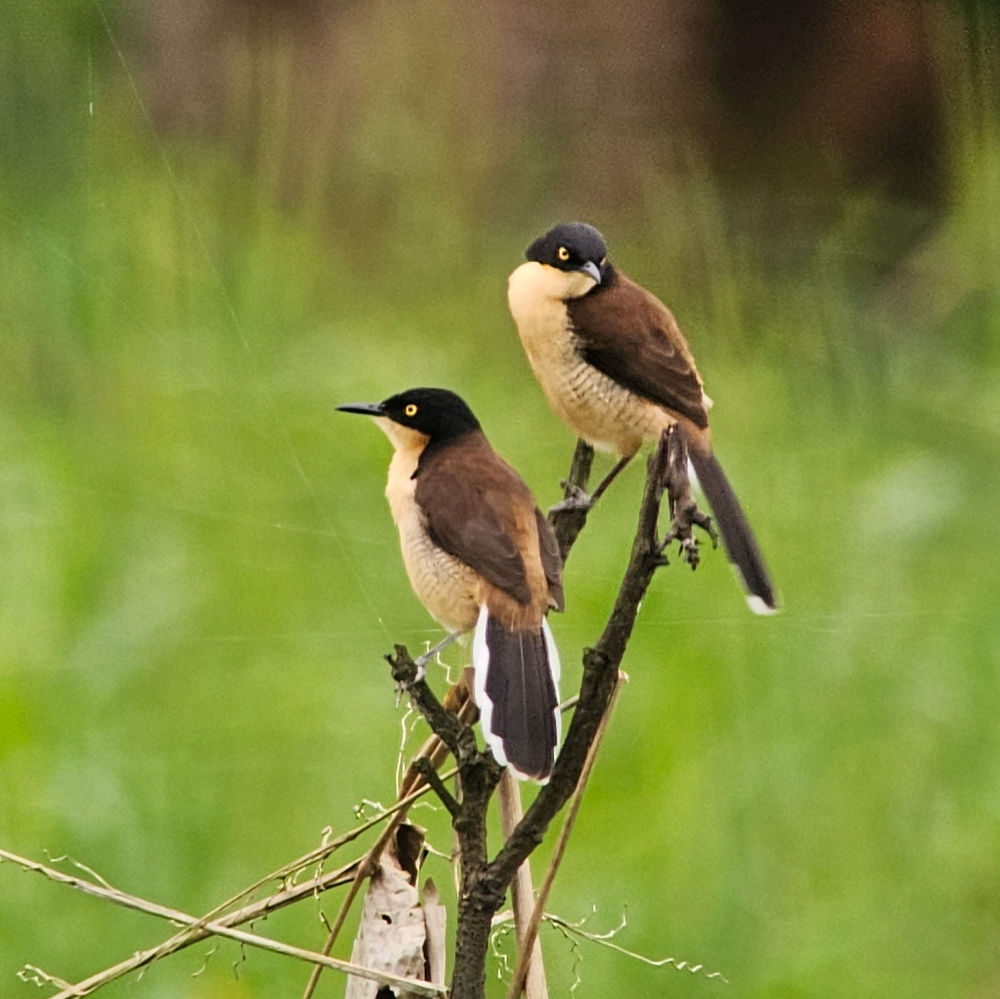
A pair of Black-capped Donacobius keeping watch from their displaying perch © Erik Bruhnke
Our next day was an early one, with Harpy Eagle being our focus. We birded our way along the Chucunaque River to the town of El Real. While birding by boat we had great experiences with two Green Ibis, Common Black Hawk, the charismatic Black-collared Hawk, and a Mangrove Swallow among twenty-five species just on the boat ride over! Once on land, we made our way to a trailhead to the deeper forest, focusing on getting to the nest site of the Harpy Eagle. After a short walk through the woods, we found ourselves looking at a baby Harpy Eagle up in a sacred Cuipo Tree. The eagle’s regal yet adorable antics were studied and enjoyed as it checked out its surroundings from within the nest. We admired this bird’s beauty for some time. How incredibly magical it was, to be in the presence of such a legendary bird, and the national bird of Panama, too! While in awe of the Harpy Eagle, we witnessed two very rare Great Green Macaws flying past. Numerous antbirds were heard and seen nearby. Checker-throated Stipplethroat was a delight, and we had a remarkable scope experience with a Russet-winged Schiffornis, an elusive species often hard to see despite its robust song. After some time viewing the eagle nest, we saw one of the parent Harpy Eagles land on the nest and keep watch over the young. After some Harpy Eagle Zen we carefully made our way out of the deep forest while appreciating the flora and fauna. Red-breasted Meadowlarks among a field put on a show at our little lunch area afterwards.
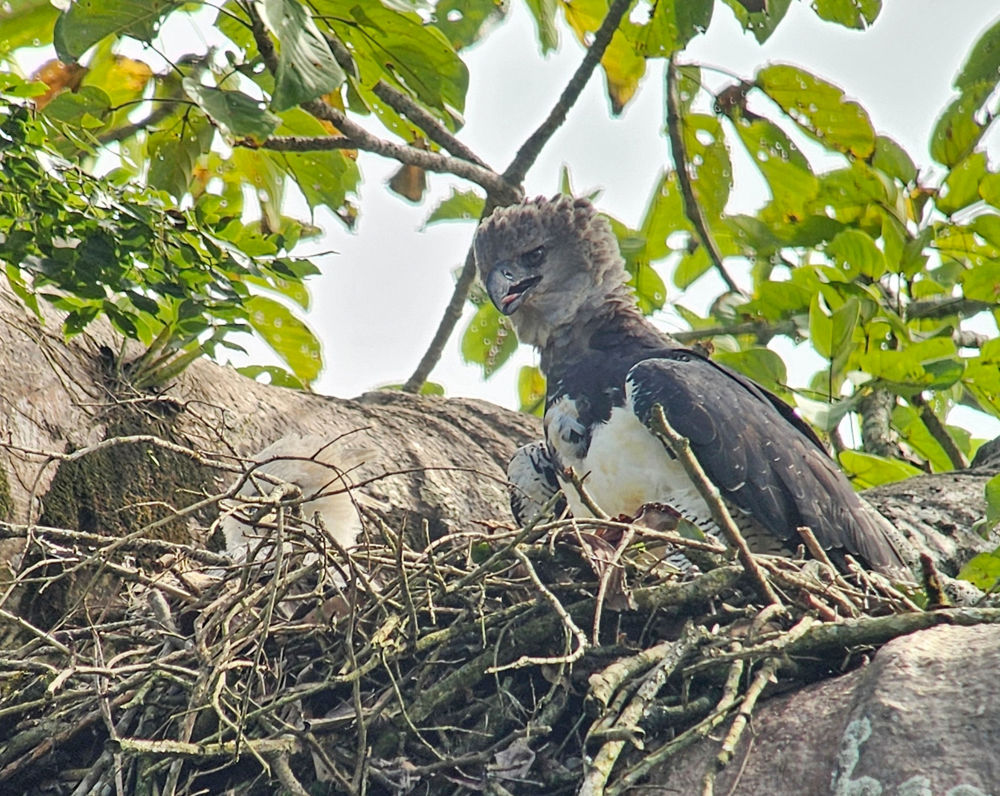
Adult Harpy Eagle at the nest, deep in the Darien Forest! A legendary bird. © Erik Bruhnke
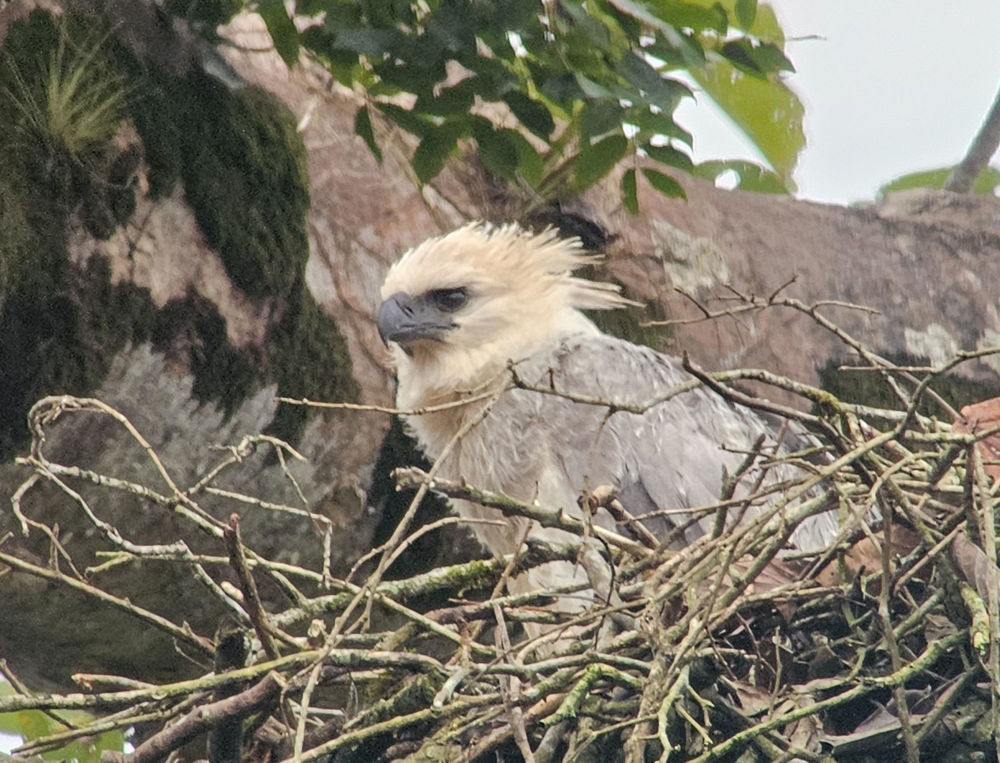
We got to see this adorable and quite large Harpy Eagle chick in the Darien Forest! © Erik Bruhnke
Our next day was another fun-filled day, as we birded local spots not far from the Canopy Camp. We started out among the vast rolling landscape of Sanson Abajo. At our first stop for birding, Tino played just a little bit of playback to see what birds were in the area. He dubbed this playback track the “chicken playback,” as the playback used had unintentionally-recorded sounds of background chickens crowing among the track. Comical rumor has it that it worked birding magic . . . and within moments a big kaleidoscope of birds appeared right in front of us. Great studies of Red-legged Honeycreeper and Blue Dacnis ensued, as well as Baltimore Oriole and Prothonotary Warbler among others. Seeing so many species at one time left us in awe. Later in the morning around the area, we savored views of a very rare Black-and-white Hawk-Eagle, a lifer for everyone on our tour including me. A Pearl Kite was seen shortly before a Striped Cuckoo was out in the open. We enjoyed 67 species of birds among about half a mile of birding that morning. In a nearby area that afternoon, we observed both Chestnut-fronted and Blue-and-yellow macaws, in addition to delightful birds like Fork-tailed Flycatcher, a Spot-breasted Woodpecker, and adult Gray-lined Hawk. So many highlights!
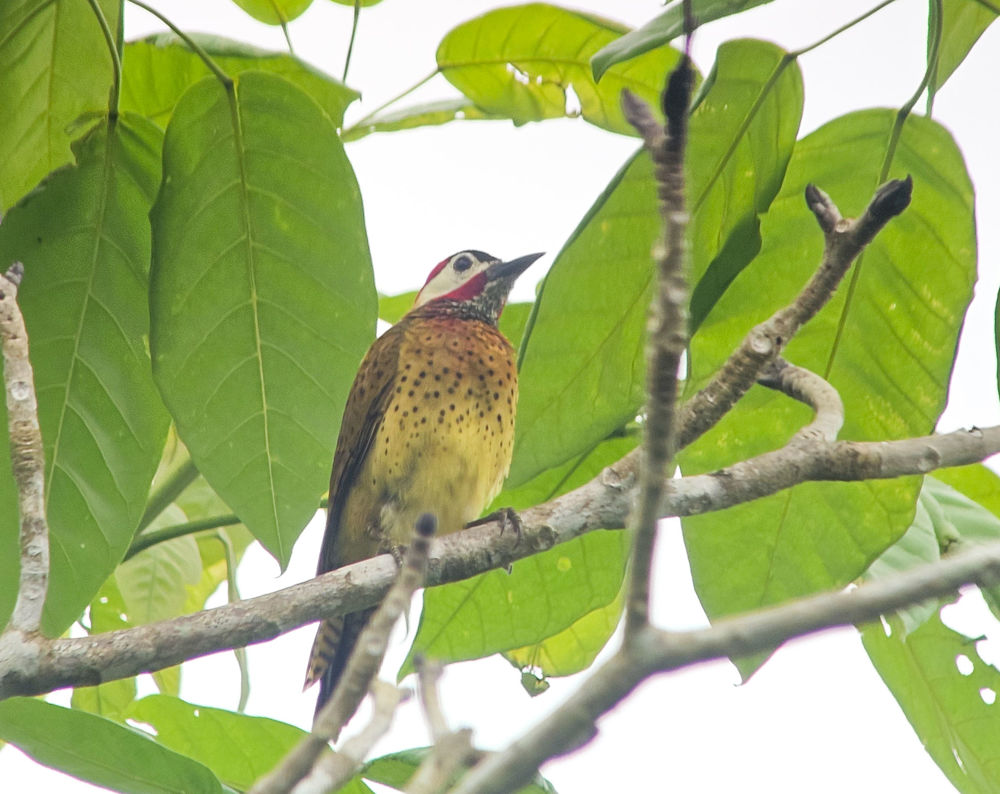
Spot-breasted Woodpecker, a primarily South American woodpecker species. We saw several of these beauties on this year's tour! © Erik Bruhnke
The next day had us setting our sights on the legendary Salto Road. Four Choco Sirystes brought big smiles to our faces, as did a radiant male Blue Cotinga. Purple-throated Fruitcrow bugled in the woods. Tiny and flashy birds like Yellow-winged Flatbill were seen, as well as the adorable Ruddy-tailed Flycatcher. Scope views of a Cinnamon Woodpecker stole the show at one point. Antbirds observed included Dusky, Bare-crowned, and White-bellied. In the afternoon we birded another renowned hotspot, the Yaviza Wetlands. We started with a fantastic study of a Zone-tailed Hawk flying over us, in addition to an uncommon Swainson’s Hawk. Four rare Great Green Macaws passed by, as well as a Chestnut-fronted Macaw. The Pied Water-Tyrant caught our attention as two Bat Falcons worked the tree tops. A sneaky Paint-billed Crake teased us with its bizarre vocalizations before we left. After dinner that night, a Crested Owl was heard calling off in the distance at the Canopy Camp. Phew!
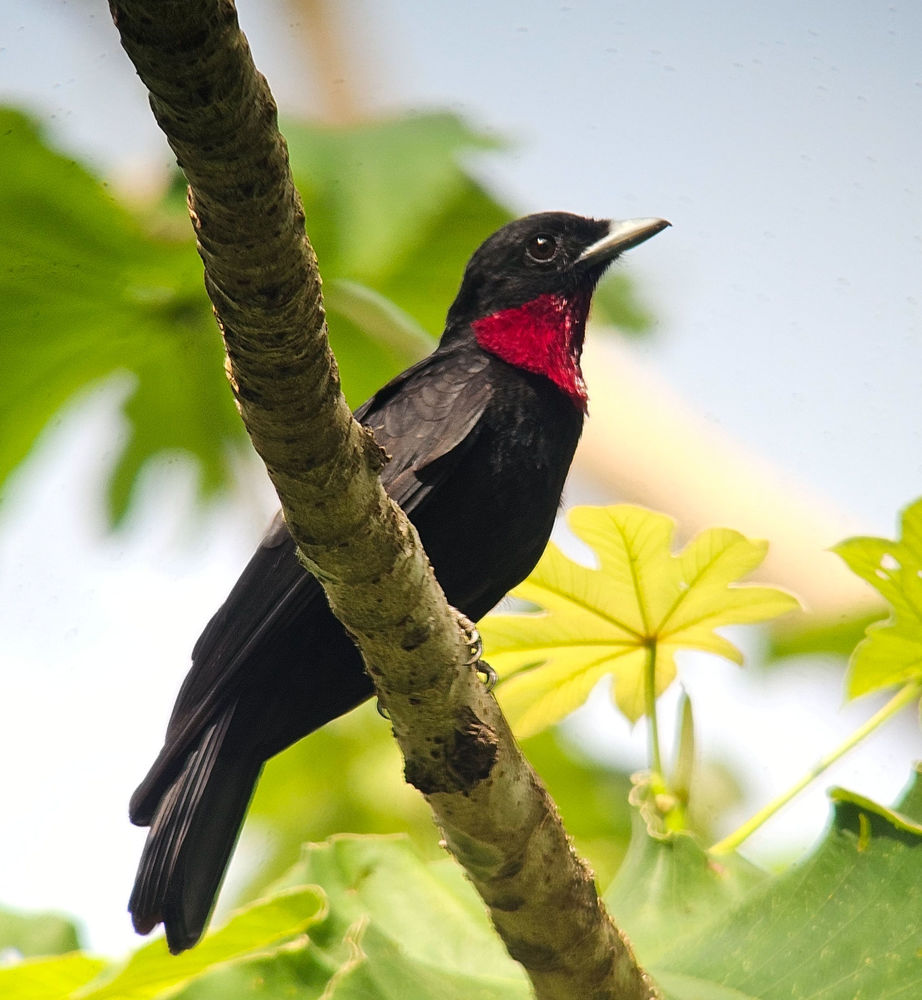
Purple-throated Fruitcrow taking a breather between giving its loud calls © Erik Bruhnke
On our last full day at the camp, we made our way along the Chucunaque River and Tuquesa River to the Embera village of Nuevo Vigia. The birding-by-boat experiences are a delight. Throughout the morning hours we saw so many amazing birds such as Amazon and Ringed kingfishers, Mangrove Swallows, and three species of herons (Striated, Green, and Little Blue). A highly sought-after, very-regional Black Oropendola flew over the river at one point! While birding some nearby trails off the boat we saw amazing birds like the super-regional Dusky-backed Jacamar, in addition to Gray-cheeked Nunlet, a lek of Golden-collared Manakins, and a Northern Plain-Xenops to name a few. Back in the village we admired the many beautiful handmade bowls, plates, and masks made by the Embera, each piece crafted with care and available for purchase to support the village. As I write this trip report, I look over next to my laptop and see the beautiful little, colorful woven plate from the Nuevo Vigia village.
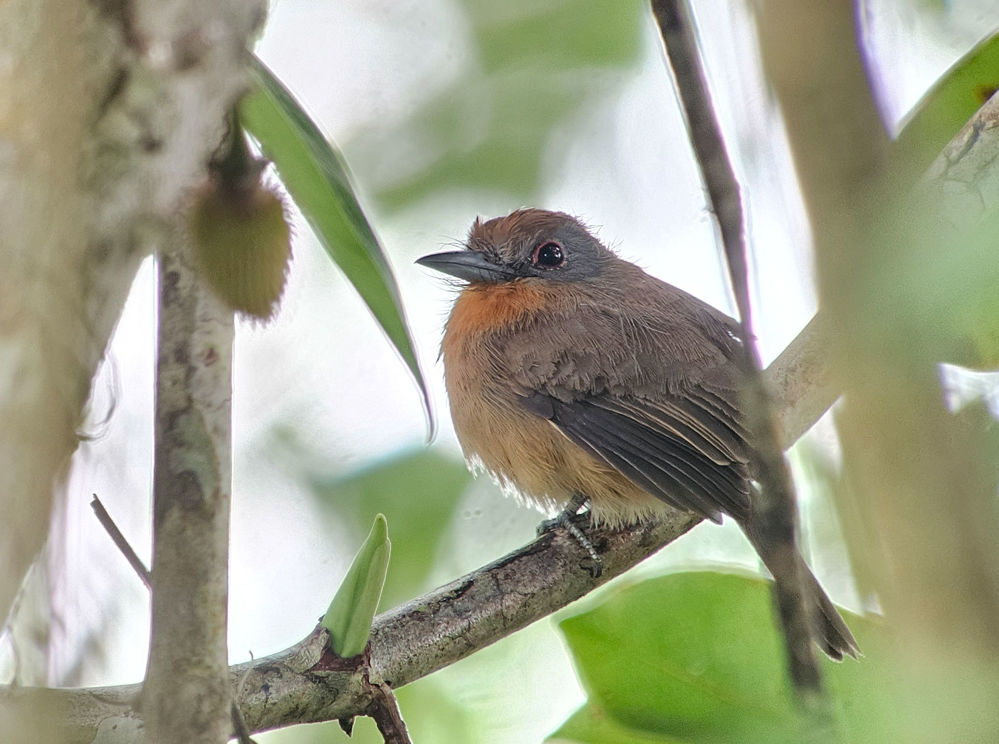
This Gray-cheeked Nunlet was a delight to see! © Erik Bruhnke
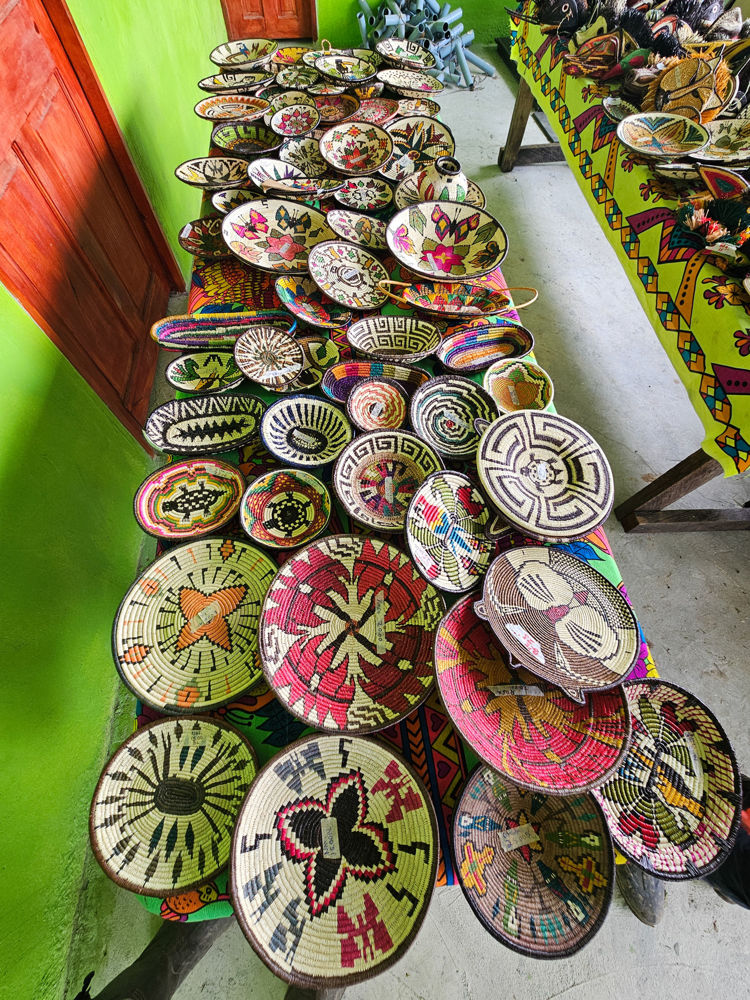
On the day we visited Nuevo Vigia we saw the incredibly beautiful handmade crafts created by the Embera tribe (with an opportunity to purchase some). Each one is made of natural fibers and natural dyes from plants in the Darien. © Erik Bruhnke
Our last day always comes too soon, as every day of this adventure is a remarkable thrill. After saying goodbye to the manager, fabulous lodging staff, and outstanding cooks at the Canopy Camp, we made our way to San Francisco Reserve. Hiking around in this beautiful riverside natural area is always exciting. Throughout the morning we scored both Black Hawk-Eagle and Ornate Hawk-Eagle (completing the hawk-eagle trifecta) in addition to fabulous birds like Checker-throated Stipplethroat, Lesser Greenlet, and two of our big targets there . . . the Graceful Black-throated Trogon and endemic Yellow-green Tyrannulet! Scope views of a chunky, vocalizing Barred Puffbird were wonderful. A lunch visit to Hotel Avicar was a treat both food-wise and hummingbird-watching wise.
A big thank you goes out to Tino Sanchez for being such a fabulous guide. It was great to bird with him again. The birds, butterflies, sloth, and so much more—all that we came across—were just incredible. We observed so many amazing birds, with a great handful of them being regional specialists of the Darien area. The entire tour feels like a dream. A big thank you also goes out to the entire Canopy Camp staff for making our rooms, meals, transport-needs, and all-round experience as fabulous as it could be. And a thank you to everyone who was on this tour! The birding and camaraderie were so much fun every day.
A complete list of the birds recorded on our tour can be found at: https://ebird.org/tripreport/469296

