

Difficulty
AN ISLAND OF ENDLESS WONDER
Sri Lanka
Sri Lanka is one of the most captivating birding destinations in the Old World, offering a remarkable blend of tropical forests, highland plateaus, coastal wetlands, and cultural treasures over a compact and easily traveled island. With more than 30 endemic birds, rich rainforest biodiversity, and some of Asia’s most accessible mammals—including Leopard—this journey showcases the best of the island’s natural heritage. From the ancient landscapes of Wilpattu to the mist-veiled forests of Horton Plains and the famed rainforest of Sinharaja, our tour combines superb birding with remarkable scenery, delicious cuisine, and insights into Sri Lanka’s deep Buddhist and colonial history.
18 Days left to Register
Tour Overview
Jan 5–Jan 21, 2027
Jan 5–Jan 20, 2028
Sri Lanka offers an intoxicating mix of natural beauty, cultural depth, and exceptional wildlife diversity, making it one of Asia’s most rewarding destinations for birders and nature travelers alike. This island nation, set like a jewel in the Indian Ocean, is home to an extraordinary collection of endemic birds, lush tropical forests, dramatic highlands, and a welcoming culture shaped by more than two millennia of Buddhist tradition. Our comprehensive journey is designed to give participants the best opportunity to encounter nearly all of Sri Lanka’s endemics while exploring an impressive variety of landscapes and historical sites.
We begin in the northwest with a visit to Wilpattu, the country’s largest and oldest national park, where dense forest and open villus create ideal habitat for mammals and forest birds. With luck, we may encounter Sri Lanka’s magnificent Leopard, often seen in daylight as it patrols the park’s sandy tracks and natural lakes.
From Wilpattu we travel into the famed Sinharaja Forest Reserve, an irreplaceable stronghold of Sri Lanka’s endemic birds. Here, mixed-species flocks animate the tall rainforest, and specialties such as Sri Lanka Blue-Magpie, Serendib Scops-Owl, Red-faced Malkoha, and Sri Lanka Spurfowl may reward our patient searching. Ascending into the cool highlands, we explore the verdant tea country and the windswept landscapes of Horton Plains, where species such as Yellow-eared Bulbul, Sri Lanka White-eye, Kashmir Flycatcher, and Pied Thrush add to the excitement.
Our adventure concludes with a visit to the ancient rock citadel of Sigiriya—crowned by vivid frescoes—and the productive wetlands of Bundala National Park, where thousands of Palearctic migrants gather. Throughout the tour, excellent accommodations, delicious cuisine, and warm hospitality complement the island’s exceptional birding and varied natural history.
Ecosystems Experienced
Sri Lanka holds a striking diversity of ecosystems within a small geographic area. The island’s wet-zone rainforests, including Sinharaja, harbor dense stands of evergreen trees, rich undergrowth, and complex canopy layers that support many of Sri Lanka’s endemics. In contrast, the dry-zone lowlands feature open forest, scrub, and seasonal wetlands, exemplified by the villu plains of Wilpattu. The central highlands rise to cool plateaus, cloud forests, and windswept grasslands such as those at Horton Plains, supporting montane endemics and unique plant communities. Along the coast, mangroves, lagoons, saltpans, and mudflats create vital feeding grounds for wintering shorebirds and waterfowl. Together, these ecosystems form an exceptional natural tapestry unmatched in South Asia.
Expected Climate
Temperature
Temperatures vary with elevation. Lowland regions—including coastal zones, dry forests, and rainforest foothills—typically reach daytime highs in the mid-80s to low-90s °F, with warm and humid nights. In the central highlands, particularly Horton Plains and higher tea estates, daytime temperatures are mild—often in the 60s to low-70s °F—while early mornings and evenings can be noticeably cool, sometimes dipping into the 40s–50s °F.
Rainfall
Sri Lanka experiences complex rainfall patterns due to its position between multiple monsoonal systems. Wet-zone forests, such as Sinharaja, receive frequent moisture year-round, often in the form of short showers or mist, even during drier periods. Dry-zone regions like Wilpattu receive significantly less precipitation and are typically dry outside the monsoon. Coastal areas and highlands may encounter brief, localized rain, but prolonged storms are uncommon during the traditional dry season.
Seasons
Most tours take place during Sri Lanka’s dry season, when conditions are generally clear, wildlife viewing is excellent, and bird activity remains high across all elevations. Vegetation in the highlands is lush, lowland wetlands attract winter migrants, and forest trails are most accessible. The season coincides with pleasant travel weather, offering a comfortable mix of warm lowlands and cool mountain air—ideal for exploring the island’s rich natural and cultural heritage.
Key Species
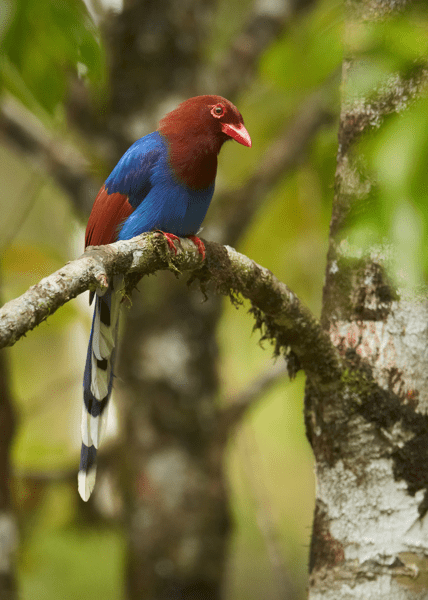
Sri Lanka Blue-Magpie
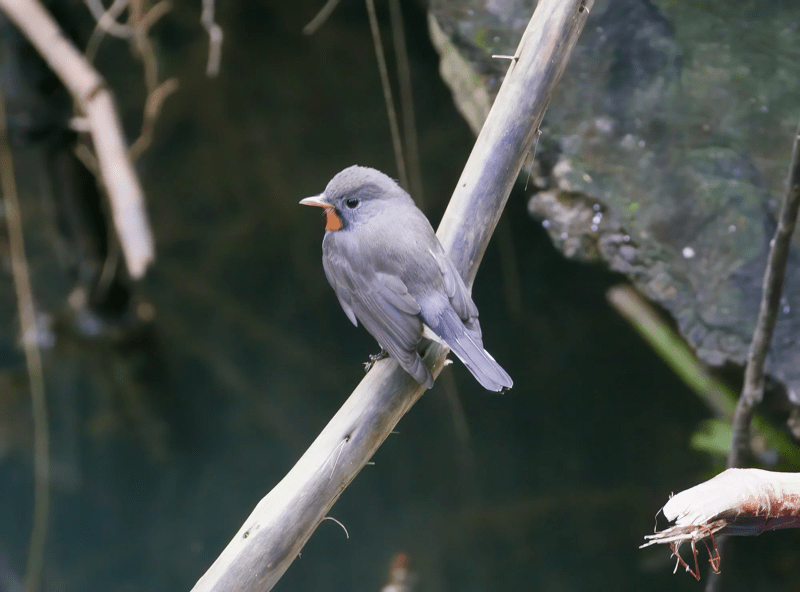
Kashmir Flycatcher
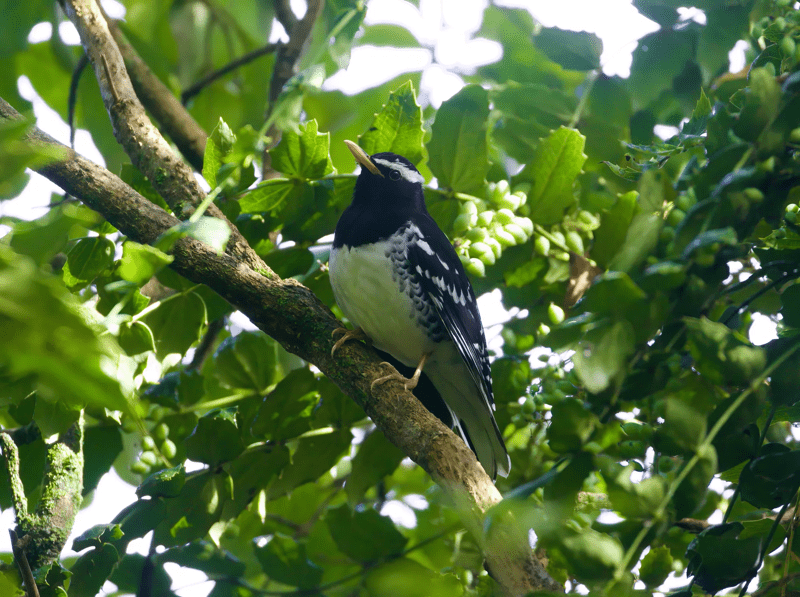
Pied Thrush
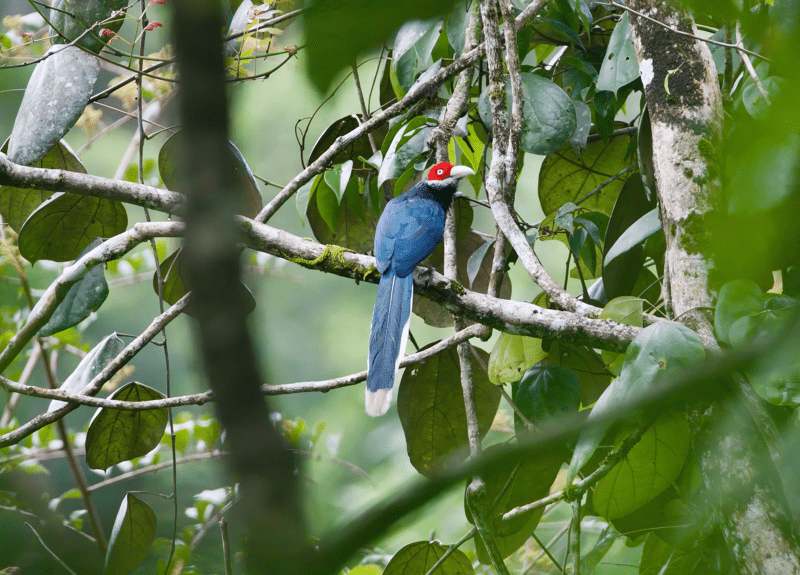
Red-faced Malkoha
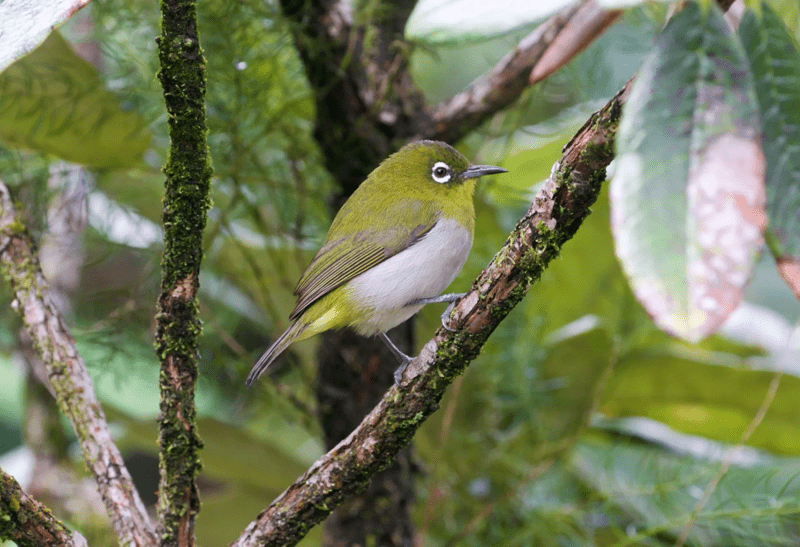
Sri Lanka White-eye
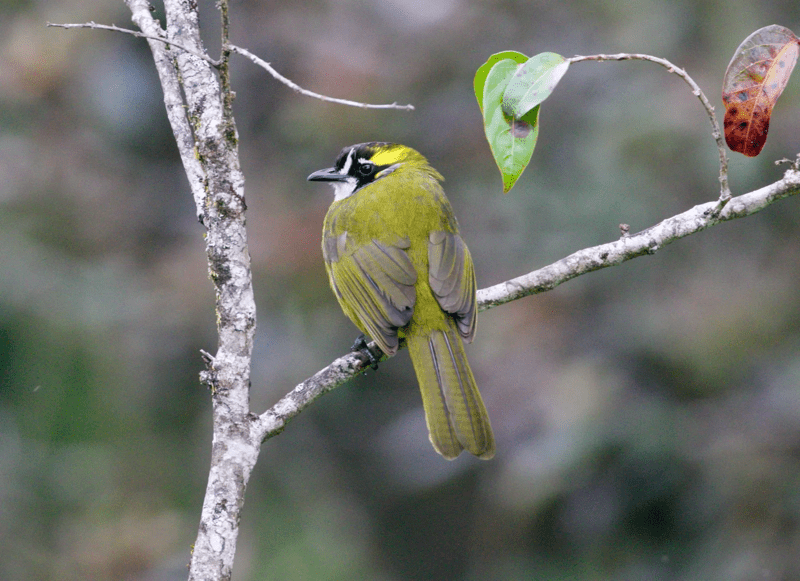
Yellow-eared Bulbul
Leader
+ Local Leader
Scott Baker
Primary Leader
Australian naturalist and tour leader with 30+ years of experience studying birds and wildlife across Australia and Southeast Asia.
Read MoreItinerary
Click here to download the 2027 itinerary PDF
Day 1
Depart the USA on January 5 for our journey to Sri Lanka, crossing the international dateline and arriving in Colombo on January 7.
Overnight aboard the aircraft as we make our way to Sri Lanka.
Day 2
Continue our journey to Colombo, with the day spent in transit.
Day 3
Arrive at Bandaranaike International Airport (CMB) in Colombo, where a representative of our ground operator will meet us and provide transportation to the Cinnamon Lakeside Hotel.
Settle in and meet the group in the hotel lobby at 6:30 p.m. for a trip welcome and orientation, followed by our first dinner together.
Travelers are encouraged to consider arriving a day early on January 6 to allow extra time in case of flight delays or misconnections and to begin the tour well-rested.
Day 4
Set out this morning on the long but fascinating drive to the southeast of Sri Lanka, with regular stops along the way to take in the changing landscapes and look for birds.
Enjoy a full day of travel and discovery as we make our way toward Yala, arriving at our lodge in the evening.
Day 5
Explore the remarkable wetlands of Sri Lanka’s southeastern Dry Zone, a rich network of lagoons and saltpans separated from the Indian Ocean by broad beaches and sand dunes.
Spend the day birding this exceptionally productive area, with possibilities including Spot-billed Pelican, Painted Stork, Black-headed Ibis, Great Thick-knee, Indian Pitta, and several species of plovers, sandpipers, and terns.
Return to Jetwing Yala in Kirinda after a full day exploring one of Sri Lanka’s most important wetland regions.
Day 6
After lunch, travel east and north toward Yala National Park, enjoying the changing scenery as we make our way to our next destination.
Arrive at our attractive lodge, ideally situated on the edge of the vast Yala National Park, where we’ll settle in for the evening.
Day 7
Spend the day exploring the vast Yala National Park, a spectacular mosaic of lowland habitats that supports an exceptional diversity of birds and mammals. To avoid the midday heat, we’ll focus our birding in the early morning and late afternoon.
With luck, we may see an impressive array of wildlife, including Asian Elephants, Sambar, several species of deer, and perhaps the park’s celebrated Leopard. The extensive marshes are also home to abundant waterbirds, including several species of storks.
This will be our best opportunity to find the endemic Sri Lanka Junglefowl, along with other highlights such as Crested Serpent-Eagle, Pheasant-tailed Jacana, Blue-faced Malkoha, and Sri Lanka Shama.
Day 8
Depart for Embilipitiya, our base for exploring Udawalawe National Park. Along the way, keep watch for waders and waterbirds on the many tanks scattered throughout the countryside.
Explore the dry-country habitats around Udawalawe, where we’ll have excellent opportunities to see wild Elephants alongside birds such as Changeable Hawk-Eagle, Barred Buttonquail, Sirkeer Malkoha, and Tawny-bellied Babbler.
Settle in at the Grand Udawalwe Safari Resort for the evening.
Day 9
Enjoy some final birding around Udawalawe before beginning the longer drive to Sinharaja Forest, taking in the changing scenery as we travel toward the island’s lush southwestern forests.
Arrive at our attractive small hotel on the edge of Sinharaja Forest, where we’ll settle in and prepare to explore this remarkable forest in the days ahead.
Day 10
Spend the day exploring Sinharaja Forest, Sri Lanka’s last remaining rainforest of significant size and a UNESCO World Heritage Site, home to an impressive array of endemic birds.
Search the forest for mixed-species flocks and highlights such as Sri Lankan Green-Pigeon, Red-faced Malkoha, Sri Lankan Frogmouth, and Sri Lankan Blue-Magpie.
Day 11
Continue exploring Sinharaja’s rich rainforest, searching for more endemic birds and mixed-species feeding flocks.
Keep watch for specialties such as Sri Lankan Scimitar-Babbler, Ashy-headed Laughingthrush, and Loten’s Sunbird, while continuing our search for the Serendib Scops Owl.
Return to the Blue Magpie Hotel after another rewarding day in the forest.
Day 12
Travel into Sri Lanka’s dramatic highlands, making birding stops along the way for species we may have missed, including Sri Lanka Wood-Pigeon, Brown Wood-Owl, and Streak-throated Woodpecker.
Arrive in Nuwara Eliya, a beautiful colonial hill station at about 6,700 feet, with time for some late-afternoon birding at Victoria Park.
Day 13
Spend the day exploring Horton Plains National Park, a spectacular montane landscape and an excellent place to search for Sri Lanka’s high-elevation specialties, including the elusive Sri Lanka Whistling-Thrush.
Later, visit the beautiful Hakgala Botanical Gardens, where we’ll continue looking for birds amid its impressive collection of trees and plants.
Day 14
Enjoy a leisurely morning as we travel to Kandy, stopping at the beautiful Royal Botanic Gardens at Peradeniya for some birding amid its lush grounds.
In the afternoon, visit the legendary Temple of the Tooth, one of Buddhism’s most important and revered monuments.
Settle into the Earl’s Regency Hotel in Kandy for the evening.
Day 15
Travel toward Sigiriya, stopping at Udawatte Kelle Sanctuary for some birding in its lush forest setting.
Arrive in Sigiriya in the afternoon, with time to enjoy more birding in this beautiful area.
Day 16
Explore the remarkable Lion Rock Fortress in Sigiriya, built more than 1,500 years ago, along with the ancient gardens and tanks surrounding it.
Explore the remarkable Lion Rock Fortress in Sigiriya, built more than 1,500 years ago, along with the ancient gardens and tanks surrounding it.
This afternoon, return to Colombo for dinner and our final night at the Cinnamon Lakeside Hotel.
Day 17
Enjoy a final breakfast before transferring to Bandaranaike International Airport (CMB) for morning or early-afternoon departures.
What’s Included
Accommodations & Dining
Settle into comfortable accommodations with modern amenities. Enjoy freshly prepared meals that highlight local flavors and international favorites, with consideration for any dietary needs.
Guided Services & Gratuities
Experience each destination with the help of Leaders who share history, culture, and wildlife insights. Gratuities for crew and local guides are included, ensuring seamless service without extra concerns; tipping for your Leaders is discretionary and not included.
Active Essentials
Every tour includes the core elements that make our field experiences possible so you can stay engaged with a range of activities. All outings include the necessary equipment and full safety support, making it easy to join at your own pace.
Transportation & Logistics
We coordinate every transfer, from airport pickup to port boarding. Whether traveling by bus, boat, or charter, our team ensures smooth connections and stress-free travel.
FAQs
Similar Trips
Loading calendar...